How to Read Maker's Marks (Without a Degree in Antiques)
Maker’s marks look like hieroglyphics until you know what you’re seeing. A practical guide to decoding stamps, signatures, and symbols on ceramics and silver.
A maker's mark is the stamp, signature, or symbol a manufacturer leaves on a piece to identify who made it and when. It's the signature of an antique—a small stamp on the bottom of a ceramic plate, a hallmark inside a silver ring, an impressed mark on the back of a chair.
And it can mean the difference between a $10 dish and a $300 one.
Where Do You Find Maker's Marks?
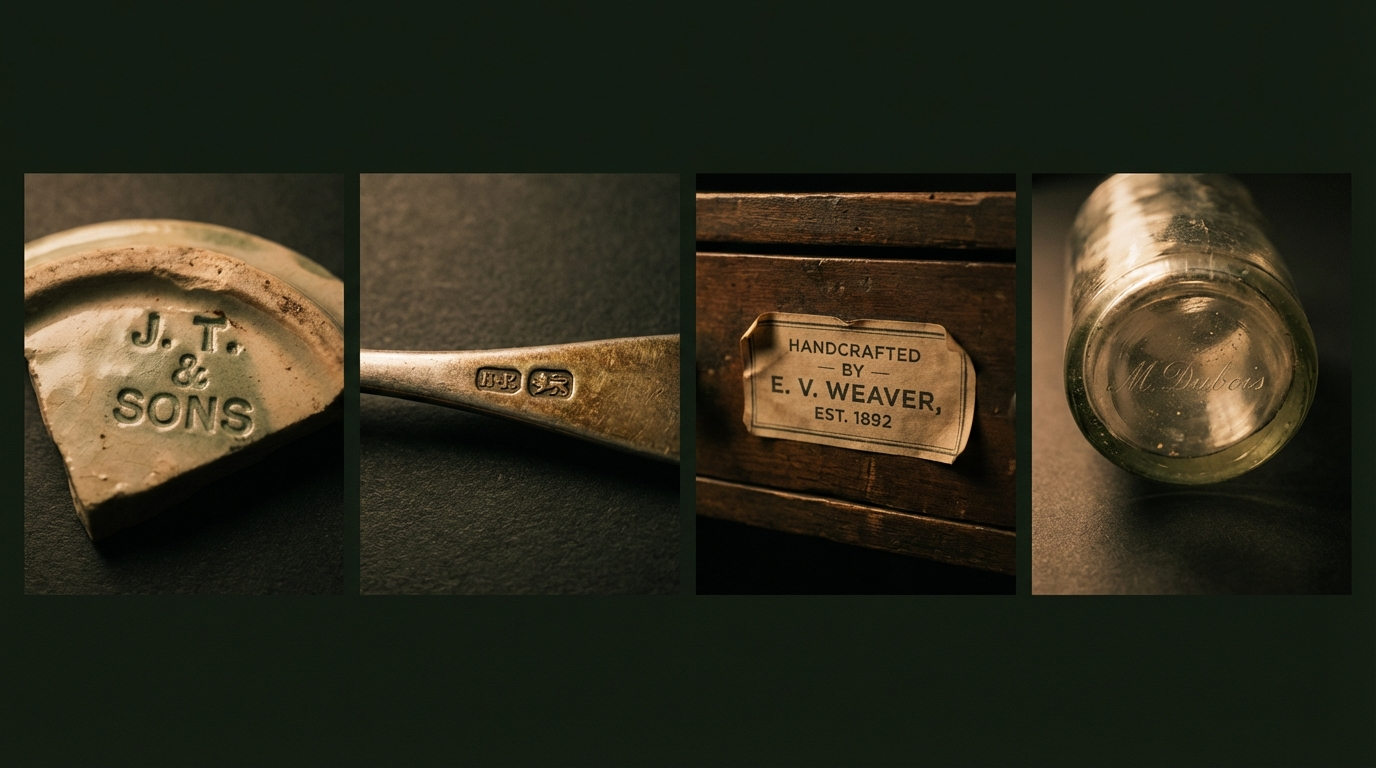
Marks hide in predictable spots, and a good flashlight changes everything. The location depends on the material: bottoms and lids for ceramics, the base for glass, the underside and clasps for silver, and back panels or drawer bottoms for furniture.
Ceramics & Pottery
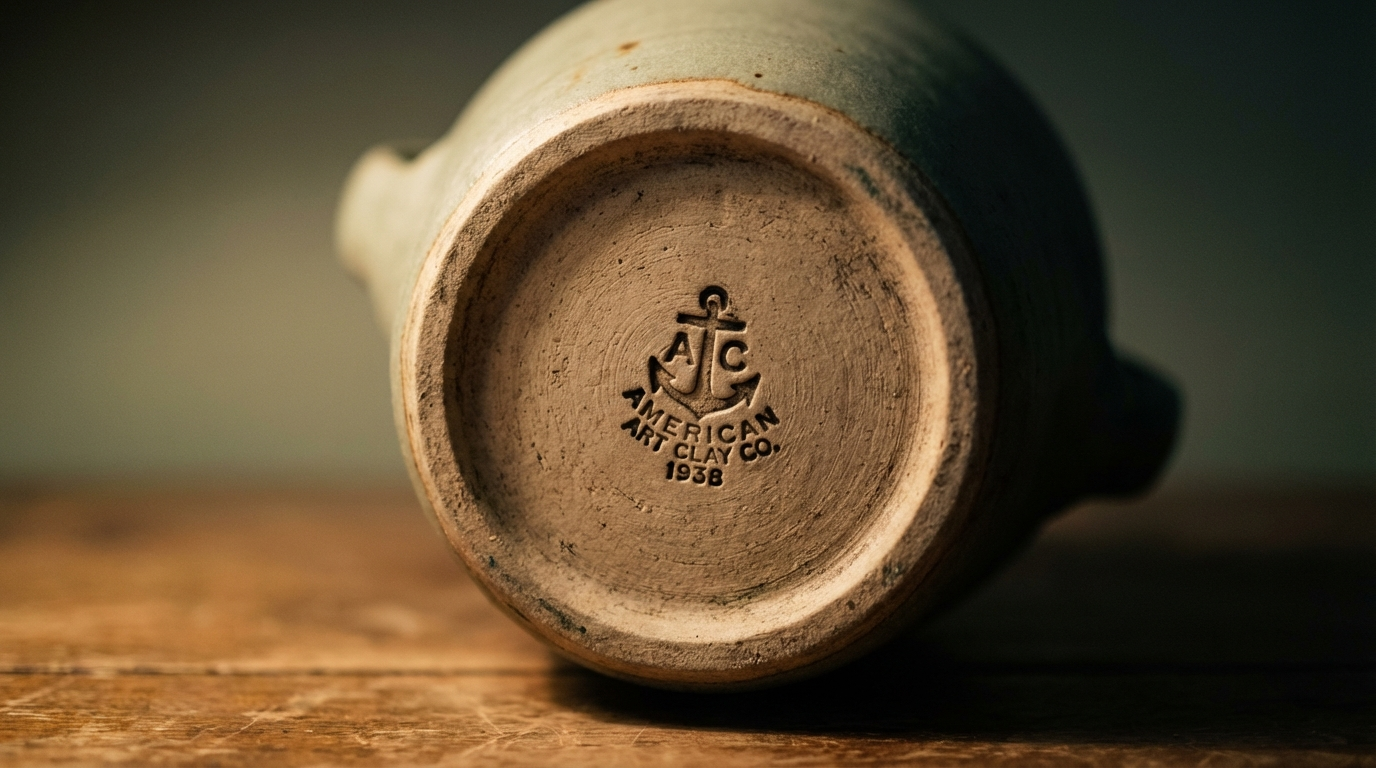
Bottom of the piece, inside lids, or on the underside of handles. Use your phone's flashlight at an angle—impressed marks only show up with raking light.
Glassware
Base or molded into the side near the bottom. Look for embossed or etched marks.
Silver & Metal
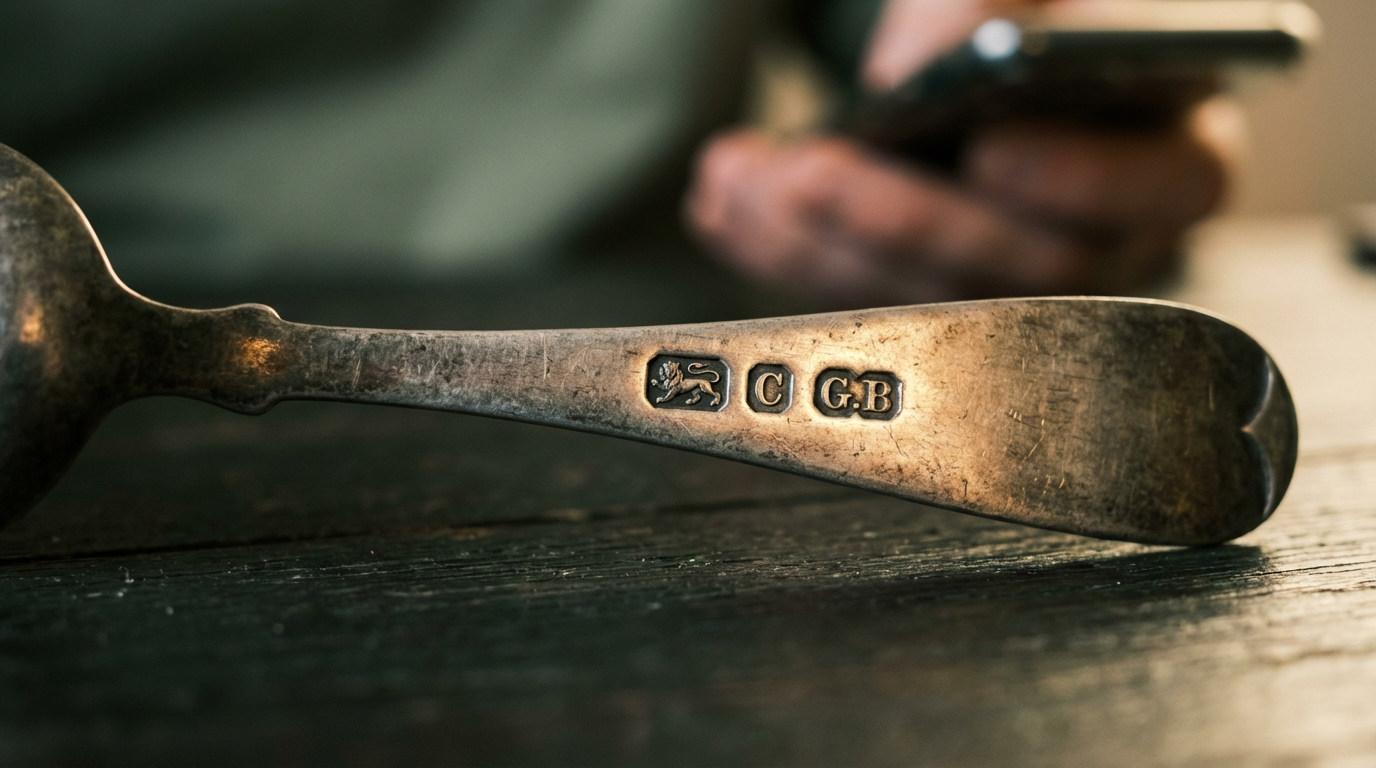
Underside, inside rim, or on clasps and hinges. Silver hallmarks are small but dense with information.
Furniture
Back panels, drawer bottoms, inside legs, or underside of tabletops. Look for stamps, labels, decals, or carved initials.
How Do You Decode a Maker's Mark?
Decoding a mark comes down to three steps: photograph it clearly, describe exactly what you see, then search those specific descriptors. Most marks can be identified without any specialist training.
Photograph clearly
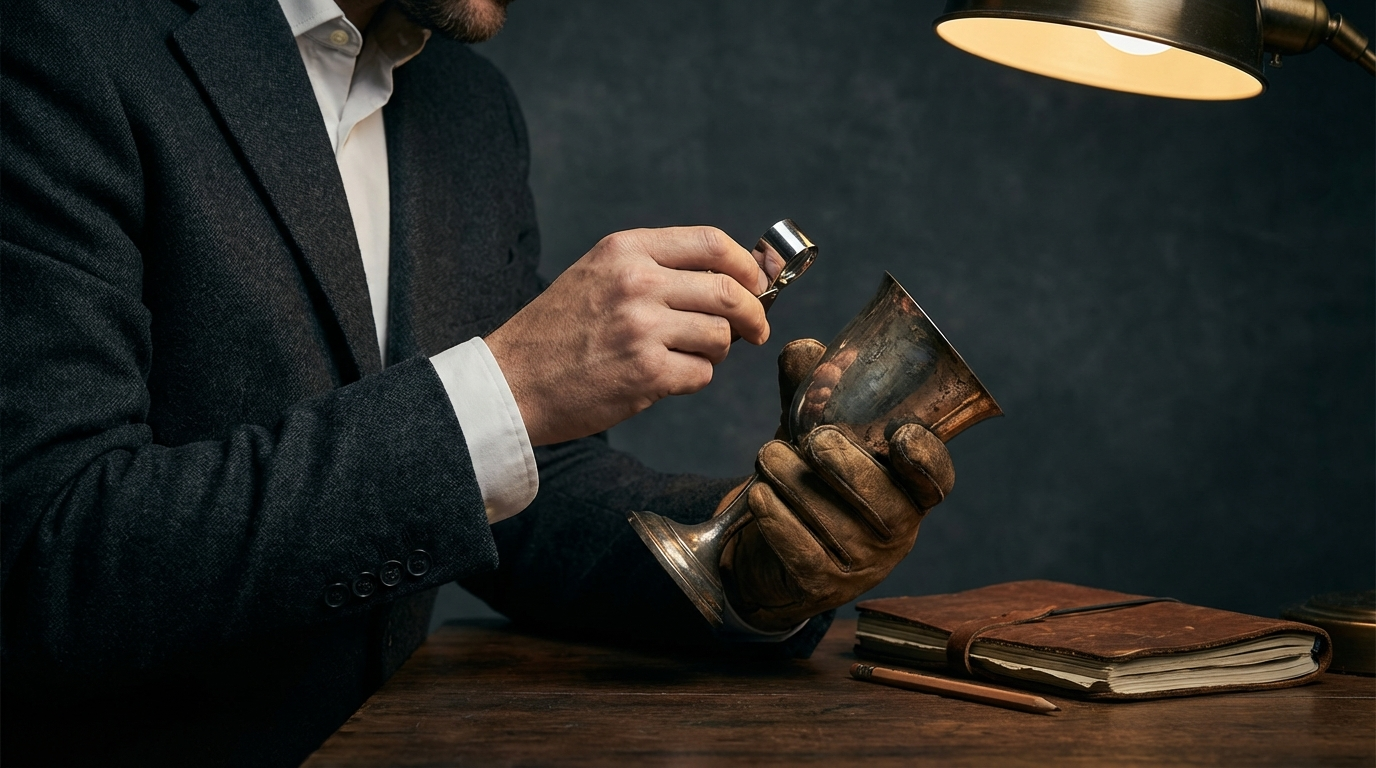
Good lighting and a steady hand matter. If you can't read it with your eye, the photo won't help.
Describe what you see
Crown with a letter? Animal shape? Initials in a circle? Words in a banner? These descriptors are searchable.
Search strategically
Use specific terms like "crown R maker's mark ceramics" on sites like Kovels, Replacements, Ltd., or the Marks Project. Or use an AI appraisal app that identifies marks automatically from photos.
Which Maker's Marks Are Valuable?
A handful of marks reliably signal higher prices. If you spot one of these, the piece is worth a closer look before it leaves your hands.
| Mark | What It Means |
|---|---|
| Rookwood | American art pottery; look for "RP" monogram and flame marks. Valuable and actively collected. |
| Roseville | Raised or impressed marks on American pottery. Strong secondary market. |
| Royal Copenhagen | Three wavy lines. Danish porcelain; commands premium prices. |
| Haviland | Multiple stamps on French porcelain. High-end dinnerware; valuable individually. |
| Stickley Furniture | "Als Ik Kan" brand or red decal. Arts and Crafts era; highly collectible. |
| Fenton Glass | Oval logo post-1970. Carnival glass from this maker is sought-after. |
| Sterling Silver | Lion passant (UK), eagle (European), or "925" (universal). Guarantees precious metal value. |
What If There's No Maker's Mark?
No mark doesn't mean no value—it means more detective work. Unmarked pieces can still be valuable, and many are. Unmarked pieces might be:
- Handmade or artisan work — Often valuable precisely because it's unique
- Pre-date marking conventions — Very old pieces sometimes have no mark
- Seconds or production samples — Worth investigating
- Lost labels over time — Age and construction can still date them
In these cases, identify by style, construction, materials, and provenance. Modern AI tools can help by analyzing the entire object—not just marks.
Most marks hide in predictable spots: Ceramics and pottery have marks on the bottom or inside lids. Glassware marks are on the base or molded into the side near the bottom. Silver and metal marks appear on the underside, inside rim, or on clasps/hinges. Furniture marks are on back panels, drawer bottoms, inside legs, or underside of tabletops. Use your phone's flashlight at an angle—impressed marks often only show up with raking light.
First, photograph the mark clearly with good lighting. Describe what you see: crown with a letter, animal shape, initials in a circle, words in a banner. Then search with specifics like "crown R maker's mark ceramics" or use reference sites like Kovels, Replacements Ltd, and the Marks Project. AI appraisal apps can now identify most maker's marks automatically from photos.
Some marks that reliably signal higher prices: Rookwood (American art pottery with "RP" monogram and flame marks), Roseville (raised or impressed marks), Royal Copenhagen (three wavy lines), Haviland (French porcelain with multiple stamps), Stickley furniture ("Als Ik Kan" brand or red decal), Fenton glass (oval logo post-1970), and sterling silver hallmarks like the lion passant (UK), eagle (European), or "925" (universal).
No mark doesn't mean no value—it means more detective work. Unmarked pieces might be handmade or artisan work (often valuable), pre-date marking conventions (very old), be seconds or production samples, or have lost their labels over time. In these cases, identify by style, construction, materials, and provenance. AI tools can help by analyzing the whole object, not just marks.
The Bottom Line
A maker's mark is shorthand for authenticity and provenance. Learn to find them, and you've doubled your ability to spot real value.