The Estate Sale Playbook: Timing and Strategy
Estate sales are treasure hunts with structure. Learn when to arrive, what to look for, and what experienced buyers skip entirely.
Estate sales are liquidations of entire households—furniture, kitchenware, clothing, art, tools, collectibles, everything. For collectors and informed buyers, they're the highest-signal opportunity in the secondhand world.
But they're also competitive. Here's how to work them strategically.

When should I go to an estate sale?
Day 1, First Hour
Full price — When serious buyers show up
High-value items—jewelry, art, designer pieces, electronics—go fast. If you want first pick, arrive 30-60 minutes before opening. Yes, there will be a line.
Pro tip: Look for a sign-in sheet. Many estate sale companies use numbered lists instead of a physical queue—your spot on the sheet is your spot in line, even if you show up early and stand in the wrong place. Miss the sheet, lose your position.
Day 1, Afternoon
Full price — The frenzy has passed
You can actually examine things. Mid-tier items remain. Good for methodical shopping without the crowd pressure.
Day 2
25-50% off — Prices drop, selection thins
Values improve. Good for furniture and larger items you couldn't justify at full price. Still decent variety.
Final Day
50-75% off — Deep discounts, slim pickings
You're picking through what nobody else wanted. Sometimes that's where the overlooked gems live.
The move: Go Day 1 for priority items, return Day 2-3 for bulk buys.
What should I look for first?
Walk the whole space before buying anything. Identify targets, then double back.
Priority scan order
-
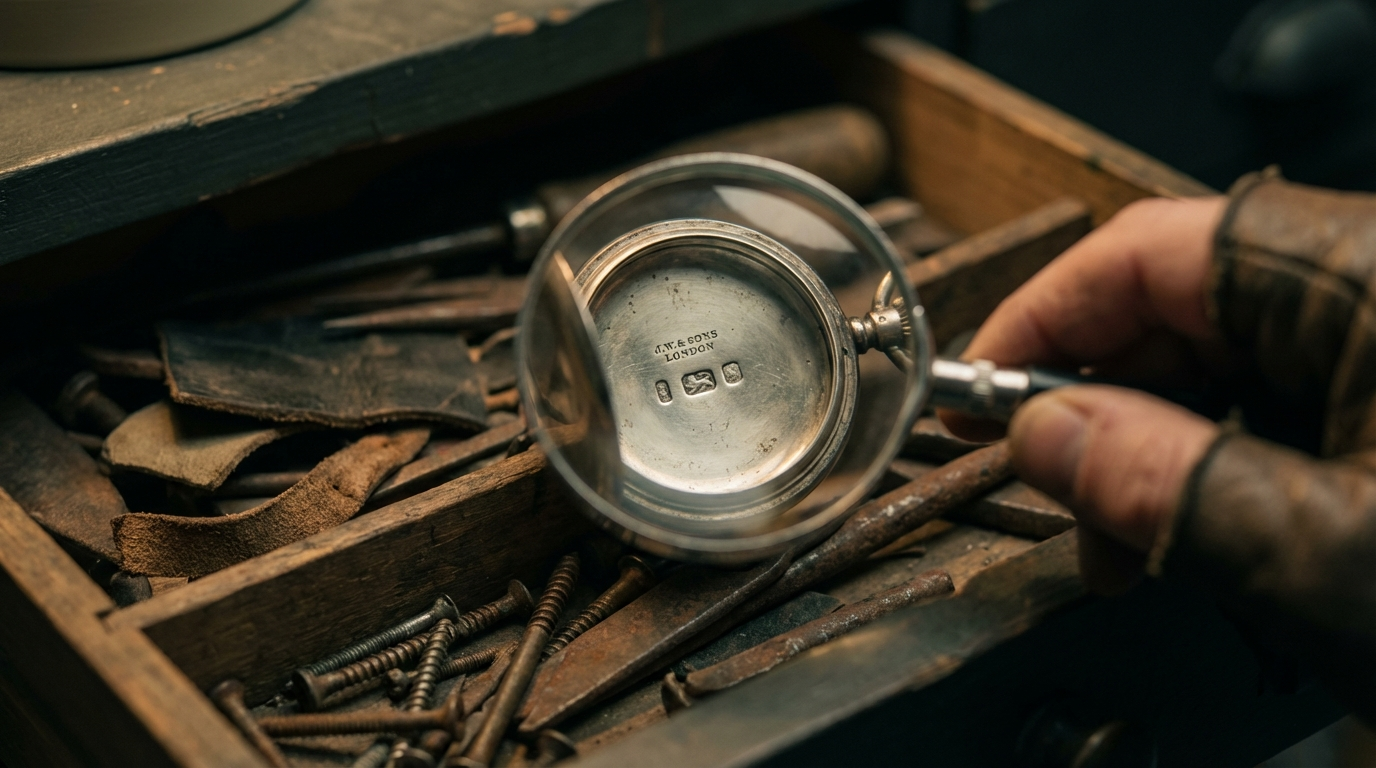
Jewelry and watches — Usually in a locked case near checkout. Ask to see pieces up close.
-
Art and frames — Look for signatures, quality framing, and anything that looks original rather than printed.
-
Small collectibles — Ceramics, glassware, figurines. Check for maker's marks on the bottom.
-
Clothing and accessories — Closets and bedrooms. Check labels immediately.
-
Furniture — Last, because it can't walk away. You have time.
How can my phone help at an estate sale?
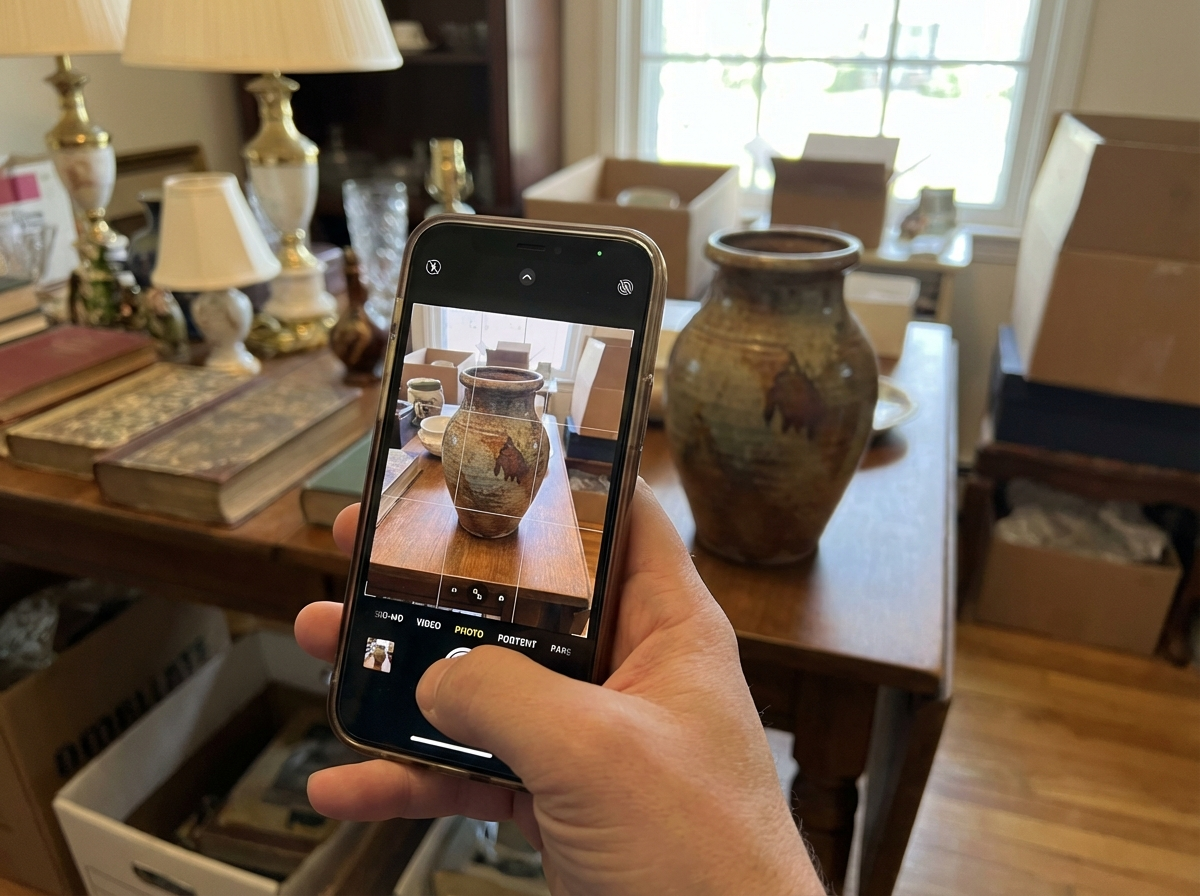
The most useful tool at an estate sale is an appraisal app. Snap a photo, get identification and pricing in seconds.
This changes your approach. Instead of "this looks interesting, maybe I'll research it later," you know immediately whether to buy. Decisions that used to take hours of post-sale Googling now take seconds.
Look for apps that work across categories—you'll encounter furniture, ceramics, clothing, and collectibles all in the same sale.
Can you negotiate at estate sales?
Estate sale companies set prices. Some negotiate, some don't.
What works
- Bundling multiple items ("I'll take all six glasses for $X")
- End-of-day offers
- Polite persistence—if something's overpriced, ask if they'll reconsider tomorrow
What doesn't
- Aggressive lowballing on Day 1
- Arguing about pricing
- Asking for discounts on already-cheap items
Pro Tip: Build relationships with estate sale companies. Repeat buyers sometimes get early access or callbacks for specific categories.
What do experienced buyers skip?

Not everything at an estate sale is worth your time.
- Particle board furniture — Heavy, fragile, no resale market
- Encyclopedia sets — Nobody buys them. Don't feel bad.
- VHS and cassette tapes — Exception: rare titles, sealed items
- Common dishware — Corelle, basic white china, Pyrex with no pattern
- Outdated electronics — That '90s stereo receiver isn't vintage yet
- Smoke-damaged items — The smell doesn't leave
Where do I find estate sales?
Find estate sales before everyone else:
- EstateSales.net — The main listing site. Set alerts for your zip code.
- Facebook groups — Local estate sale company pages post early
- Craigslist — Still used by smaller operators
- Driving neighborhoods — Signs go up before online listings sometimes
Location tip: Look for sales in older, wealthier neighborhoods. The probability of vintage quality goes up dramatically.
Day 1, first hour is when serious buyers show up—arrive 30-60 minutes before opening for high-value items. Look for a sign-in sheet near the door; many companies use numbered lists instead of a physical queue, and your spot on the sheet is what counts. Day 2 often has 25-50% discounts with thinner selection. Final day has deep discounts (50-75% off) but you're picking through what nobody else wanted. The best strategy: go Day 1 for priority items, return Day 2-3 for bulk buys.
Walk the whole space before buying anything. Priority scan order: 1) Jewelry and watches (usually in a locked case near checkout), 2) Art and frames (look for signatures and original pieces), 3) Small collectibles like ceramics and glassware (check for maker's marks), 4) Clothing and accessories in closets and bedrooms, 5) Furniture last, because it can't walk away.
Experienced buyers skip: particle board furniture (heavy, fragile, no resale market), encyclopedia sets, VHS and cassette tapes (unless rare or sealed), common dishware like basic Corelle or unpatterned Pyrex, outdated electronics from the 90s, and anything smoke-damaged (the smell doesn't leave).
The main listing site is EstateSales.net—set alerts for your zip code. Also check Facebook groups for local estate sale company pages, Craigslist for smaller operators, and drive through neighborhoods where signs go up before online listings. Pro tip: look for sales in older, wealthier neighborhoods where the probability of vintage quality goes up dramatically.
The Bottom Line
Estate sales reward preparation and information. Know what you're looking for, know what it's worth in real-time, and don't buy something just because it's cheap.
The flip side: when you find the right item at the right price, move fast. So will everyone else.