Is Your Old Pyrex Worth Money? Patterns That Sell
Most vintage Pyrex is worth $5–$25. But certain patterns sell for hundreds—and one went for over $22,000. Here’s how to identify what you have and its value.
Most vintage Pyrex is worth $5–$25 per piece, but rare patterns and promotional pieces sell for hundreds to thousands of dollars—and the rarest, Lucky in Love, has listed for over $22,000. What separates a $12 dish from a four-figure one is the pattern, the condition, and whether the piece was a limited or test run. Here's how to tell which one you have.
How much is vintage Pyrex actually worth?
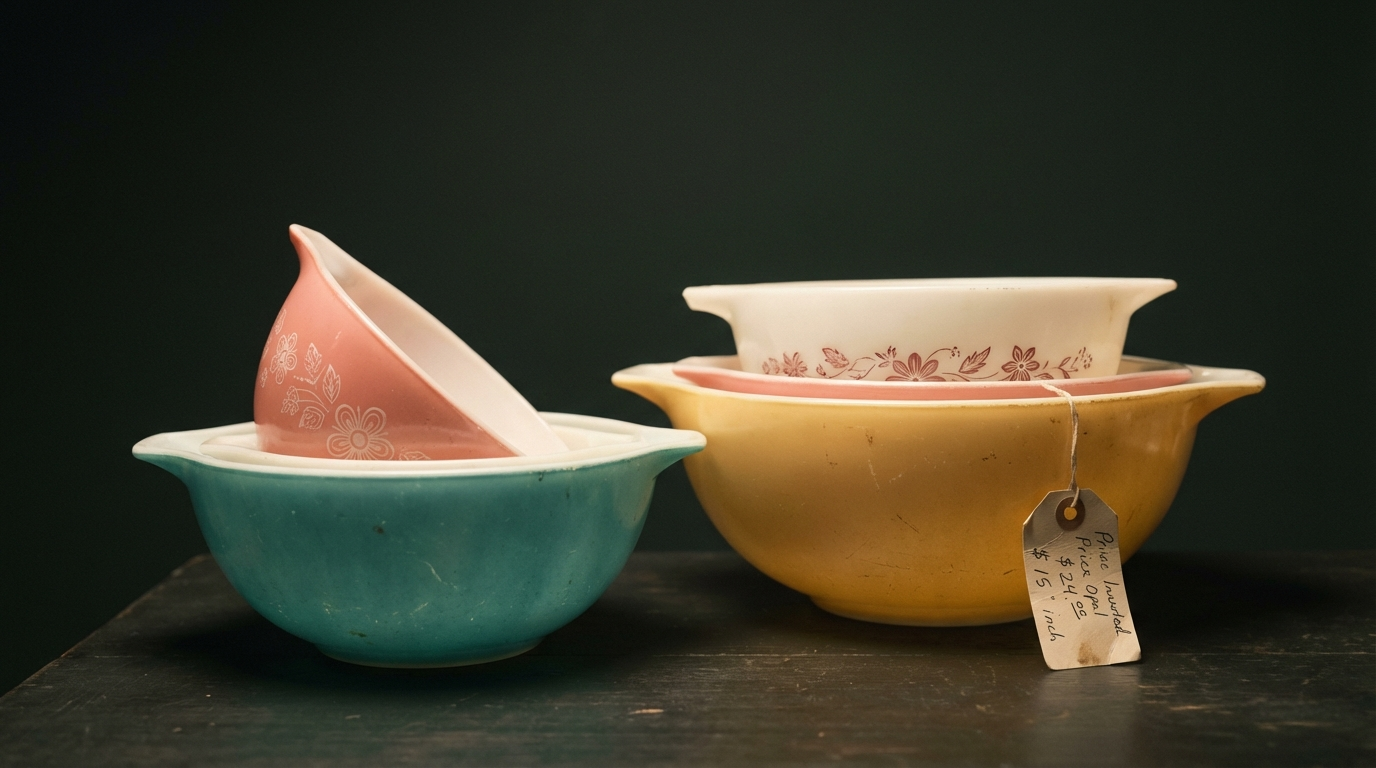
Most vintage Pyrex is worth $5–$25 per piece. That Butterfly Gold casserole dish from the 1970s? Beautiful. Nostalgic. Worth about $12 on a good day. The Spring Blossom mixing bowls? Similar story. These were mass-produced in enormous quantities, and supply still outpaces demand.
But the same company also made pieces that were only available through Stanley Home Products parties, S&H Green Stamps redemptions, and limited promotional runs. Some were test patterns that never reached production. One casserole dish — a pattern called Lucky in Love — listed for $22,100 in 2022. Only about ten or twelve are believed to exist.
The distance between $12 and $22,000 comes down to knowing which pattern you're looking at. Here's how to tell.
Which Pyrex patterns are worth real money?
The $1,000+ tier: Prototypes and ultra-rares
Lucky in Love (1959). Green clovers and pink hearts on white opal glass. Made only on the #473 one-quart casserole as a test run — the green grass bled through the pink hearts during production, likely killing the pattern before it launched. Around ten to twelve pieces are believed to exist. Sold for $5,994 through a Goodwill auction in 2017 (sixty bidders), $9,000 on eBay in 2018, and was listed at $22,100 in 2022. Collectors call it the Holy Grail of Pyrex.
Blue Dianthus (1963). A delicate blue floral produced as a "Sales Test." A single Cinderella mixing bowl sold for $3,600. Casseroles with lids reach $3,000.
Pink Tulip (prototype). The standard Tulip pattern is common in blue and brown. But a pink version — described by collectors as almost impossible to find — sold for over $4,400.
Gypsy Caravan (1960s). A pattern so rare most collectors have never seen one in person. Sold for nearly $4,700 in excellent condition.
Butterprint "Lady on the Left" variant. Standard Butterprint is common and affordable. But a specific variant with the Amish lady positioned on the left side of the dish sold for $3,050 in November 2024. Details matter.
The $300–$1,500 tier: Promotional and limited releases
Atomic Starburst (c. 1960). Gold eight-point starburst on turquoise. Produced for roughly one year. With original lid and candle warmer cradle: over $1,100. The casserole alone: $300–$600.
Pink Duchess (1959). Available only through Stanley Home Products hostess parties — you couldn't buy this in stores. Sold for $2,200 on eBay. Complete sets with accessories push toward $3,000.
Butterprint in Orange/Pumpkin. The standard Butterprint came in turquoise and white. But an orange variant was available only through S&H Green Stamps — never sold retail. Complete Cinderella bowl sets: $800–$1,600 or more.
Atomic Eyes / "Eyes" (1950–1959). Chip and dip sets in this pattern run $200–$600 depending on condition and completeness.
Balloons (1958). Original retail price: $3.95. Complete sets now: $200–$500 or more. That's a 12,500% return — if anyone had known to hold on to them.
The $50–$300 tier: Collectible and climbing
Snowflake Turquoise (1956–1967) brings $75–$600 for complete sets. Gooseberry in black and yellow: $200–$500 for a Cinderella set. Friendship (the birds and flowers pattern): $200–$400 for complete fridgie sets. Pink Daisy (1956–1962): $50–$200 per piece. Golden Hearts (1959): $45–$125.
There's a meaningful gap between these and the ultra-rares, but the prices are climbing. Supply is permanently fixed — Corning stopped making collectible Pyrex patterns by the mid-1980s — while demand keeps growing.
How do you identify vintage Pyrex?
The logo tells you the era
Flip the piece over. The stamp on the bottom is your first and most reliable dating tool.
PYREX in all capital letters means Corning-era production — pre-1998. This is the collectible vintage Pyrex, made from borosilicate or tempered soda-lime opal glass. pyrex in lowercase means modern post-1998 production by World Kitchen or Instant Brands. It has no collector value.
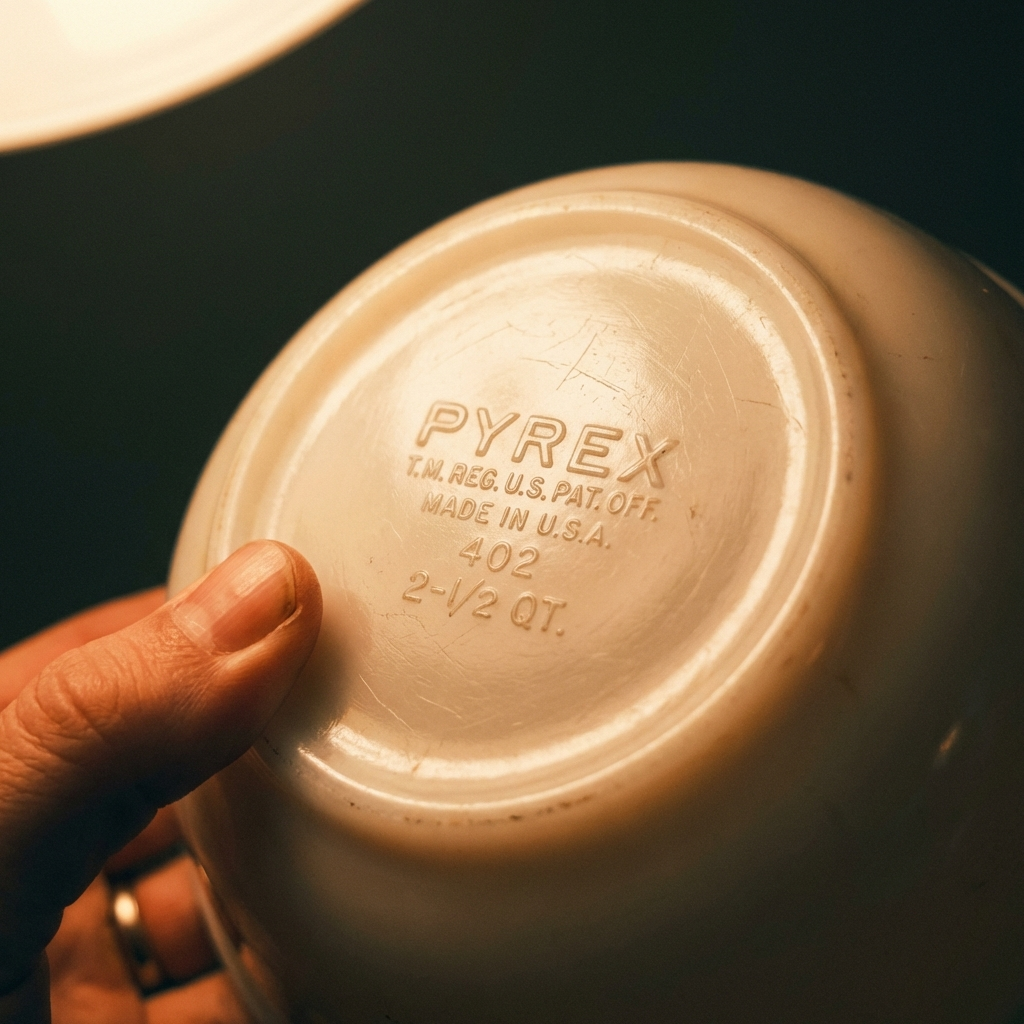
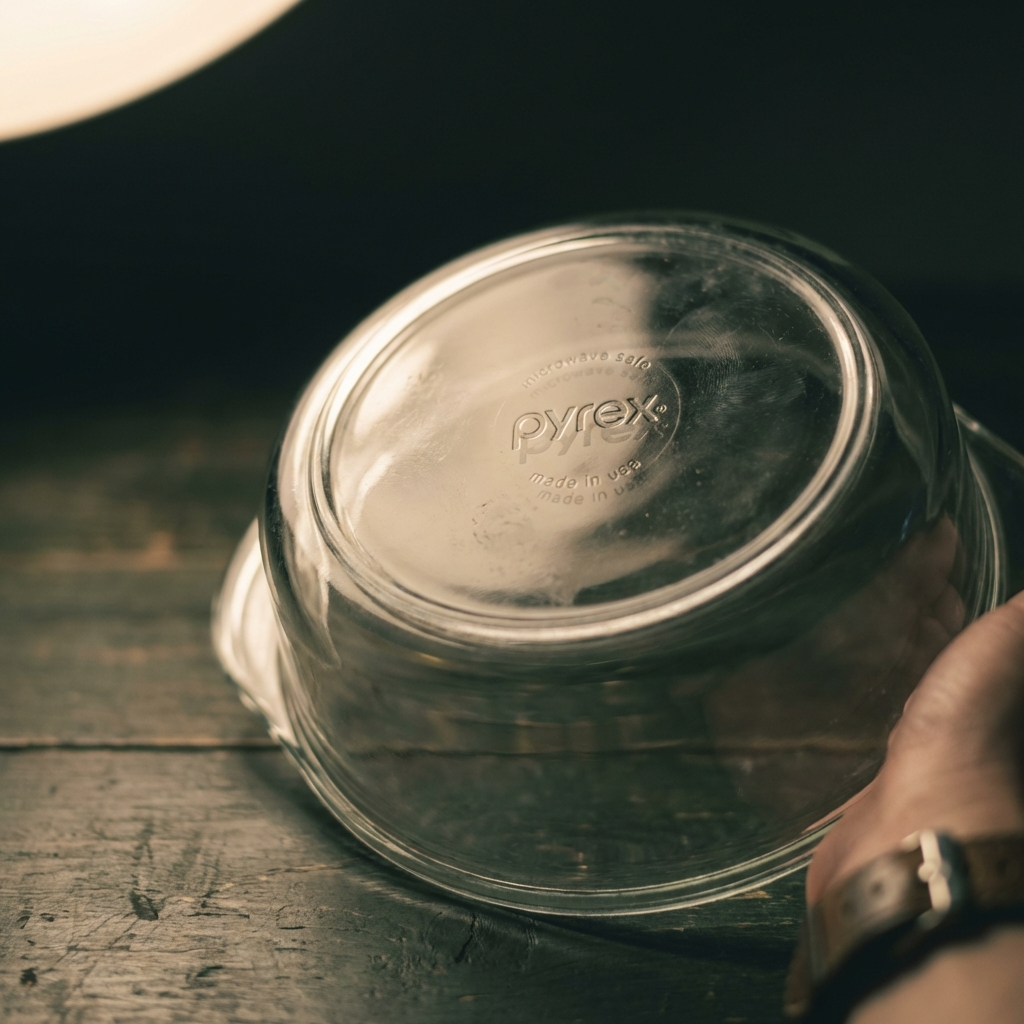
Within the all-caps era, the stamp evolved: pre-1940s used a simple sans-serif font. The 1940s–50s added a circle with "CG" (Corning Glass). By the mid-1950s you'll see "Made in the U.S.A." The late 1960s switched to straight text with a ® symbol. If you see metric capacities (milliliters) on the stamp, the piece dates to the mid-1970s or later.
Model numbers decode the piece
The numbers stamped on the bottom identify what type of piece you have and its size. The 400 series covers mixing bowls (401 = smallest, 404 = largest). The 470s are casseroles. Lids carry the base model number plus a "-C" suffix. Knowing the model number lets you search for your exact piece in price databases and collector groups.
Condition: the value multiplier
Dishwasher damage is the biggest issue. Detergent etches the glass surface over time, stripping color and creating a dull, hazy appearance called "DWD" in collector shorthand. Even minor fading can cut value in half. And it's irreversible — no amount of cleaning brings the color back.
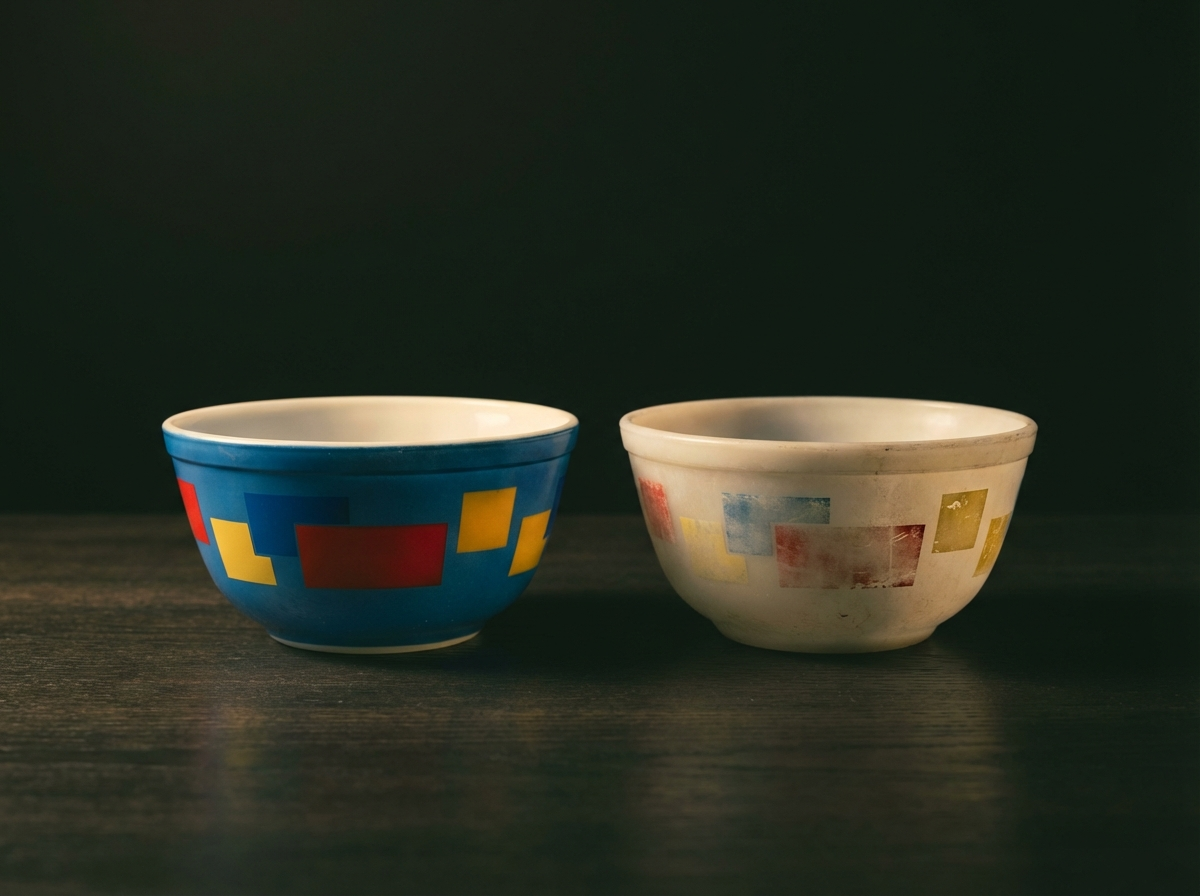
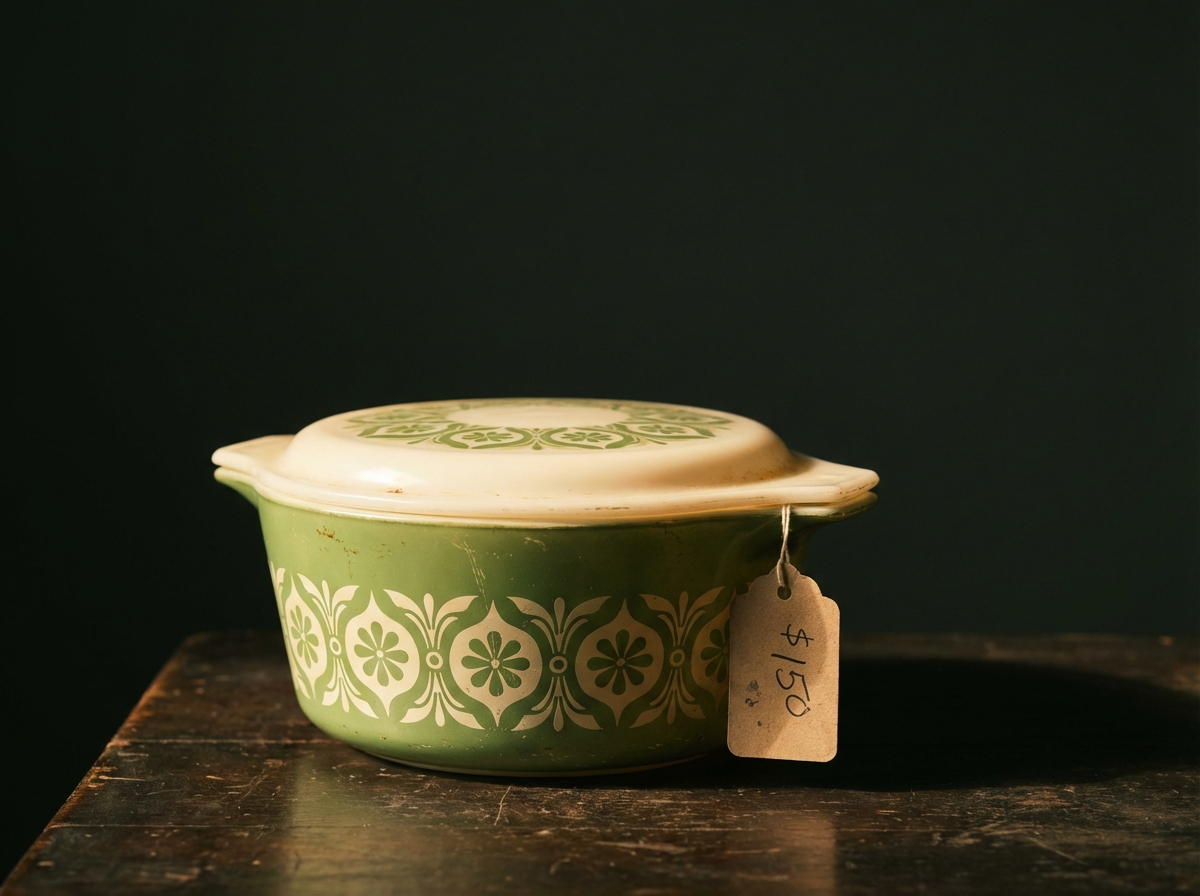
A chipped rim drops value to roughly 20% of what a clean piece brings. Cracks make pieces nearly worthless to collectors. Matching lids add substantial value — a casserole with its original lid might sell for $150 while the same dish without it brings $40. Original boxes, candle warmers, and metal cradles all increase value further.
Which Pyrex is NOT worth much (and why)?
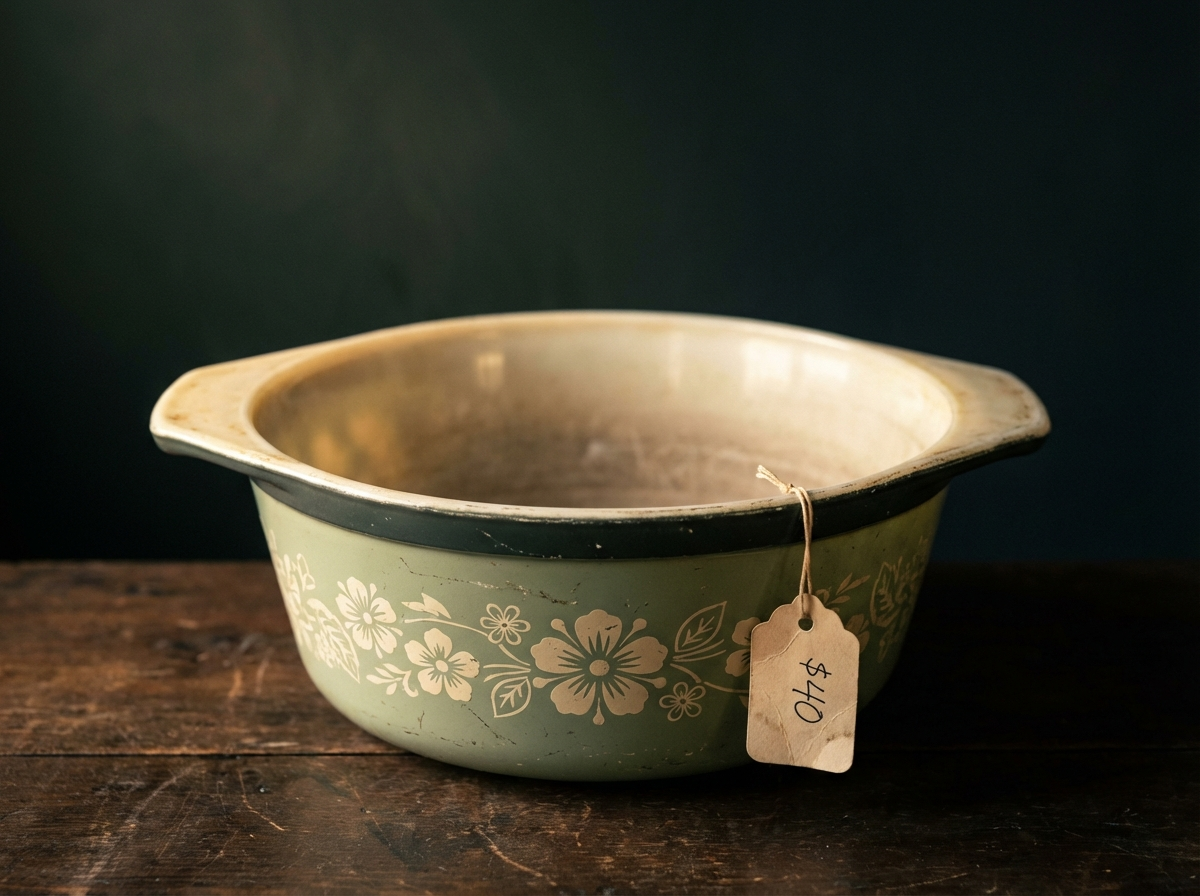
Spring Blossom (Crazy Daisy) and Butterfly Gold. Produced in huge quantities throughout the 1970s. Worth $5–$20 per piece. They're charming, but supply is enormous.
Clear glass Pyrex. Measuring cups, pie plates, loaf pans — the secondary market is saturated. Thrift stores have more than they can shelf.
Modern lowercase pyrex. If the stamp uses lowercase letters, it's post-1998 production. No collector interest.
Dishwasher-damaged pieces. Sometimes sellers present faded Pyrex as "rare color variants." Experienced collectors spot dishwasher damage immediately.
One important safety note: some vintage Pyrex decorations contain lead in the paint. This was common in mid-century manufacturing and doesn't affect most practical uses, but it's worth knowing — especially if you're using decorated vintage pieces for food storage.
Where is the best place to sell vintage Pyrex?
Facebook Marketplace and Pyrex-specific Facebook groups are the center of the Pyrex collecting universe. Groups like "Pyrex Passion" and "Vintage Pyrex Love" have tens of thousands of members who know exactly what they're looking at. This is where knowledgeable buyers congregate — and where you're most likely to get fair market value for rare pieces.
eBay offers the widest reach. Use "sold listings" to price accurately. Shipping Pyrex requires careful packing — breakage claims eat into margins fast.
Etsy works well for photogenic pieces — the platform's audience appreciates vintage aesthetics and is willing to pay premium prices for well-photographed, styled listings.
ShopGoodwill.com runs online auctions for Goodwill locations nationwide. The famous $5,994 Lucky in Love sale happened here. Worth checking both as a buyer and seller.
In-person options: estate sales (the number-one sourcing channel for Pyrex collectors), antique malls, and organized Pyrex Swaps run through Facebook groups. For common patterns, local sales avoid shipping costs and hassle.
Key research sites before you sell: Pyrex.cmog.org (the Corning Museum of Glass official pattern library), PyrexLove.com (identification, no prices), and PyrexCollector.com (173+ patterns cataloged).
What should you check at the thrift store?
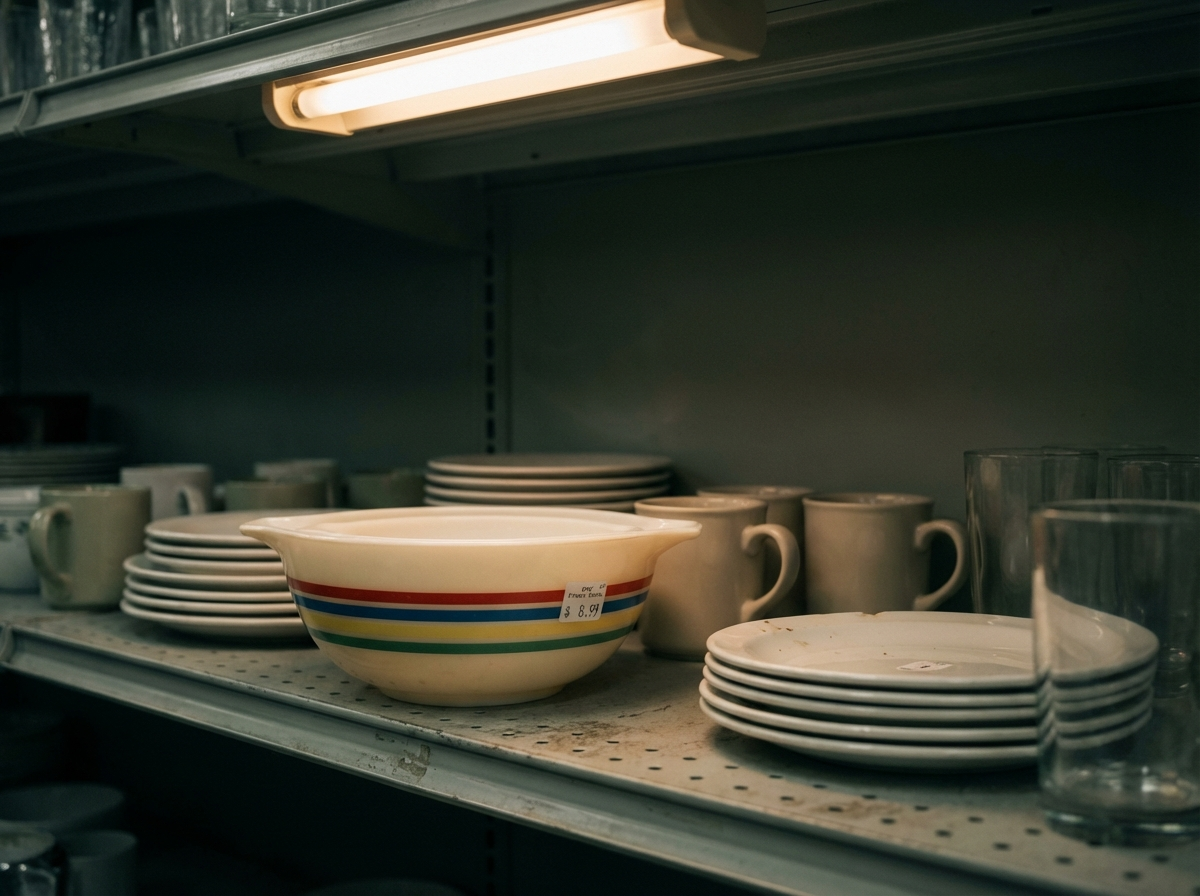
"Valuable Pyrex thrift store finds" has become a breakout search, and a thirty-second check covers most of it. Turn the piece over and read the backstamp: the logo style dates it, and the model number identifies the piece. Look at the pattern against the tiers above, and remember that a rare pattern on a common shape is still rare. Hold it up to the light and check for dishwasher damage, the dull, chalky finish that erases most of the value, and run a finger around the rim for chips. Lids are worth checking separately, because a correct lid can be worth more than the bowl it fits. If the same shelf holds a heavy black skillet, old cast iron rewards the same turn-it-over habit.
Why values keep climbing
The math is simple. Corning stopped making the collectible patterns by the mid-1980s. Every piece that breaks, chips, or gets dishwasher-damaged reduces supply permanently. Meanwhile, demand grows — driven by TikTok collectors, millennial nostalgia, and a broad appreciation for mid-century American design.
When Instant Brands (the modern Pyrex manufacturer) filed for Chapter 11 bankruptcy in June 2023, sellers immediately raised prices. A Butterprint set listed for $5,000 post-bankruptcy — similar sets had sold for around $1,600 before. The bankruptcy underscored what collectors already knew: vintage Pyrex and modern pyrex are entirely different products from entirely different eras.
The gap between common pieces ($5–$50) and rare promotional pieces ($500–$5,000+) continues to widen. If you have Pyrex worth keeping, keep it out of the dishwasher.
The bottom line
Your grandmother's Pyrex is probably not worth $22,000. It's probably worth $10–$50. But "probably" is a word that gets expensive when you're wrong.
The patterns that command real money share three traits: they were produced in tiny quantities (test patterns, promotional exclusives, regional variants), they survived in clean condition (no dishwasher damage, original lids), and they appeal to a collector community that tracks and values them obsessively.
Flip the piece over. Check the stamp. Identify the pattern. The whole process takes about thirty seconds — and it's the difference between a $5 garage sale giveaway and a listing that gets sixty bidders.
Most vintage Pyrex sells for $5–$25 per piece. Common 1970s patterns like Butterfly Gold or Spring Blossom have modest value due to high production numbers. However, rare patterns and promotional pieces from the 1950s and 1960s can be worth $200–$5,000+. The rarest pattern, Lucky in Love, has sold for over $22,000. Key factors: pattern rarity, condition (no dishwasher damage), completeness (matching lids), and whether it was a promotional or test piece.
Lucky in Love (1959) is the most valuable Pyrex pattern, with only an estimated 10–12 pieces ever made. A single casserole dish listed for $22,100 in 2022, and another sold for $9,000 on eBay in 2018. Other extremely valuable patterns include Blue Dianthus ($3,000–$3,600), Pink Tulip prototype ($4,400+), Atomic Starburst ($300–$1,100), and Pink Duchess ($2,200+).
Check the logo stamped on the bottom. PYREX in all capital letters indicates Corning-era production (pre-1998) — this is the collectible vintage Pyrex made of borosilicate glass. Lowercase "pyrex" indicates modern post-1998 production, which has minimal collector value. Additional dating clues: "Made in U.S.A." stamps started mid-1950s, metric measurements appeared mid-1970s, and model numbers identify piece type and size.
Spring Blossom (Crazy Daisy) and Butterfly Gold are the most common patterns and sell for $5–$20 per piece. Any clear glass Pyrex (measuring cups, baking dishes) has minimal resale value — the market is saturated. Modern lowercase "pyrex" has no collector appeal. And dishwasher-damaged vintage Pyrex loses 50% or more of its value — faded colors from detergent etching are irreversible.
Facebook Marketplace and dedicated Facebook Pyrex groups are the primary community hubs with the most knowledgeable buyers. eBay offers the widest reach for rare patterns. Etsy works well for curated, photogenic pieces. ShopGoodwill.com runs online auctions (where the famous $5,994 Lucky in Love sold). For common patterns, local options like antique malls and estate sales tend to yield better returns than shipping-heavy online sales.