Is My Old Furniture Worth Anything? How to Tell
Not all old furniture is antique, and not all antiques are valuable. Here’s how to tell whether it’s worth money—and what really drives value.
Most old furniture isn't worth much, and "old" isn't the same as "antique" or "valuable." The pieces that command real money are driven by maker, era, construction quality, and current demand—not age alone. Knowing which is which keeps you from trashing something valuable or wasting time on pieces nobody wants. Here's how to tell the difference.
Is old furniture the same as antique furniture?
Not all old furniture is antique. Not all antiques are valuable.
Technically, "antique" means over 100 years old. "Vintage" generally means 20-100 years. But these terms matter less than you'd think. What matters is:
- Desirability: Is anyone collecting this style?
- Quality: Was it well-made originally?
- Condition: Has it survived well?
- Provenance: Do you know who made it?
A mass-produced 1990s entertainment center is worthless, despite being 30+ years old. A 1960s Scandinavian teak sideboard might fetch thousands. Age is necessary but not sufficient.
What old furniture is actually selling right now?
The furniture market has shifted dramatically. Here's the current landscape:
Strong Markets (Active Buyers, Good Prices)
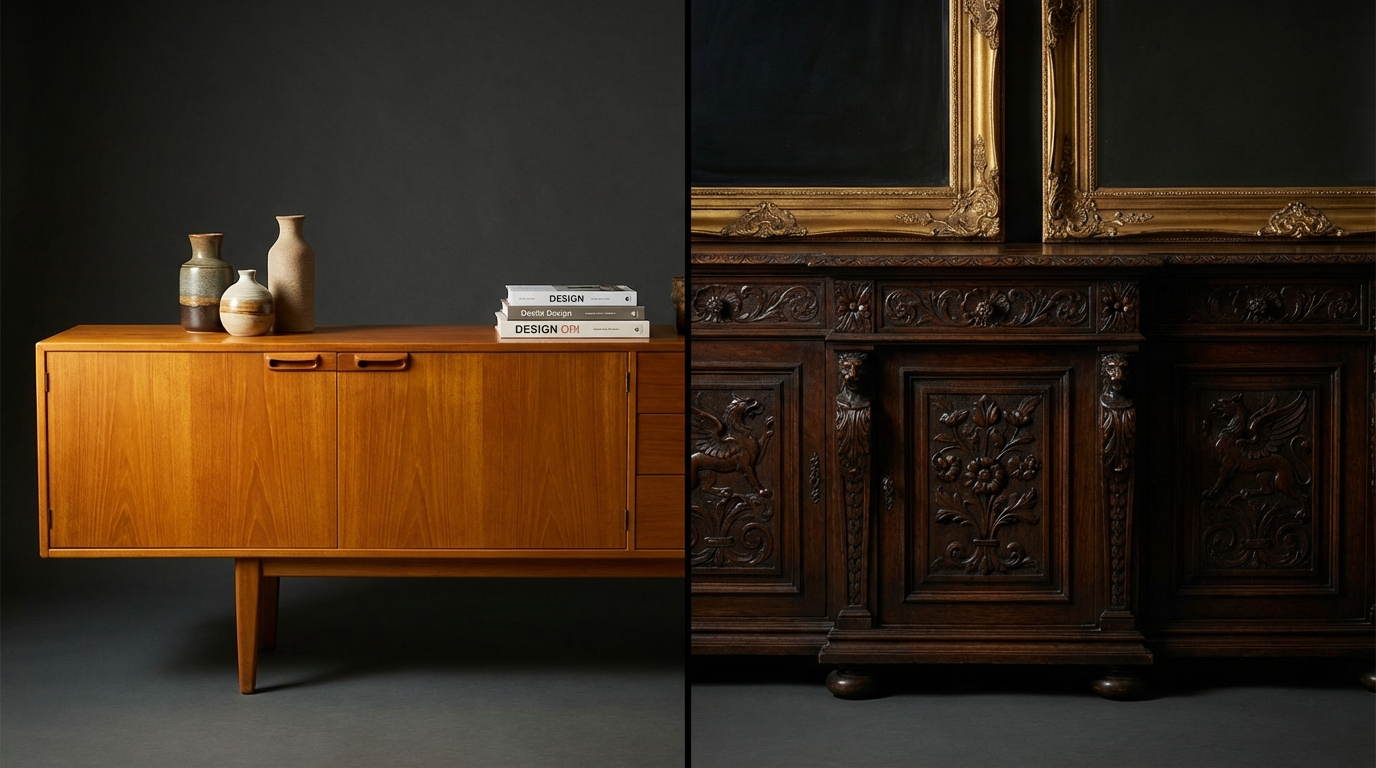
Mid-century modern (1945-1970): The dominant trend for 15+ years and still strong. Danish modern, Eames, Knoll, Herman Miller, and quality pieces in this aesthetic sell well. Even unmarked pieces in this style find buyers.
Quality vintage Americana (1920s-1960s): Well-made American pieces from this era—especially from known makers like Heywood-Wakefield—have consistent demand.
Industrial and rustic: Metal and wood pieces with character. Factory tables, architectural salvage, pieces with visible history.
Specific designer pieces: Furniture by recognized designers (even mid-tier ones) commands premiums. If you can identify the maker, research them.
Declining Markets (Oversupply, Weak Demand)
Victorian and ornate antiques: Dark wood, heavy carving, formal styles. Beautiful but out of fashion. The people who loved these are aging out of the market.
Brown furniture generally: Traditional mahogany, dark oak, formal dining sets. Estate sales are flooded with it. Prices have collapsed.
Colonial revival (1920s-1950s): Unless it's genuinely high-quality, the reproduction colonial style has limited appeal.
Anything from 1980-2000: With exceptions, furniture from this era hasn't aged into "vintage" appeal. Most of it was cheaply made and shows it.
How do I tell if my furniture is valuable?
Step 1: Look for Maker's Marks
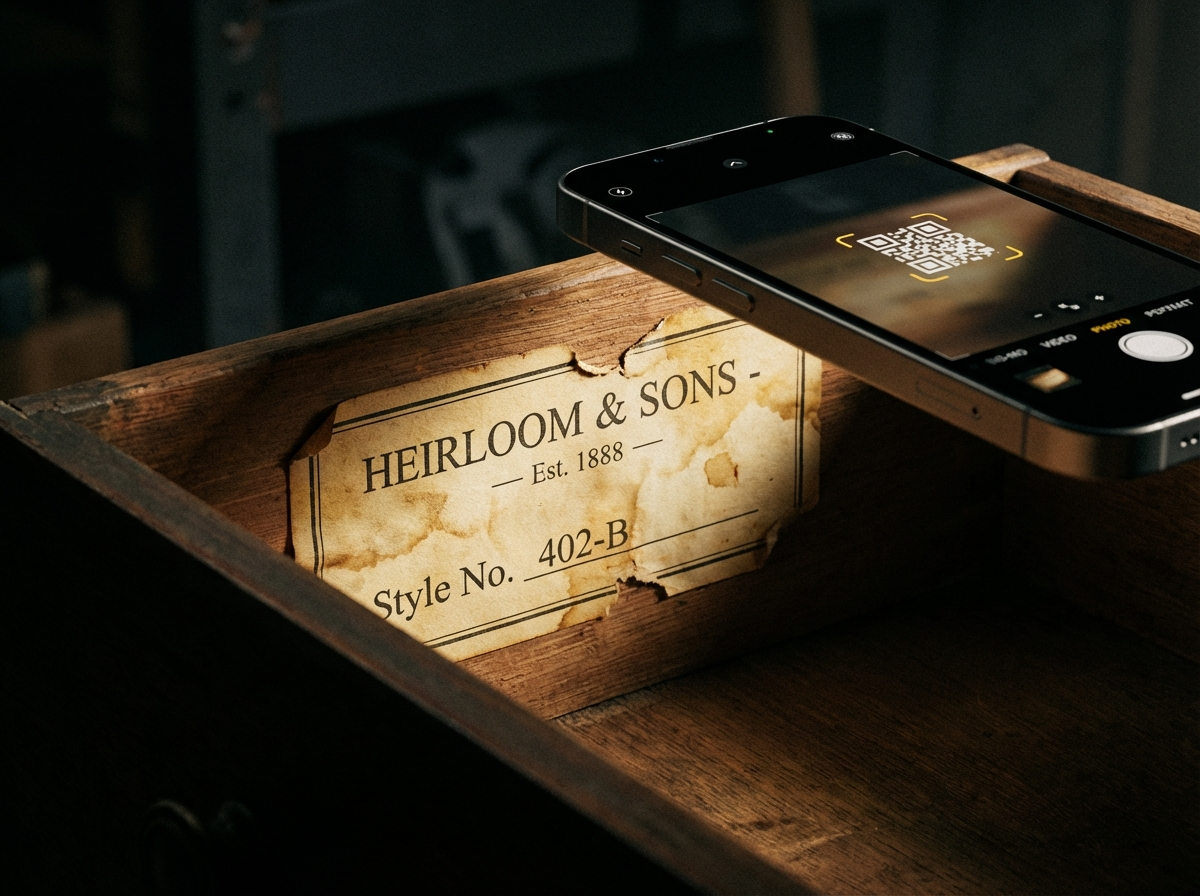
Flip it over. Open drawers. Check the back. Look for labels, stamps, branded marks, or signatures.
A maker's mark immediately tells you whether you need to research further. "Henredon" or "Drexel" means something different than no mark at all. How to read maker's marks.
Step 2: Assess Construction Quality
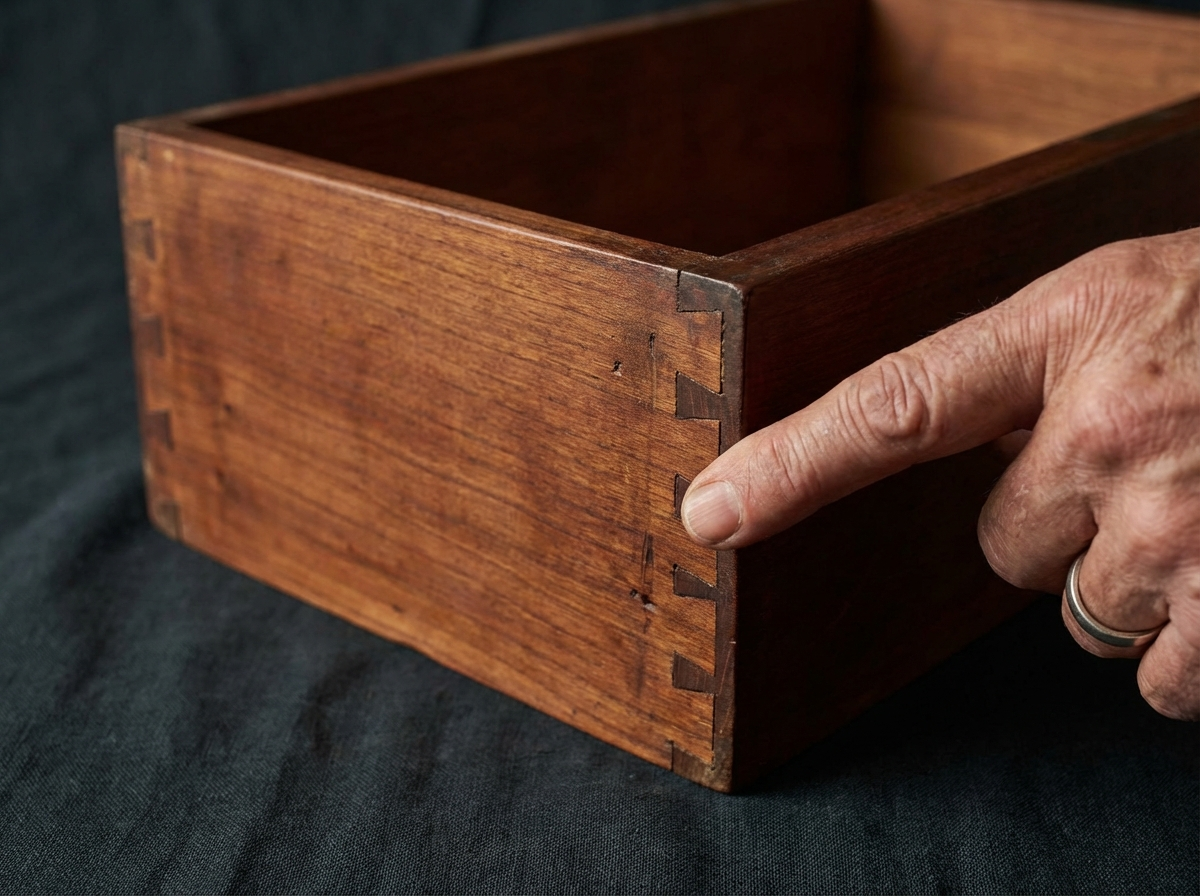
Real quality shows in details:
- Dovetail joints in drawers: Hand-cut dovetails (irregular spacing) suggest age and quality. Machine-cut (perfectly regular) suggests post-1890. No dovetails (glued or stapled) suggests low quality.
- Solid wood vs. veneer: Solid wood throughout indicates quality. Veneer over plywood is standard for most 20th century furniture—not bad, but not premium.
- Hardware: Original brass hardware in good condition suggests quality. Replacement hardware suggests previous repairs or lesser construction.
- Back panels: Finished backs (even if simple) suggest better manufacture than raw plywood.
Step 3: Evaluate Condition
Condition matters enormously—especially for pieces that derive value from craftsmanship rather than pure style.
Minor issues (usually fine):
- Surface scratches
- Natural patina and wear consistent with age
- Missing keys (for pieces with locks)
Significant issues (reduce value substantially):
- Structural damage (loose joints, broken legs)
- Water damage or warping
- Missing or replaced parts
- Bad refinishing jobs (stripping original finish often hurts value)
Possibly fatal (may make piece unsellable):
- Major veneer damage or loss
- Extensive repairs needed
- Fire or smoke damage
- Severe insect damage
Step 4: Get a Quick Market Check
For furniture without obvious maker's marks, an appraisal app provides fast orientation. It can identify styles, suggest eras, and pull comparable sales data—even without knowing the specific maker.
This tells you whether a piece warrants deeper research (potential significant value), can be sold casually (moderate value), or should just be donated (minimal market).
How do I polish old wood furniture without hurting its value?
Searches for how to polish wood furniture have climbed sharply this year, and the short answer is: gently, and without refinishing. An original finish, even a worn one, is part of what collectors and dealers pay for. Stripping and refinishing a valuable antique can cut its value in half.
For everyday care, dust with a soft cloth and use a good paste wax once or twice a year. Skip silicone-based spray polishes, which build up a film that's hard to remove and can complicate future conservation. For a piece with real value, clean with a barely damp cloth, dry immediately, and leave anything more aggressive to a conservator. If the surface has the soft, aged glow collectors call patina, don't try to polish it away.
Which antique chairs are worth keeping?
"Valuable antique chairs to keep" has been a breakout search in 2026, and the answer comes down to maker and construction. Windsor chairs with hand-turned spindles, Thonet and other bentwood chairs with paper labels or stamps, Stickley and other Arts and Crafts pieces with shopmarks, and signed mid-century designs (Eames, Wegner, Bertoia) all hold value. Check under the seat for labels, stamps, and hand-cut joinery. A set of four or six matching chairs is worth considerably more than the sum of singles, so keep sets together.
What are specific furniture styles worth?
Mid-Century Modern: $200-$10,000+
The wide range reflects the gap between reproduction and authentic designer pieces. Key factors:
- Designer attribution (marked pieces command premiums)
- Iconic designs (certain chair models, certain credenza styles)
- Original condition (unrestored pieces often worth more)
- Materials (teak and walnut valued over oak)
Art Deco (1920s-1930s): $300-$5,000+
Geometric designs, exotic woods, chrome and glass. Quality varies widely. Machine Age pieces particularly collectible.
Victorian (1837-1901): $100-$2,000
Currently oversupplied. Exceptional pieces still valuable; ordinary pieces struggle to sell at any price. Quality and condition matter more than age.
Early American and Primitive: $200-$5,000+
Simple, functional, handmade pieces. Authenticity critical—reproductions are common. Original paint highly valued.
Designer Modern (1950s-present): $500-$50,000+
Pieces by recognized designers—Eames, Saarinen, Wegner, Nakashima—are furniture as art. Authentication matters; fakes exist.
Where should I sell old furniture?
Furniture is harder to sell than small items because shipping is expensive and local markets are limited.
For high-value pieces: Auction houses (Heritage, local houses), specialty dealers, consignment galleries.
For mid-range pieces: Facebook Marketplace (local sales), Chairish and 1stDibs (curated vintage), Etsy (for specific styles).
For everyday vintage: Facebook Marketplace, Craigslist, estate sales, consignment shops.
For pieces nobody wants: Donate to Habitat ReStore or similar. They'll sell it to someone renovating on a budget.
Detailed selling guidance by platform.
The Bottom Line
Old doesn't mean valuable. But valuable pieces hide in plain sight—especially mid-century and quality vintage furniture that's currently in fashion.
Look for maker's marks. Check construction quality. Understand the current market. And when in doubt, scan it before you donate it.
The dining set you thought was worthless might fund the move. The antique you assumed was valuable might struggle to sell. The market doesn't care about sentiment—but knowing what it wants helps you make smarter decisions.