How to Sort Through a Deceased Parent's Belongings
A gentle, practical guide to sorting through a deceased parent’s belongings. How to approach it, identify what’s valuable, and make decisions without regret.
Sorting through a deceased parent's belongings is one of the hardest tasks you'll face. It's not just stuff—it's memory, identity, and decisions that feel permanent. There's no way to do this without some grief. But there is a way to do it without regret.
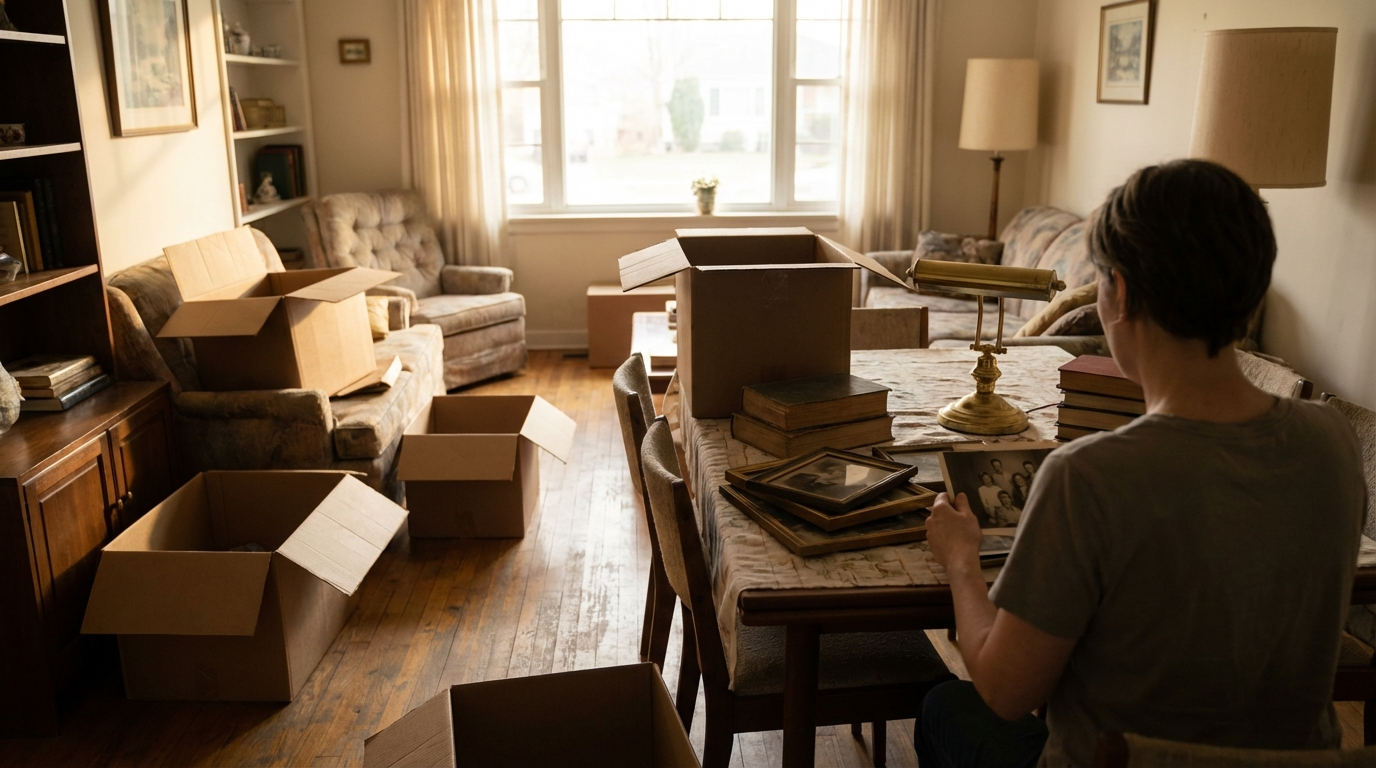
This guide is practical. It won't tell you how to feel. It will tell you how to approach the process so you can honor what matters without drowning in the volume.
What should I do before I start sorting?
Rule 1: You don't have to decide everything now.
The pressure to clear a house quickly—for a lease, a sale, or just to stop paying utilities—is real. But "I'll deal with this later" is a valid decision for anything you're unsure about. Box it. Label it. Revisit it in six months when the grief fog lifts.
Rule 2: Value and meaning aren't the same thing.
Your mother's everyday coffee mug might mean everything to you and nothing to an appraiser. That's fine. Keep what matters emotionally. But also know that the reverse is true: items with no sentimental pull might have real market value. A quick scan can tell you which is which.
Rule 3: You can't keep everything.
This is the hardest one. But trying to preserve an entire life in objects leads to garages full of guilt. Choose deliberately. Let the rest find new homes where it will be used, not stored.
How do I sort belongings room by room?
Tackling a whole house is overwhelming. Tackling one room is manageable. Start with the easiest space—often a bathroom or guest room—to build momentum before facing the bedroom or home office.
For each room:
-
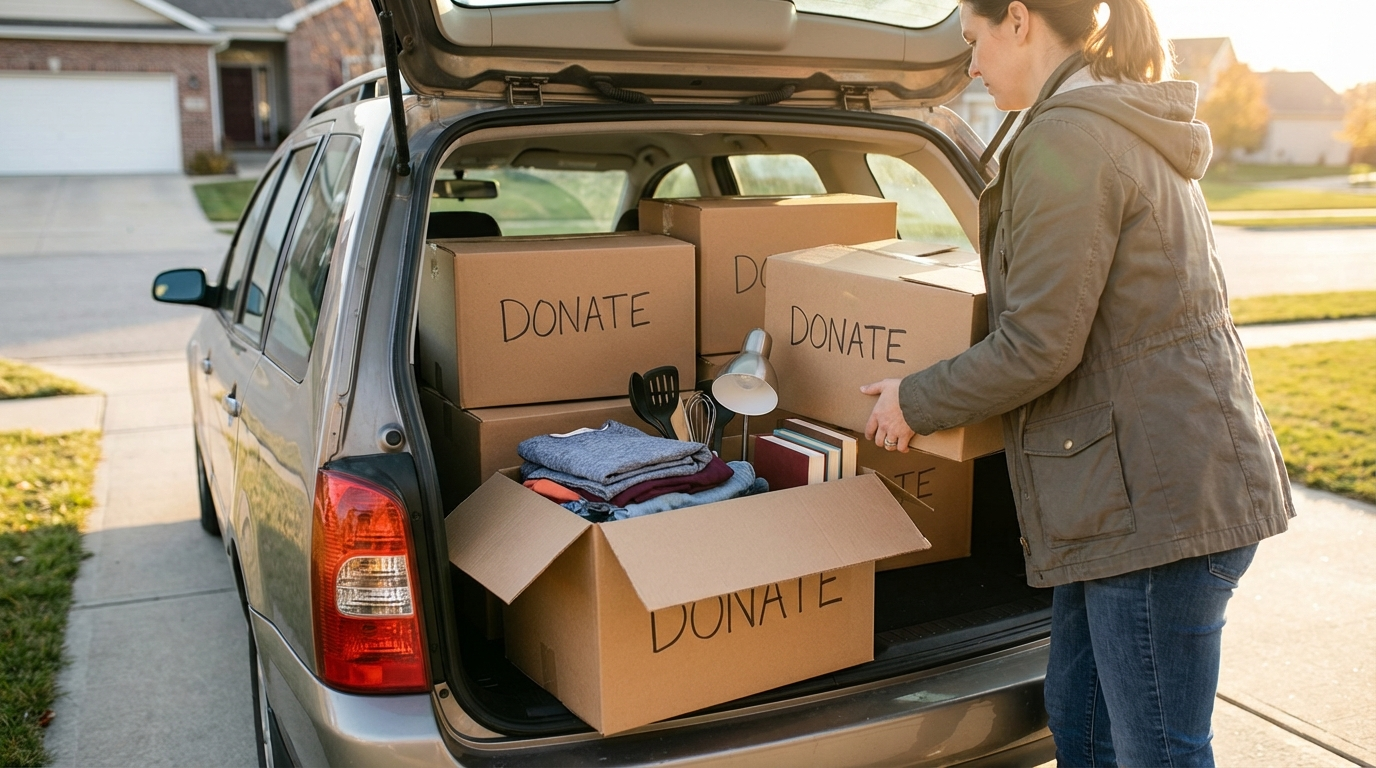
First pass: Obviously keep, obviously donate, obviously trash. Don't deliberate. If you know instantly, act instantly.
-
Second pass: The maybe pile. Everything uncertain goes here. This is where you slow down.
-
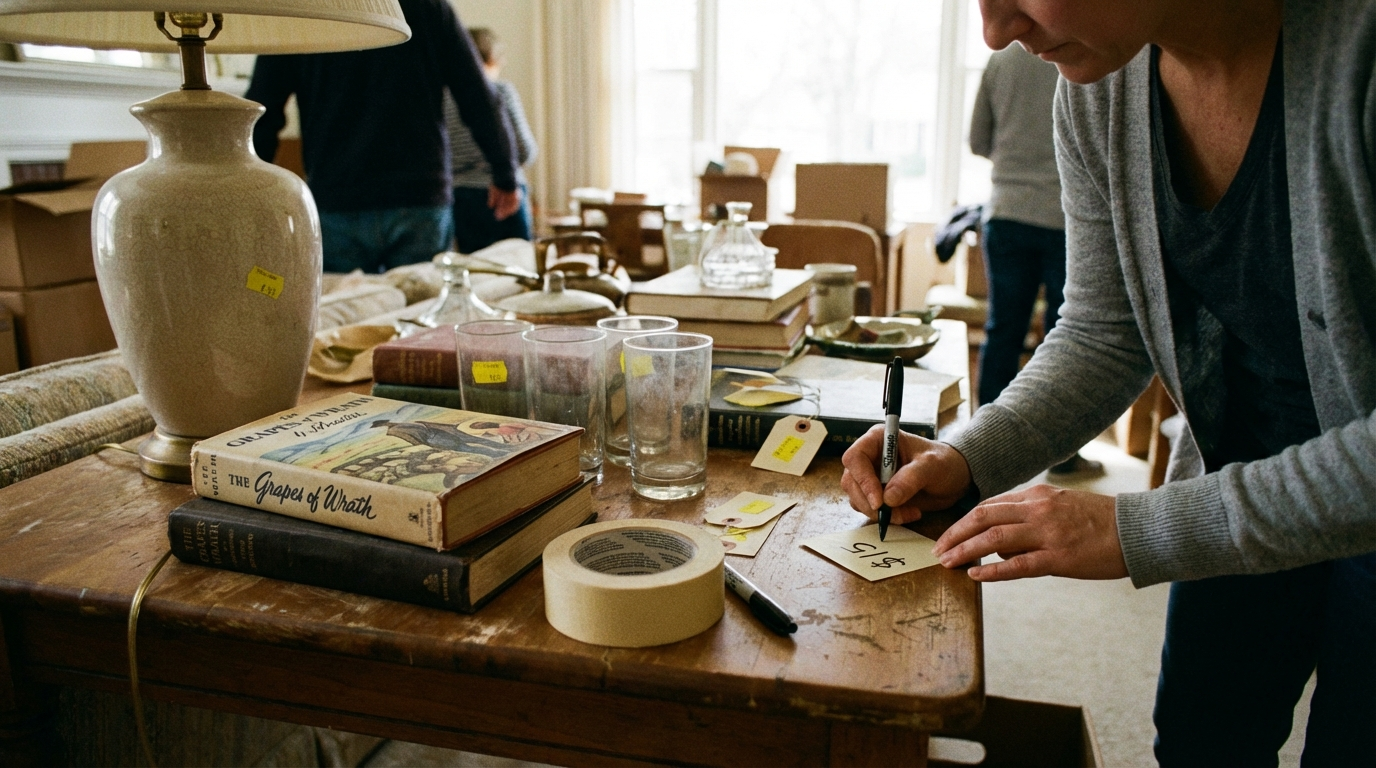
Third pass: Assess the maybes. This is where knowing value helps. An item you're keeping out of obligation might be easier to release if you know it's worth $15. An item you were about to donate might deserve more attention if it's worth $500.
What's likely to be valuable (and what isn't)?
After decades of accumulation, it's hard to know what deserves research and what can go straight to donation.
Worth a closer look:
- Jewelry (even costume jewelry from certain eras)
- Art and prints (check for signatures, limited editions)
- Furniture from the 1950s-70s (mid-century is consistently valuable)
- China and pottery with maker's marks on the bottom
- Watches, especially mechanical ones
- Tools (quality vintage tools have strong resale markets)
- Books (first editions, signed copies, specific collectible categories)
- Vinyl records (condition matters enormously)
Rarely valuable (despite what you might hope):
- Mass-produced furniture from the 1980s-2000s
- Encyclopedia sets
- Most glassware and crystal (with exceptions)
- VHS tapes, most DVDs
- Hummel figurines (market has declined significantly)
- Thomas Kinkade prints
- Beanie Babies (with a few rare exceptions)
When you're unsure, a quick scan with an appraisal app can tell you in seconds whether something warrants research or can be donated without worry.
How do I handle sentimental items?
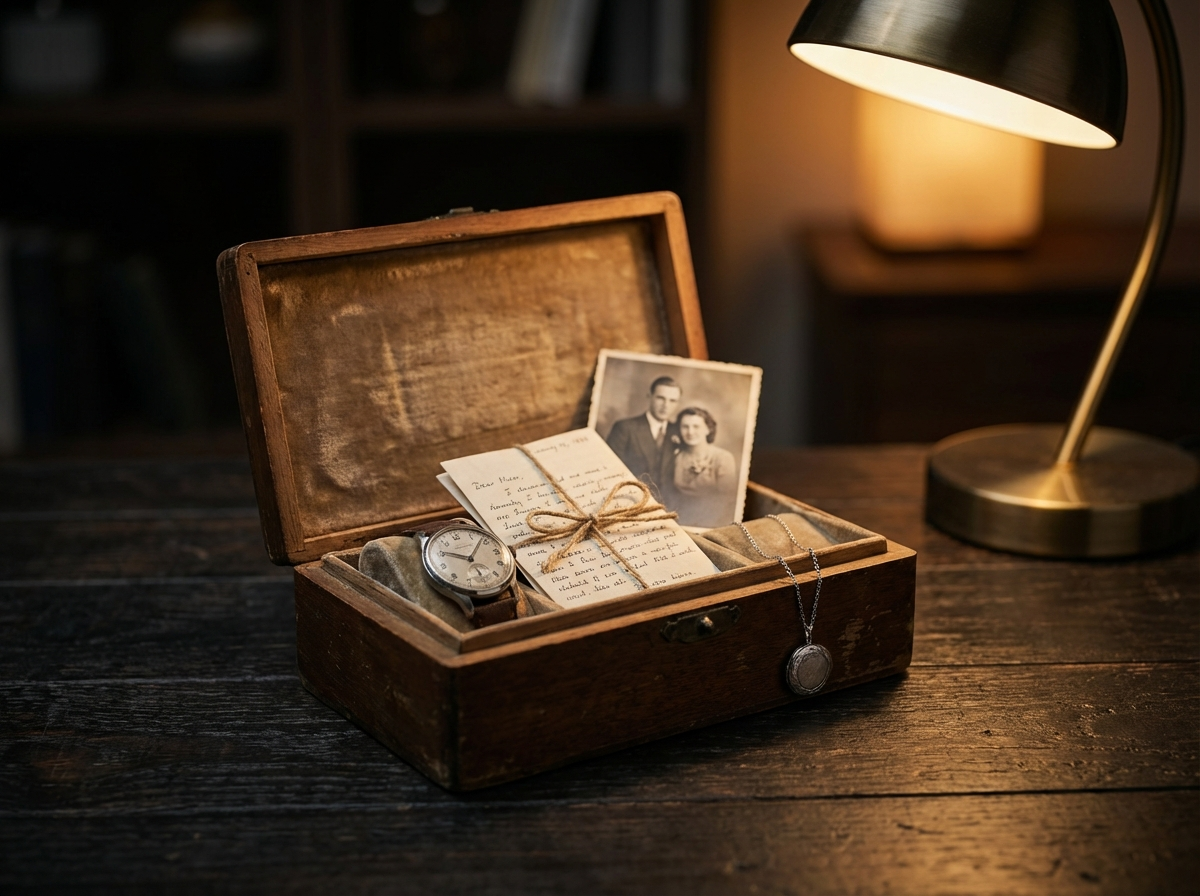
The hardest items aren't valuable—they're meaningful. Your father's worn wallet. The cookie tin that was always in the kitchen. Reading glasses still on the nightstand.
Some strategies that help:
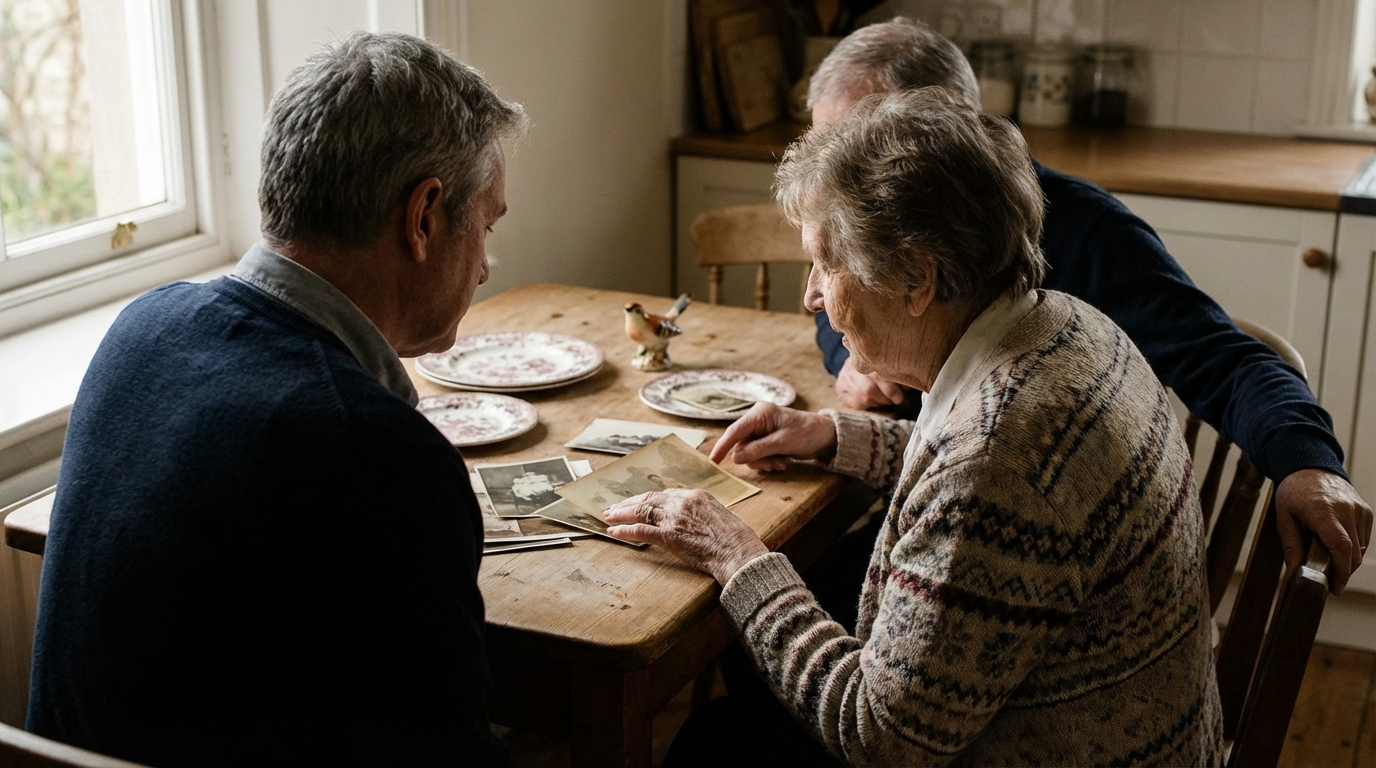
Take photos. You can preserve the memory without keeping the object. A photo of your mother's perfume bottles captures the vanity you remember without requiring you to store them forever.
Choose representatives. Instead of keeping every sweater, keep one. Instead of every book, keep the one with notes in the margins.
Create a memory box. One container, finite space. What matters most goes in. This forces prioritization and creates a curated collection rather than an undifferentiated mass.
Give with intention. Offering a specific item to someone who will appreciate it—a friend who admired your father's watch, a grandchild who remembers the cookie tin—extends the object's story rather than ending it.
What if I find something unexpected?
Decades of accumulation often reveal surprises. Documents you didn't know existed. Objects with unknown histories. Sometimes valuable finds; sometimes difficult discoveries.
Financial documents: Look for old stock certificates, savings bonds, insurance policies. Some may still have value or need to be formally closed.
Hidden collections: Many people collect quietly. Check closets, attics, and storage areas for accumulations that might not be obvious—coins, stamps, vintage items.
Items of uncertain origin: If you find something that seems significant but you don't know its story, document it with photos before deciding anything. Provenance matters for value; family knowledge matters for meaning.
Where can I get help?
You don't have to do this alone.
For emotional support: Grief counselors, support groups, trusted friends. The practical task and the emotional task are intertwined, and support with one helps the other.
For physical help: Estate sale companies, professional organizers who specialize in estates, junk removal services for the clear-outs. These services exist because this task is genuinely hard.
For assessing value: Appraisal apps for quick checks on individual items, professional appraisers for high-value or complex pieces, estate sale companies who will price items for sale.
The Bottom Line
Sorting through a parent's belongings is grief work disguised as logistics. Give yourself grace. Take breaks. Ask for help.
The goal isn't to finish quickly—it's to finish well. To keep what truly matters, to pass on what will be valued elsewhere, and to let go of what's simply... stuff.
You'll know you're done not when the house is empty, but when you feel at peace with what you kept, what you released, and how you made those choices.