How to Price Items for an Estate Sale
Pricing an estate sale is part research, part psychology. Here's how to set prices that sell—quickly enough to clear the house, high enough to get fair value.
The fastest way to price an estate sale: price to sell most of it over a single weekend, not to maximize any one item. Research recent sold prices for the few pieces that might be valuable, price everything else to move—usually 20–50% of online resale value—and plan to discount on days 2 and 3.
Pricing an estate sale is stressful. Price too high, and things don't sell. Price too low, and you leave money behind. And you're often doing this while grieving, exhausted, or under time pressure.
This guide is practical. It covers how to research prices, how to think about estate sale psychology, and how to set prices that actually move merchandise.

What's the goal when pricing an estate sale?
Estate sales aren't antique shops. The goal is to clear a house in a weekend, not maximize every dollar.
The right mindset:
- Price to sell, not to keep. If you wanted to keep it, you wouldn't be selling it.
- Volume matters more than individual prices. A hundred items at $10 each is better than one item at $200 that doesn't sell.
- Days 2 and 3 are discount days. Price for Day 1; accept that discounts will follow.
How do I research estate sale prices?
Quick Method: Appraisal Apps
For most items, an appraisal app gives you fast orientation. Scan the item, get a market range.
How to use this data for estate sale pricing:
- The app tells you resale market value (what it sells for online)
- Estate sale prices are typically 20-50% of resale value
- The gap accounts for immediacy, no shipping, buyer convenience
If an app says an item is worth $100 on eBay, price it at $30-50 for the estate sale. Serious buyers know they're getting a deal.
Comparative Method: Sold Listings
For items without app recognition or where you want confirmation:
- Search eBay sold listings (not active listings—actual sales)
- Check Chairish, 1stDibs for furniture comparables
- Search "estate sale" + item type for realistic pricing
Remember: estate sales are retail, not auction. Buyers pay immediately and haul items themselves. That has value.
When to Get Professional Help
For potentially valuable items—art, antiques, jewelry, collectibles—consider:
- Auction estimates: Many auction houses provide free estimates
- Appraisers: For items over $1,000 potential value (bodies like the International Society of Appraisers list credentialed members)
- Specialist dealers: For niche categories (coins, firearms, musical instruments)
The cost of professional input is often worth it for items that might be significantly valuable—or that you suspect might be.
How should I price items by category?
Furniture
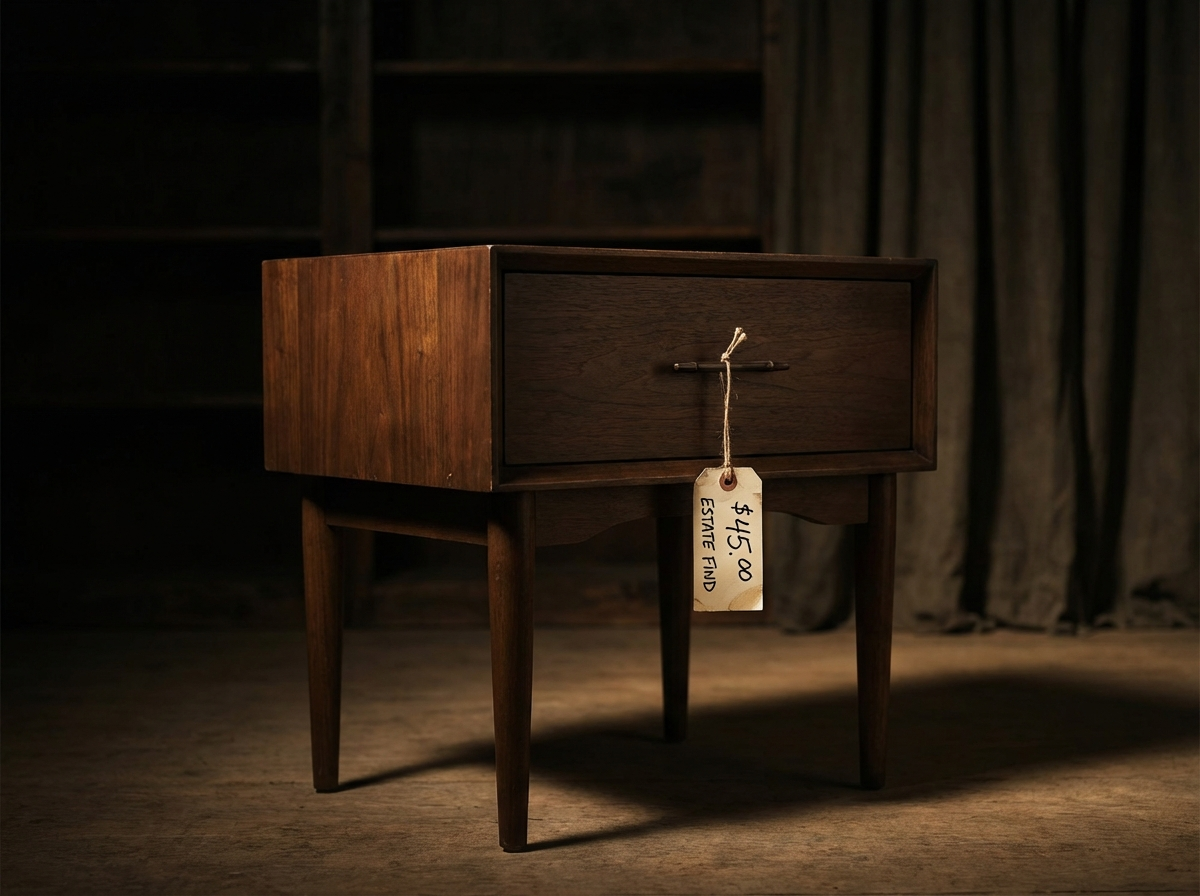
- Quality mid-century: 30-50% of online comparable values
- Standard vintage (1970s-1990s): $25-150 depending on condition and function
- Victorian/traditional: Very soft market—price to move ($25-200)
- IKEA and mass-market: $5-50 (people know what it cost new)
Clothing
- Designer labels: 20-40% of resale value
- Vintage (pre-1980): $5-50 depending on era and condition
- Everyday clothing: $1-10 (or bundle)
- Coats and outerwear: $10-50
Housewares
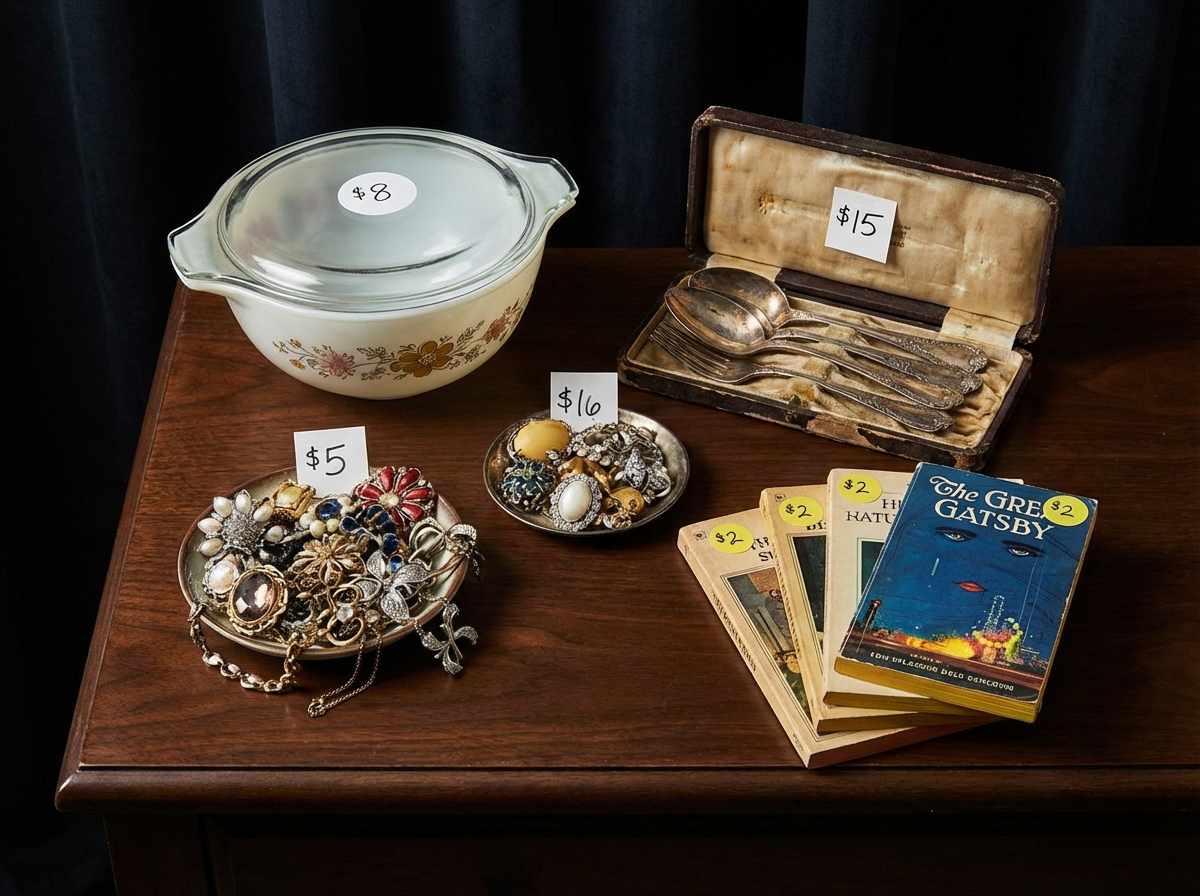
- Kitchen items: $1-20 for most things
- Quality cookware (Le Creuset, All-Clad): $20-100
- Vintage Pyrex, desirable patterns: $10-50
- Generic dishes and glasses: $1 each or bundle
Books
- Most books: $1-5 each
- Coffee table and art books: $5-25
- Potential collectibles: Research individually or scan
- Book club editions: $0.50 or bundle
Art and Decorative Items
- Original art: Highly variable—research or get appraisal
- Prints and reproductions: $10-50 (unless significant artist)
- Decorative objects: $2-25 depending on quality
Electronics
- Working vintage audio: $20-200 (vintage receivers, turntables have markets)
- Old TVs and computers: Often worthless; may need to pay for disposal
- Tools: $2-50 depending on quality; vintage hand tools have collectors
Jewelry
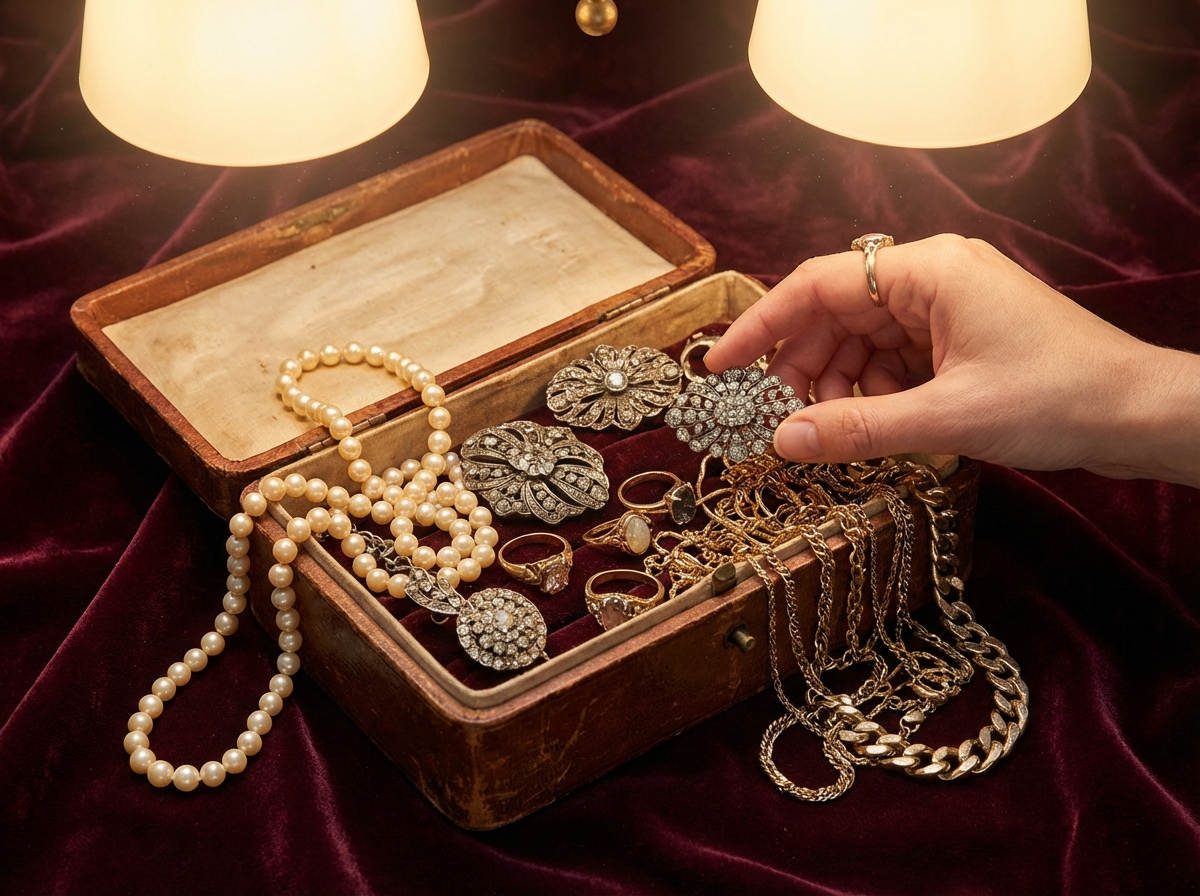
- Costume jewelry: $2-25 per piece; bundle lesser items
- Potential fine jewelry: Research or appraise; don't underprice
- Watches: Highly variable—check brand value specifically
How does buyer psychology affect pricing?
Estate sale buyers are experienced. They know:
- Prices will drop on subsequent days
- They're buying as-is with no returns
- They're doing the hauling
- They can negotiate
Price with this in mind:
Day 1 Pricing Strategy
Price at your target, knowing negotiation will happen. If you want $40, price at $50. Buyers expect to negotiate—let them feel they've won something.
For valuable items: Price firm on Day 1. Serious collectors come early and pay fair prices.
For uncertain items: Price slightly high. You can always come down; you can't go up.
Day 2: Standard Discounts
Most estate sales run 25-50% off on Day 2. This is expected. If something didn't sell at full price, the discount often moves it.
Day 3: Clear the House
By Day 3 (if you have one), the goal is emptying the space. Deep discounts—50% or more. Consider "fill a bag" pricing for smalls.
What doesn't sell:
- Donate what charities will accept
- Haul away or junk removal for the rest
- Don't agonize over the remnants—they've been market-tested and rejected
What are the most common pricing mistakes?
Overpricing Because of Sentiment
"Mom paid $2,000 for that dining set" doesn't matter. Market value is what buyers will pay now. The market doesn't care about original prices.
Underpricing Out of Exhaustion
When you're tired, it's tempting to price everything at $5 just to be done. Take breaks. Get help. Underpricing gives away money unnecessarily.
Inconsistent Pricing
If one lamp is $15 and an identical one is $45, buyers notice. They'll cherry-pick the underpriced items and skip the overpriced. Systematic pricing builds trust.
Not Pricing At All
"Make an offer" invites lowball offers. Buyers don't want to negotiate from zero—they want to negotiate from a reasonable starting point. Price everything.
What will an estate sale actually net?
Before the sale, do rough math:
- Estimate total items by category
- Apply typical prices per category
- Expect to sell 60-70% of items
- Plan for Day 2/3 discounts of 25-50%
This gives you a realistic revenue expectation. If you need a specific amount, you'll know whether the estate can deliver it—or whether you need to sell certain items through other channels (online, auction) first.
Should I hire a pro or run it myself?
DIY Estate Sales Work When:
- Estate is modest size
- You have help and time
- Items are mostly household goods
- You're comfortable with the process
Professional Estate Sale Companies Work When:
- Estate is large or complex
- Contains potentially valuable items
- You're out of town or unavailable
- You want hands-off management
Professional companies typically take 30-40% of sales. They handle pricing, setup, staffing, and sometimes cleanup. Worth it for complex estates or when you can't do it yourself.
The Bottom Line
Pricing an estate sale is research plus psychology. Know what things are actually worth (not what someone paid or hopes they're worth). Price for the reality of estate sale shopping—motivated buyers who want deals, expect to negotiate, and will come back for discounts.
Use tools to work efficiently through high volume. Price confidently. Accept that some things won't sell.
The goal isn't perfection. It's clearing the house fairly, in a weekend, without leaving significant money behind or spending weeks agonizing over every lamp.