Best Antique Identifier Apps in 2026, Ranked
We ranked the best antique identifier apps of 2026 on identification accuracy, real sold prices, and listing support. See how Patina and five rivals compare.
You're standing in front of a shelf at an estate sale. There's a ceramic vase with a mark on the bottom you don't recognize. Could be nothing. Could be $300. You have about 30 seconds before someone else picks it up.
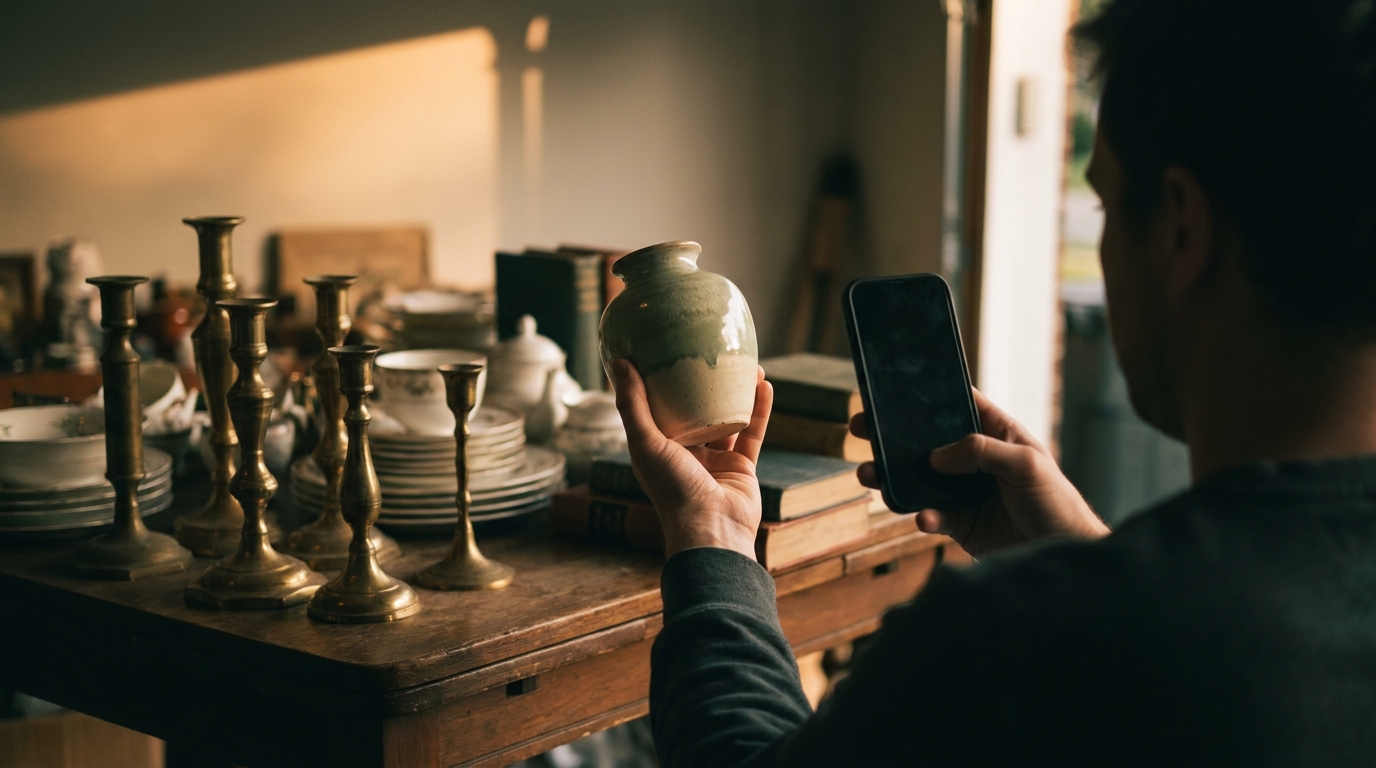
This is exactly the problem antique identifier apps exist to solve. But not all of them solve it equally well. Some tell you what an item is. Some tell you what someone is asking for it. Very few tell you what it actually sold for — which is the only number that matters when you're deciding whether to buy.
This guide ranks the best antique identifier apps available in 2026, based on what resellers and thrifters actually need: fast identification, real market data, and a clear path to selling.
What makes a good antique identifier app?
Before getting into the rankings, it helps to know what separates a useful app from a frustrating one.
Identification accuracy is the obvious starting point. Can the app correctly identify the maker, era, materials, and style from a photo? This is harder than it sounds — a mid-century modern lamp and a reproduction from the 1990s can look nearly identical in a photo.
Pricing data quality is where most apps fall short. There's a significant difference between asking prices (what sellers list) and completed sale prices (what buyers actually paid). Asking prices can be wildly optimistic. Completed sales tell you what the market will bear right now.
Speed and usability matter when you're in the field. An app that requires you to type descriptions or wait two minutes for a result is useless at a busy estate sale.
Category coverage determines whether the app is genuinely versatile. Furniture, jewelry, ceramics, vintage clothing, books, art, collectibles — a good app handles all of them.
Listing support is the bonus feature that separates apps built for resellers from apps built for curious hobbyists. If an app can write your eBay or Poshmark listing for you, that's real time saved.
The apps, ranked
1. Patina — best overall for resellers
Patina is the most complete tool on this list for anyone who buys and sells secondhand items. Point your iPhone camera at any object and it returns the maker, era, materials, and condition in seconds. Then it shows you completed sale prices pulled from eBay, Chairish, and 1stDibs — not asking prices, actual transactions.
That distinction matters more than it might seem. An item might have dozens of listings at $150, but if completed sales are consistently landing at $60, you know the real ceiling. Patina shows you the real ceiling.
Beyond identification and pricing, Patina writes a ready-to-post listing for you — title, description, and suggested price — based on what it found. It also recommends which platform is likely to get you the best return for that specific item type. Vintage denim might do better on Poshmark; a signed print might move faster on 1stDibs.
Category coverage is broad: furniture, clothing, books, art, ceramics, jewelry, watches, collectibles, and vintage electronics all work. The app has identified over 25,000 items and holds a 4.9 App Store rating.
Pricing is $7.99/month or $44.99/year (about $3.75/month), with a 7-day free trial that includes full access and no scan caps.
Best for: Active resellers, thrifters, estate sale shoppers, and anyone who needs to make fast buy/pass decisions based on real market data.
Limitations: iOS only (iPhone). No Android version currently available.
2. WorthPoint — best for deep catalog research
WorthPoint has been around for years and has built one of the largest databases of sold antiques and collectibles available. If you're researching a specific maker's mark, a particular pottery line, or a niche collectible category, WorthPoint's depth is hard to beat.
The database includes historical sold prices from major auction houses and marketplaces, which makes it genuinely useful for serious collectors who want to understand long-term price trends.
Where WorthPoint struggles is in the field. It's not built for quick camera-based identification. You typically need to know what you're looking for before you search, which means it rewards existing knowledge rather than helping you build it. For a reseller who picks up unfamiliar items regularly, this is a real constraint.
Pricing is subscription-based and sits at a higher price point than most of the apps on this list.
Best for: Established collectors and dealers who already know their categories and want deep historical price data.
Limitations: Not a camera-based identifier. Requires prior knowledge to use effectively. Higher cost.
3. Curio — good for casual identification
Curio is a camera-based antique identifier app with a clean interface. Point, shoot, get a result. For casual users who want a quick answer about something they found, it works reasonably well.
The identification is generally decent for common antique categories. Where it falls short relative to Patina is on the pricing side — Curio leans more toward informational identification than market valuation. If you want to know what something is, it can help. If you want to know what it's worth right now based on what buyers are actually paying, the data is thinner.
There's no listing generation feature, which means you're still doing that work yourself after the scan.
Best for: Hobbyists and collectors who want quick identification without needing deep pricing data.
Limitations: Weaker real-time market data. No listing generator. Less useful for active resellers.
4. AntiqBot — decent AI identification, limited pricing
AntiqBot uses AI visual recognition to identify antiques and vintage items. The identification results are generally reasonable, and the interface is straightforward.
The gap shows up when you need pricing context. AntiqBot can tell you what something is, but the market data it surfaces is limited compared to apps pulling from active marketplaces. For a reseller who needs to make a quick decision on whether an item is worth $8 at a thrift store, "limited pricing context" is a meaningful problem.
Best for: Users who want AI identification and don't need strong pricing data.
Limitations: Market data is not as robust as Patina or WorthPoint. No listing generation.
5. Antique Identifier (Antiqly) — basic tool for simple lookups
Antiqly offers camera-based identification with a simple, accessible interface. It covers common antique categories and can return useful results for straightforward items.
It's a reasonable free or low-cost option if your needs are basic — you want to know what something is, roughly when it was made, and whether it might have any value. It doesn't go deep on pricing, and there's no listing support.
Best for: Beginners who want a simple, no-frills identifier.
Limitations: Limited pricing depth. No listing generation. Better for learning than for active reselling.
6. Google Lens — useful starting point, not a reseller tool
Google Lens is worth mentioning because a lot of people use it as a free first step. It's genuinely good at identifying objects — it can often tell you what a piece of furniture is, who made it, or what style it belongs to.
What it cannot do is tell you what that item sold for. It will surface listings and articles, but those are asking prices and editorial content, not completed transactions. For someone building a resale business, that's a significant gap.
Google Lens is also not built for the specific workflow of a reseller. There's no pricing database, no where-to-sell guidance, no listing generator. It's a general-purpose visual search tool that happens to be useful for a narrow slice of what antique identification requires.
Best for: A free first look when you have no other tool available.
Limitations: No completed sale data. No pricing database. No listing support. Not built for resellers.
Side-by-side comparison
| App | Camera ID | Completed Sale Prices | Listing Generator | Category Coverage | Price |
|---|---|---|---|---|---|
| Patina | Yes | Yes (eBay, Chairish, 1stDibs) | Yes | Very broad | $3.75–$7.99/mo |
| WorthPoint | No | Yes (historical) | No | Deep but narrow | Higher |
| Curio | Yes | Limited | No | Moderate | Varies |
| AntiqBot | Yes | Limited | No | Moderate | Varies |
| Antiqly | Yes | Minimal | No | Basic | Free/low cost |
| Google Lens | Yes | No | No | General | Free |
The completed sale price problem
This point deserves more attention because it's the single biggest differentiator between apps.
When you're at an estate sale or thrift store, you're not trying to understand the theoretical market for a category. You're trying to answer one question: if I buy this for $12, can I sell it for $80?
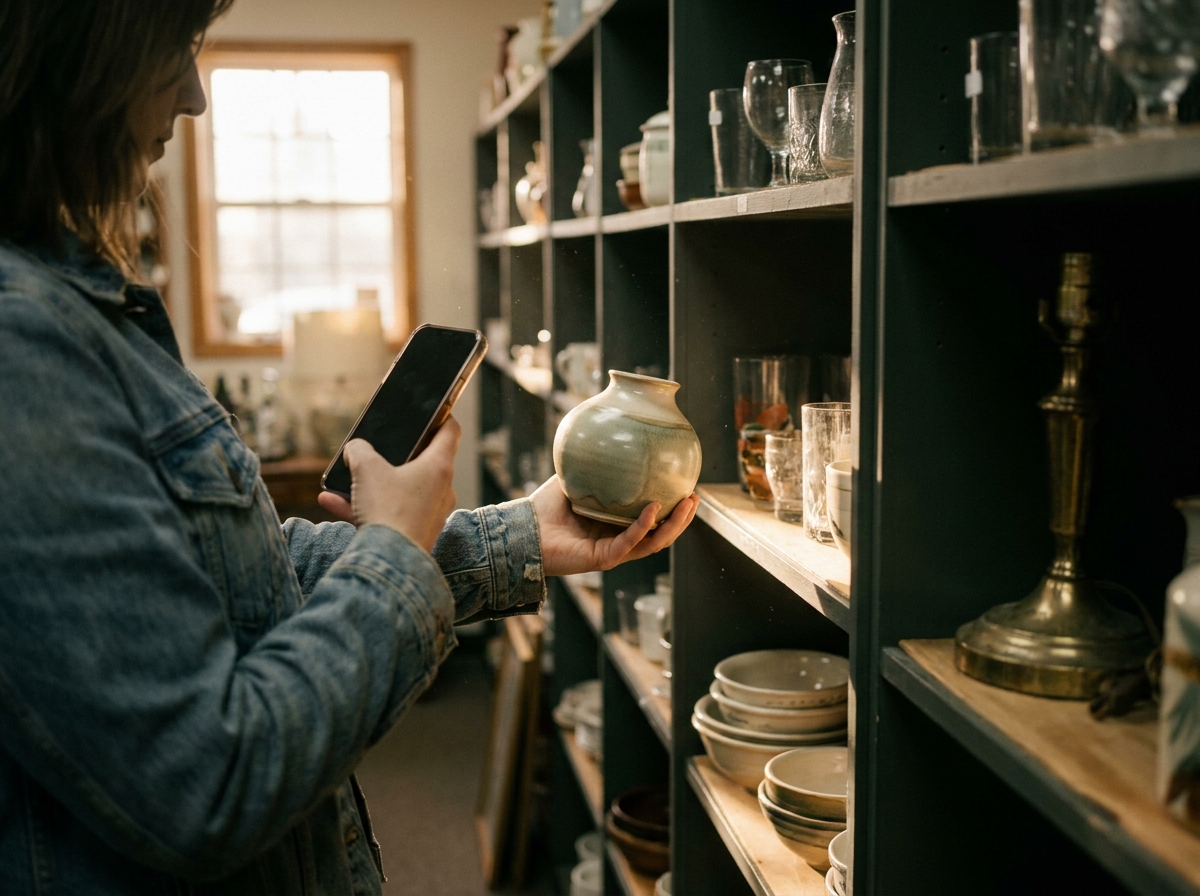
Asking prices don't answer that question. A quick search on any resale platform will show you listings at all kinds of prices, many of which will never sell. Completed sale prices show you what real buyers paid for comparable items in recent transactions. That's the number you need.
Most antique identifier apps show you asking prices, or nothing at all. Patina pulls completed sales from eBay, Chairish, and 1stDibs — three platforms that cover a wide range of item types and price points, from everyday thrift finds to high-end antiques.
This is the gap that separates a research tool from a buying tool.
Who should use which app?
You're an active reseller or thrifter who makes buying decisions on the floor: use Patina. The combination of camera identification, completed sale prices, where-to-sell guidance, and auto-generated listings covers your entire workflow in one app.
You're a serious collector who specializes in a specific category and wants deep historical auction data: WorthPoint is worth the investment alongside a camera-based identifier.
You're just getting started and want to learn what things are before committing to a tool: Google Lens is a reasonable free starting point, but you'll quickly hit its limits once you need pricing data.
You want to try before committing: Patina's 7-day free trial includes full access with no scan caps, so you can run it through a real thrift run or estate sale before deciding.
How to get the most out of any identifier app
The best antique identifier app is the one you'll actually use consistently. A few practical tips for getting the most out of any camera-based identifier:
Photograph the maker's mark separately. If there's a stamp, hallmark, or signature on the bottom or back of an item, photograph that directly. It's often the most useful signal for identification. Our guide on maker's marks covers what to look for across different categories.
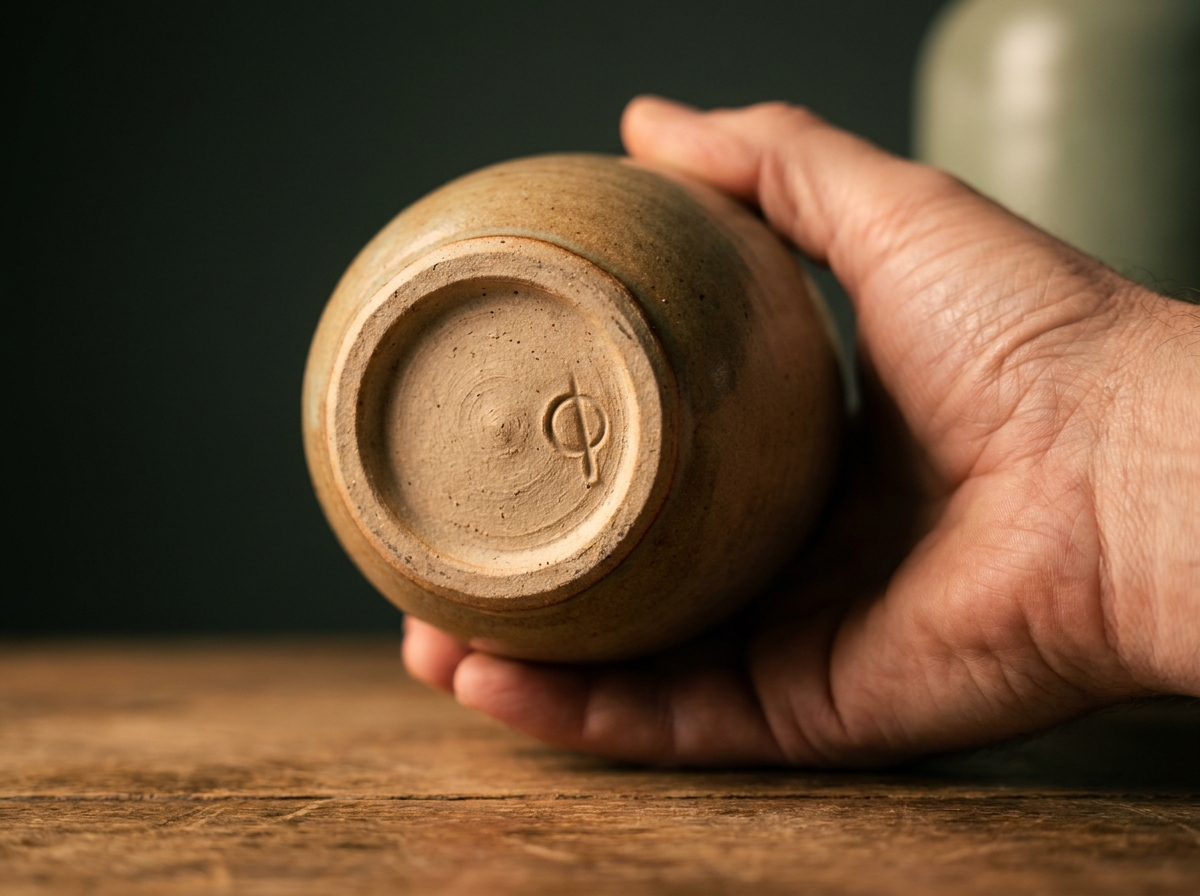
Take multiple angles. A single photo from one angle can miss details that change the identification. Front, back, bottom, and any markings give the app more to work with.
Check the condition honestly. Market values vary significantly based on condition. A ceramic piece with a hairline crack might be worth 40% less than a perfect example. The app can only work with what you show it.
Use the data as a range, not a fixed price. Completed sales give you a realistic range. Where your item lands in that range depends on condition, how you list it, and which platform you use. Once you know what you have, our guide on where to sell helps you pick the right platform.
The bottom line
The antique identifier app space has matured quickly. You have real options now, and the differences between them are meaningful.
For most resellers, thrifters, and estate sale shoppers, the question isn't really "which app identifies things best" — it's "which app helps me make better buying and selling decisions." That's a different question, and it points clearly toward tools that combine identification with real completed-sale pricing.
If you want to see what a well-built antique identifier app looks like in practice, Patina is worth trying on your next thrift run. The free trial gives you a full week with no restrictions.
For active resellers and thrifters, Patina is the strongest option in 2026. It combines camera-based identification with completed sale prices from eBay, Chairish, and 1stDibs, plus auto-generated listings and where-to-sell recommendations. WorthPoint is a strong complement for collectors who need deep historical catalog data.
Yes, Google Lens can identify many antique and vintage items from a photo. However, it does not provide completed sale prices or any resale-specific guidance. It works as a free starting point but lacks the pricing data that resellers need to make buying decisions.
Asking prices are what sellers list items for — they can be wildly optimistic and don't reflect what buyers will actually pay. Completed sale prices are what items actually sold for in real transactions. For resellers, completed sale prices are the only reliable measure of an item's current market value.
Google Lens is free and can identify many items. Antiqly offers a free or low-cost option for basic identification. Patina offers a 7-day free trial with full access and no scan caps, which is enough time to test it on real finds before subscribing.
Yes. Patina covers vintage clothing and accessories, including vintage denim, and can identify era, maker, and materials from a photo. It also surfaces completed sale prices from platforms like Poshmark that specialize in vintage fashion.
Accuracy varies by app and item type. Camera-based AI identification has improved significantly and works well for items with clear visual characteristics or maker's marks. Results are most reliable when you photograph the item from multiple angles and include any stamps, signatures, or hallmarks. No app is infallible, so treat results as a strong starting point rather than a definitive appraisal.
The better apps cover a wide range: furniture, ceramics, jewelry, art, vintage clothing, books, collectibles, watches, and vintage electronics. Patina's category coverage spans all of these. More specialized tools like WorthPoint go deeper in specific niches but may not cover all categories equally well.