Are Your Old Pokémon Cards Worth Money?
Most 1999 Pokémon cards are worth $1–$15, but a 1st Edition Charizard sold for $550,000 and the record is $16.5 million. Here's how to read your binder.
Most old Pokémon cards are worth $1–$15, but the right cards from 1999 and 2000 sell for thousands, and the rarest ones reach six and seven figures. A 1st Edition Base Set Charizard in perfect condition sold for $550,000 in December 2025, and a Pikachu Illustrator card set the all-time record at about $16.5 million in February 2026. What separates a $2 card from a $2,000 one is the print run, the condition, and a few small marks most people never check. Here's how to read your binder.
How much are old Pokémon cards actually worth?
Most cards are worth $1–$15. Unlimited Base Set commons and uncommons from 1999 sell for $1–$8 played and $3–$15 near-mint, and a complete played run of Base Set commons brings $50–$100. Bulk from the 2010s is worth less: $15–$25 per thousand cards to a bulk buyer. Wizards of the Coast printed these by the hundreds of millions, and most people kept them.
But the same Charizard exists in several forms that look nearly identical and price a hundred times apart. An Unlimited Base Set Charizard in near-mint condition sells for a few hundred dollars. The same card with a tiny "1st Edition" stamp, graded a perfect 10, sold for half a million. The artwork is identical. The difference lives in a stamp, a shadow, and a number on a grading label.
The distance between $2 and $200,000 comes down to knowing which print run you're holding. Here's how to read it.
Which Pokémon cards are worth real money?
The $100,000+ tier: trophy cards and first-edition grails
Pikachu Illustrator (1998). Awarded to winners of a Japanese illustration contest, with only a few dozen ever made. A PSA 10 copy sold through Goldin in February 2026 for about $16.5 million, the most ever paid for a trading card. You do not have this one. But it explains the ceiling.
1st Edition Base Set Charizard, PSA 10. The card every collector wanted in 1999 and still wants. A perfect copy sold at Heritage for $550,000 in December 2025. PSA has graded more than 5,300 of these and given only 124 a perfect 10, which is why the grade matters as much as the card.
Japanese promos and trophy cards. A Japanese "no-rarity" Charizard sold for $1.7 million in March 2026. At Goldin's August 2026 auction, a Pokémon Snap Bulbasaur promo brought about $809,000, and a Base Set Prerelease Raichu brought $640,500.
The $1,000–$100,000 tier: 1st Edition and Shadowless holos
1st Edition Base Set holos. All sixteen holographic rares from the first print run carry serious value in high grade. A 1st Edition Charizard sells for roughly $3,000–$6,000 ungraded and $75,000–$120,000 as a PSA 9, and the other holos scale down from there.
Shadowless Base Set holos. The second print run, before Wizards added a drop shadow to the art box. A Shadowless Charizard runs $2,000–$4,000 raw and $40,000–$60,000 as a PSA 10.
Early promos and error cards. Black Star promos, prerelease stamps, and printing errors from 1999–2000 all trade in this range when authenticated.
The $50–$1,000 tier: Unlimited holos and clean vintage rares
Unlimited Base Set Charizard sells for about $400 ungraded, $1,300 as a PSA 8, and $14,000 as a PSA 10. Blastoise, Venusaur, and the other Base Set holos, along with holos from Jungle, Fossil, and Team Rocket, land here in clean condition. Prices in this tier moved up through 2026: TCGplayer reported Base Set Charizard climbing to $868 in its September 1 report, with vintage cards holding steady while modern chase cards fell.
Under $15: what most of the binder actually is
Unlimited commons and uncommons, non-holo rares, 2010s bulk, and anything with creased corners or a scratched foil. Enormous supply, modest demand. Fun to own. Not an investment.
How do you identify a valuable Pokémon card?
The stamp and the shadow tell the story
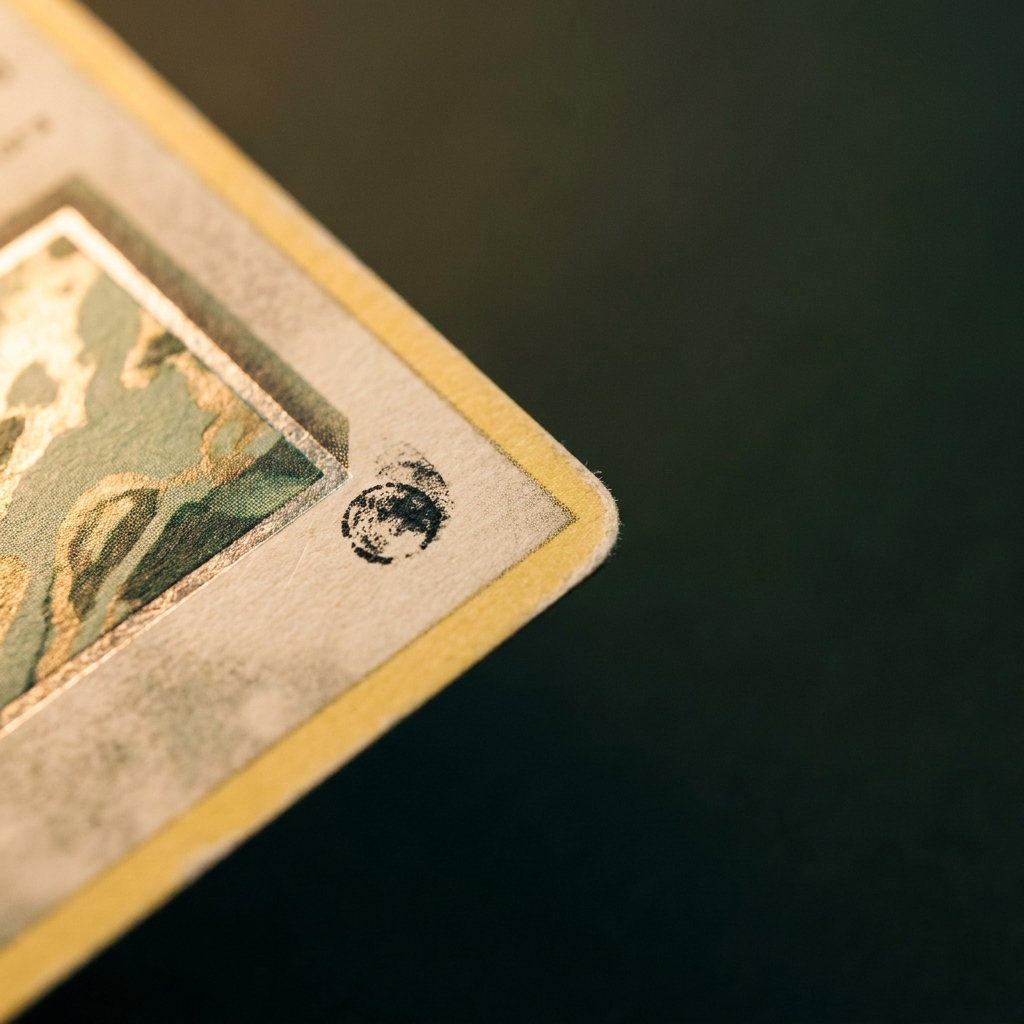
Look at the bottom-left corner of the artwork. A small black "1st Edition" stamp with a "1" in a circle means first print run, the most valuable form of any Base Set card. No stamp? Look at the right and bottom edges of the art box. If there's no drop shadow, it's Shadowless, the second run. A drop shadow with a "1999" copyright line means Unlimited, the common version. A "1999–2000" copyright line marks the fourth print, made mostly for the UK and Australia.
Base Set 2, released in 2000, reprinted 130 Base Set and Jungle cards with its own set symbol and carries far less value than the originals. Check the small symbol to the right of the card's bottom text: Base Set has no symbol, and every later set has one.
Grading sets the price
The trading-card market prices graded cards, and the grade drives the number. PSA, the largest grader, requires 55/45 centering or better for a 10, and the most common reason a card lands at 9 instead of 10 is centering. Print lines, edge whitening, and hairline scratches on the holo foil all cost a grade. For an Unlimited Charizard, the spread runs from about $400 raw to $14,000 at PSA 10.
Grading costs money. PSA's standard service runs $79.99 per card with a 70–80 business day turnaround, so it only pays when a 9 or 10 would add well over $100 to the sale. Grade the holos, leave the commons.
Condition: the value multiplier
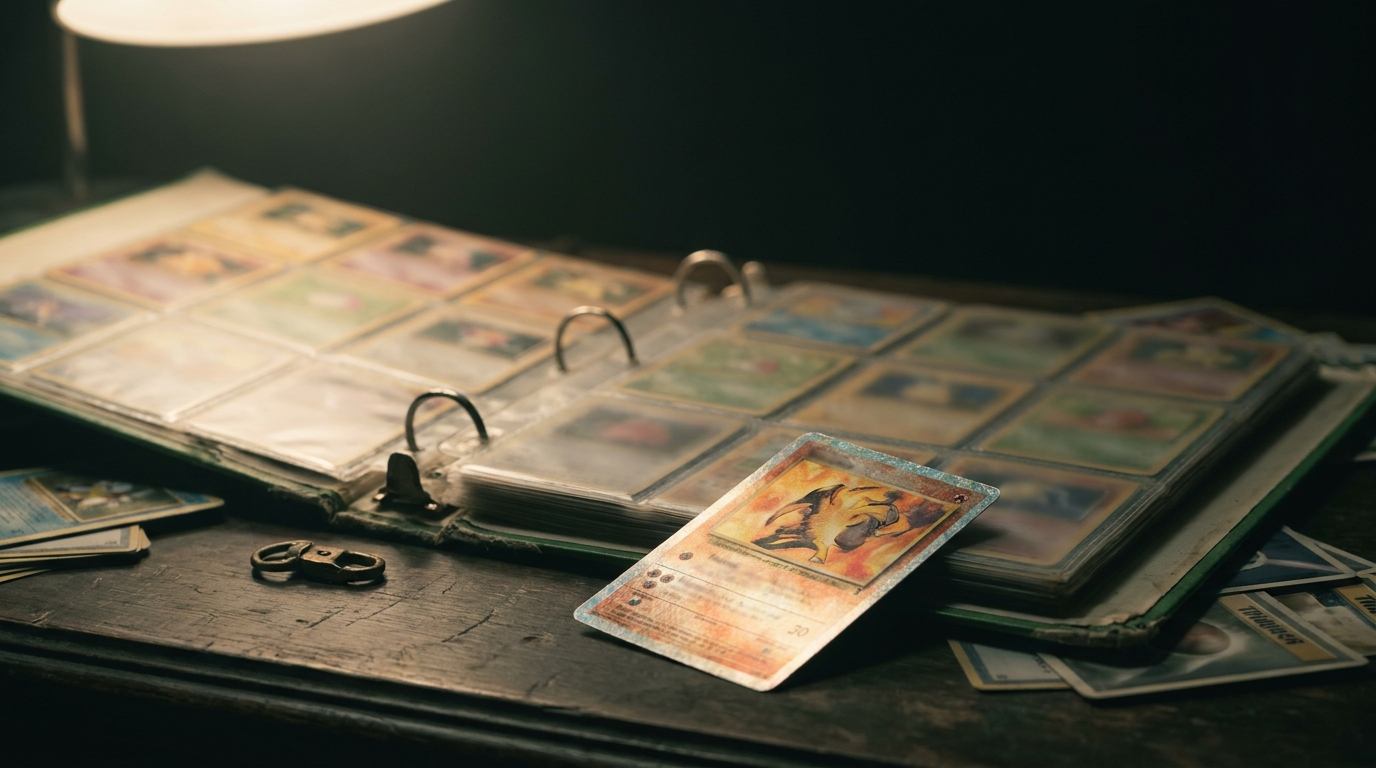
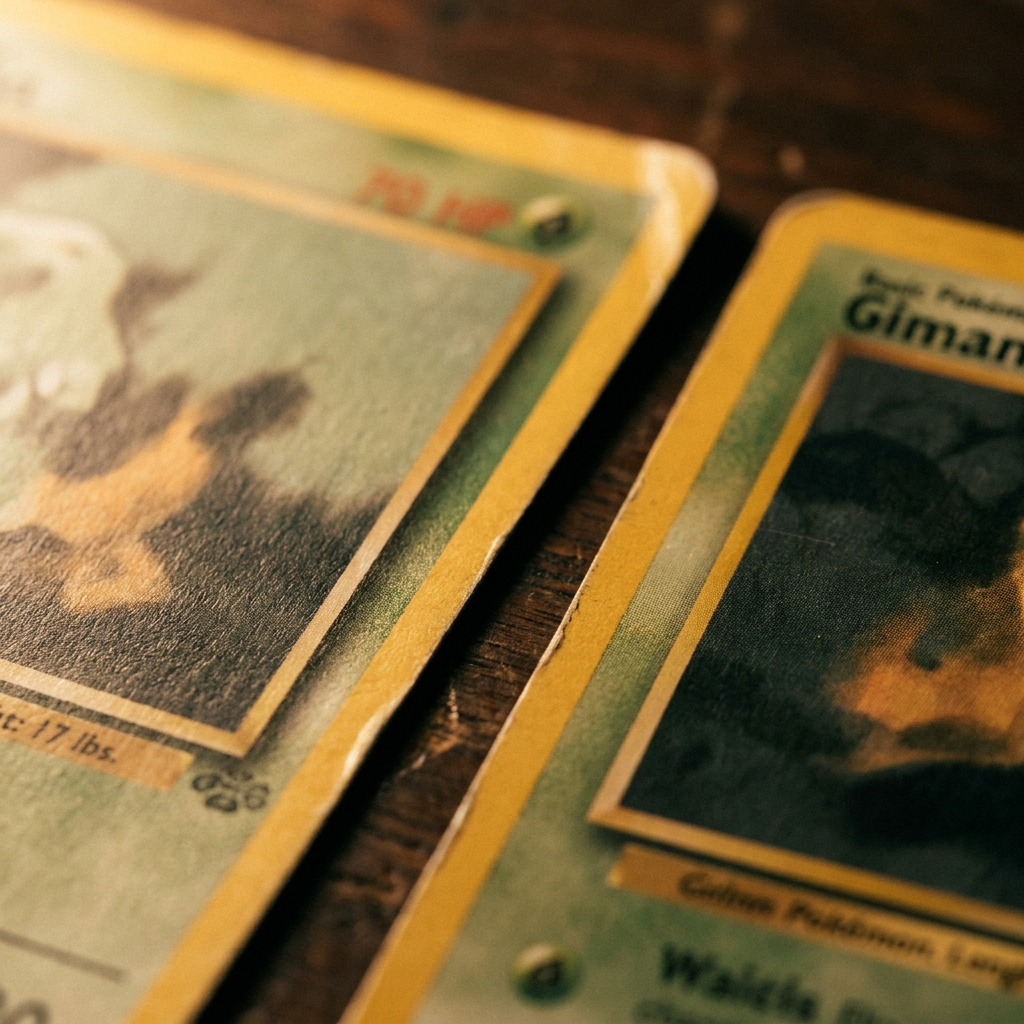
Condition doesn't nudge the price, it sets it. Hold the card at an angle under a lamp and look for scratches in the foil, whitening along the edges, and dents in the corners. Cards stored loose in a shoebox usually grade 6–8; cards that lived in sleeves inside a binder are the ones that reach 9 and 10. Don't clean, press, or trim anything. Graders catch it, and a trimmed card is worth nothing.
Spotting a fake
Counterfeits are common for exactly the cards worth money. Fakes use thin or plasticky stock, muted or purplish blues, blurry text, and oddly wide letter spacing, and they're often slightly smaller than a real card. A genuine card has a thin dark layer visible at a torn edge, which is why the market trusts graded cards for anything expensive.
Which Pokémon cards are NOT worth much (and why)?
Unlimited commons and uncommons. Printed by the hundreds of millions in 1999 and 2000. A near-mint Unlimited Pidgey is a few dollars on its best day.
2010s bulk. Cards from the Black & White through Sun & Moon eras were printed in even larger quantities, and most trade for a cent or two each.
Damaged holos. A creased or heavily scratched Charizard drops to a small fraction of a clean one. The damage is permanent.
Fakes. Counterfeit Base Set holos have circulated since 1999, and a fake is worth nothing regardless of how it looks.
Where is the best place to sell Pokémon cards?
eBay is the center of the market for single cards. Search "sold" listings for the exact card, set, print run, and grade to price from real sales, and note that eBay's Authenticity Guarantee covers cards that sell for $200 or more, which reassures buyers on expensive singles.
TCGplayer works well for ungraded cards and bulk, with live market prices for every card.
Local card shops buy bulk on the spot, usually at 60–70% of online prices, which is often worth it to skip listing hundreds of cards.
Goldin, Heritage, and PWCC handle the five-figure cards, where a global bidding pool matters more than convenience. For a full breakdown of platforms and fees, see where to sell.
The 30th anniversary matters for timing. The Pokémon Company's 30th Celebration set launches September 16, 2026 with gold-bordered reprints of the 1999 Charizard and Pikachu, which sends a wave of new collectors looking for the originals. If you've been meaning to check the binder, this is the month.
If you're not sure what you have, that's the part to solve first. Identifying the print run before you list, by hand or with a tool that shows you how AI appraisal works, is the difference between a $5 sale and a $500 one.
The bottom line
Your binder is probably worth $1–$15 a card. But "probably" gets expensive when one of the holos carries a 1st Edition stamp and you sold the binder for $40 at a yard sale.
The cards that command real money share a few traits: they're from the first two print runs of 1999 (confirmed by the stamp and the shadow, not assumed from the artwork), they survived in clean condition, and they're graded by a service the market trusts. Everything else is a lovely, ordinary card.
Pull the binder out. Check the corner of each holo for the stamp. Look for the shadow. It takes about a minute per page, and it's the difference between a binder you'd give to a nephew and one worth going through card by card. If the same closet held old toys or old comic books, the same logic applies: the print run and the condition are where the value hides.
Most old Pokémon cards are worth $1–$15. Unlimited Base Set commons sell for a few dollars, and 2010s bulk is worth a cent or two per card. But 1st Edition and Shadowless holographic rares from 1999 sell for hundreds to hundreds of thousands of dollars depending on grade. A 1st Edition Base Set Charizard graded PSA 10 sold for $550,000 in December 2025. Value depends on print run, condition, and grading.
The Pikachu Illustrator card, awarded to Japanese contest winners in 1998, holds the record. A PSA 10 copy sold through Goldin in February 2026 for about $16.5 million. Among cards most people could own, the 1st Edition Base Set Charizard is the grail, with a PSA 10 selling for $550,000 at Heritage Auctions in December 2025.
Look at the bottom-left corner of the artwork for a small black '1st Edition' stamp. If there's no stamp, check the right and bottom edges of the art box: no drop shadow means Shadowless (the second printing), and a drop shadow with a '1999' copyright line means Unlimited (the common version). A '1999–2000' copyright line marks the fourth print run.
Unlimited commons and uncommons, non-holo rares, and bulk from the 2010s sell for pennies to a few dollars. Creased, scratched, or trimmed holos lose most of their value, and counterfeits are worth nothing. Fakes tend to have thin or plasticky stock, muted blues, blurry text, and wide letter spacing.
eBay is the main marketplace for single cards, with sold listings to price from and an Authenticity Guarantee on cards over $200. TCGplayer suits ungraded cards and bulk. Local card shops buy bulk at about 60–70% of online prices. Goldin, Heritage, and PWCC handle five-figure cards. Grading through PSA ($79.99 per card standard) only pays when a high grade adds well over $100.