Are Your Old Toys Worth Money? What Sells
Most old toys sell for a few dollars, but rare vintage action figures bring thousands—one Boba Fett hit $1.34 million. Here's how to spot the valuable ones.
Most vintage toys are worth $5–$50, but rare action figures sell for hundreds to thousands of dollars—and the rarest, a 1979 rocket-firing Boba Fett prototype, sold for $1.34 million. What separates a $10 loose figure from a five-figure one is the maker, the year, whether it's still sealed in its packaging, and whether you're holding a production variant almost no one else has. Here's how to tell which one is in your box.
How much are old toys actually worth?
Most loose vintage toys from the 1980s are worth $5–$50. That Kenner figure with a missing accessory, played-with paint wear, and no packaging? Real nostalgia. Worth about $15 on a good day. The common Transformers and Star Wars figures were produced in the millions, and supply still outpaces demand for the ordinary ones.
But the same lines also produced prototypes that never reached shelves, regional exclusives sold only in one country, and early production variants that were quietly changed within months. Those are the pieces that turn a donation box into a discovery. A hand-painted rocket-firing Boba Fett prototype sold for $525,000 at Heritage Auctions in May 2024 to become the most valuable vintage toy in the world. A carded example later sold for $1.34 million, setting the Guinness World Record.
The distance between $15 and seven figures comes down to knowing what you're looking at. Here's how to read it.
Which vintage toys are worth real money?
The $10,000+ tier: prototypes and holy grails
Rocket-firing Boba Fett (1979). Kenner planned a version that fired a small missile from the figure's back, then pulled it over safety concerns before mass release. Only around thirty prototypes were made. One sold for $525,000 in 2024; a graded carded example reached $1.34 million in 2026. Collectors call it the Holy Grail of action figures.
Double-telescoping lightsaber figures (1978). The earliest Kenner Luke, Vader, and Obi-Wan had lightsabers that extended in two stages—a feature dropped almost immediately to cut production cost. A double-telescoping Darth Vader reportedly reached $130,095 in a 2025 sale. Even a loose double-telescoping Luke has commonly changed hands around $3,500.
Vinyl Cape Jawa (1978). The first Jawa figure wore a stiff vinyl cape. Kenner soon swapped it for a cloth cloak, likely because the vinyl version looked cheap for the price. The vinyl variant is now exceptionally rare—a carded, high-grade example sold for $30,000 at Heritage Auctions in 2024.
Graded G1 Optimus Prime (1984). The toy that launched Transformers. A graded Canadian variant sold for more than $40,000 in 2023. The difference between that and a $500 loose one is the box, the grade, and the region.
The $1,000–$10,000 tier: graded, boxed, and regional
This is where sealed originals and top grades live. The hobbyDB price database ranks the most valuable Kenner Star Wars figures, with a gray-haired Ben (Obi-Wan) Kenobi around $25,700, a carded Jawa near $14,110, and Yak Face—a Canada-only 1985 release—commonly cited around $6,700 carded.
The G1 Transformers ceiling sits here too. Graded, boxed examples of Fortress Maximus, Jetfire, Megatron, and Soundwave have sold between roughly $16,000 and $30,000 at the top of the grading scale, while boxed ungraded copies more often land in the hundreds to low thousands. Grade and packaging drive nearly all of that spread.
The $50–$500 tier: loose but climbing
A loose double-telescoping Luke around $3,500 is the exception. Most loose vintage figures are far more modest—Blue Snaggletooth, a mis-scaled Cantina variant, commonly sells around $360 in good condition, and a loose Yak Face has changed hands near $1,000. Ordinary loose figures from the big lines usually fall between $10 and $60.
There's a real gap between these and the ultra-rares, but the floor keeps rising. Supply is permanently fixed—these molds stopped running decades ago—while a generation that grew up with these toys keeps bidding.
How do you identify valuable vintage toys?
Country-of-origin stamps date the piece
Turn the figure over and read the leg or back. Early Kenner Star Wars figures are stamped with a year and a country—Hong Kong on the earliest runs, later Taiwan or China. A "1977" or "1978" stamp on a Hong Kong-made figure points to a first-wave piece, which is exactly the window where the valuable variants live. The stamp won't tell you everything, but it tells you which era you're in—and era is the first fork in the road.
Cardbacks tell you the wave
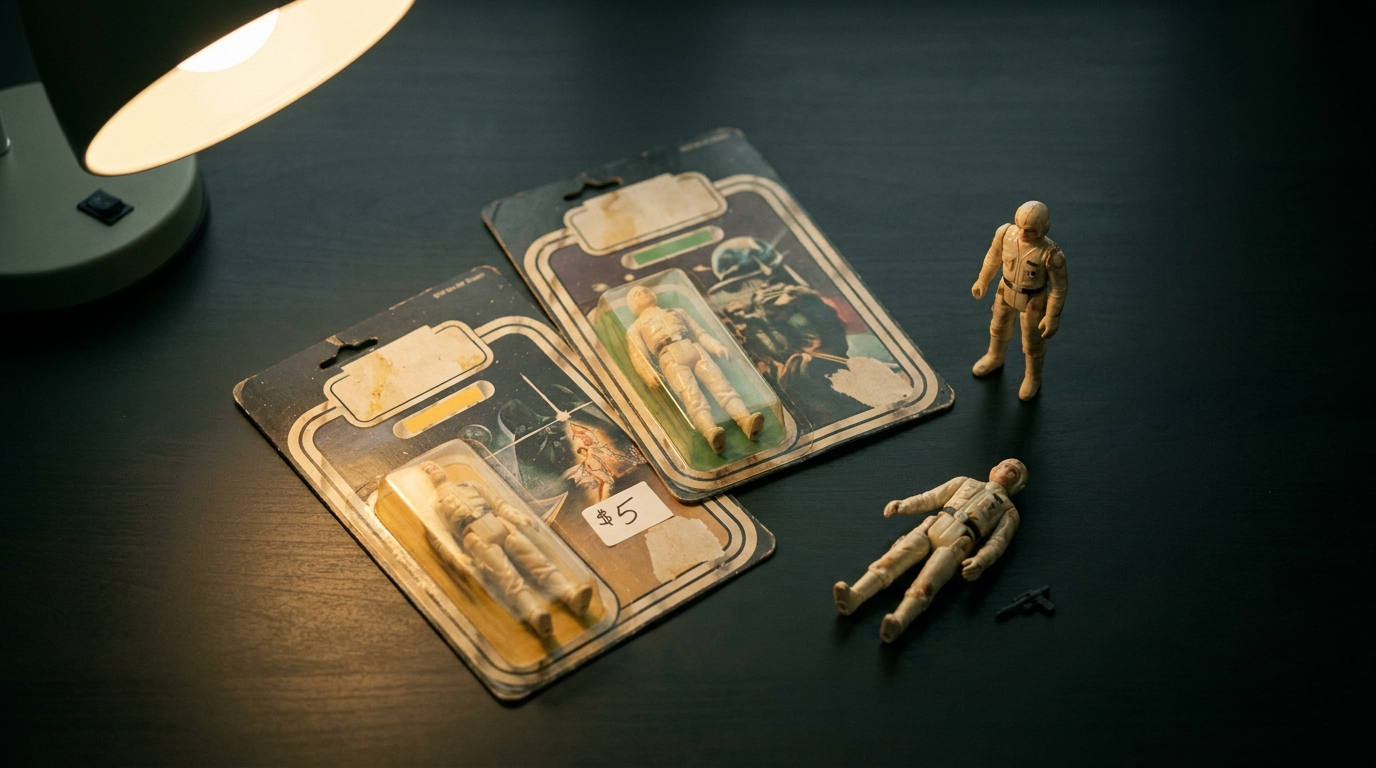
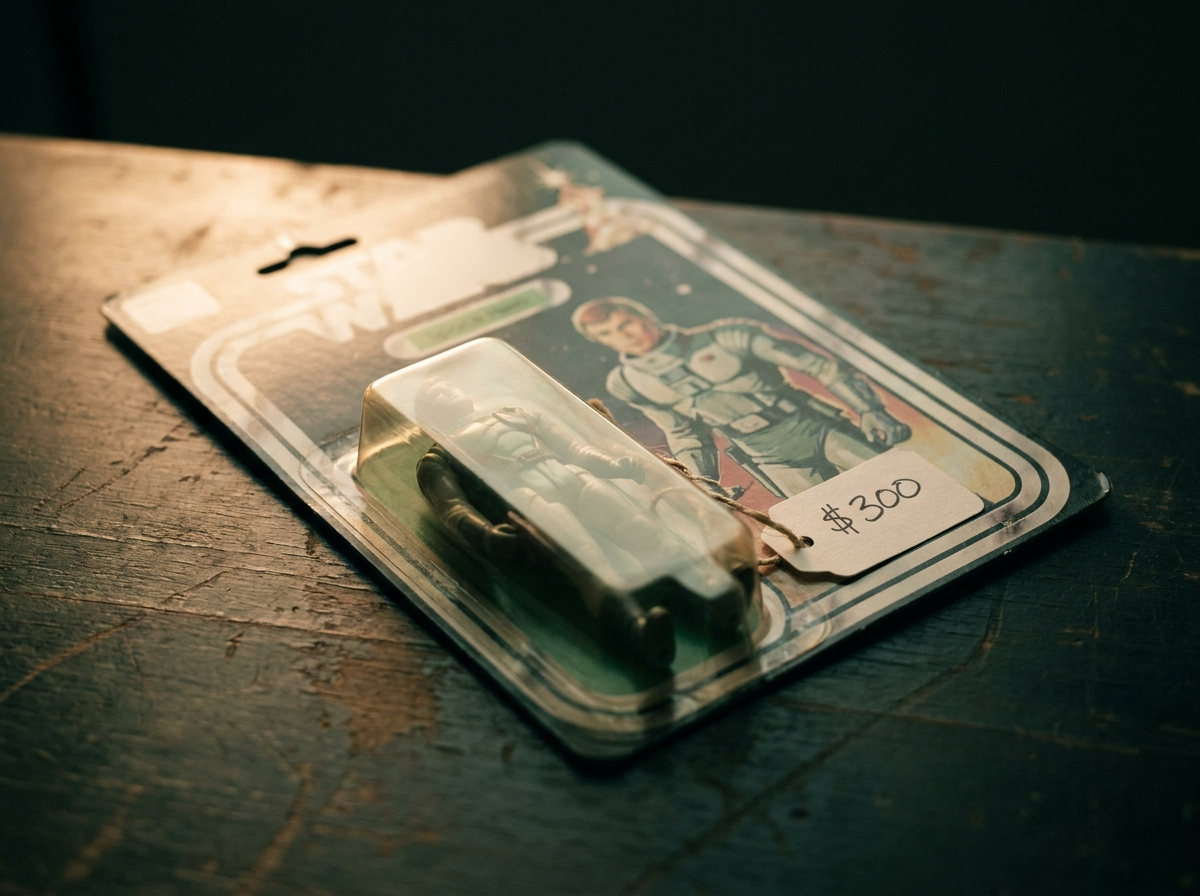
If the toy is still on its card, flip it over. Kenner cardbacks pictured the other figures available at the time, so the number shown dates the release: a "12-back" (twelve figures pictured) is an early card, and early cards on desirable figures carry a premium over later ones. Package graders like AFA (Action Figure Authority) use exactly these details, which is why two sealed copies of the "same" figure can be worth wildly different amounts.
Boxed vs. loose: the brutal multiplier
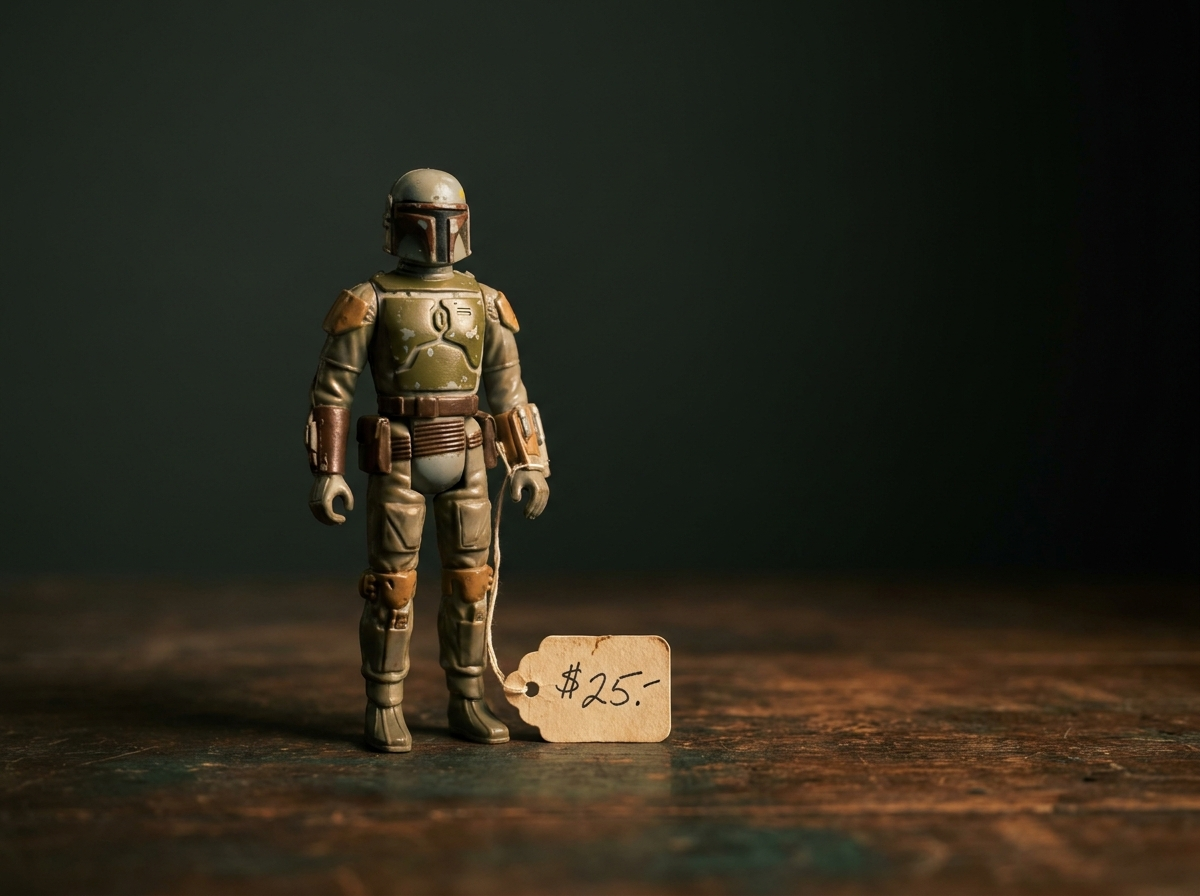
This is the number that surprises people most. For vintage toys, still being sealed in the original box or on the card isn't a nice bonus—it's most of the value. A loose G1 Soundwave might bring $100–$200; a graded, sealed one has sold for nearly $16,000. Playing with the toy, as intended, is what quietly erased most of its collector value.
Condition and grading
For loose figures, condition is paint, joints, and accessories. Original weapons and capes matter—the small, easy-to-lose parts are often the difference between a complete figure and a partial one. For sealed pieces, professional grading from a service like AFA turns "it looks mint" into a documented, buyer-trusted number, and that number moves the price more than almost anything else.
Which old toys are NOT worth much?
Anything from the last twenty years, still common. Most figures from the 1990s onward were produced in huge numbers and carefully hoarded by collectors who knew to save them—so supply is high and prices stay low.
Loose, incomplete, played-with figures. Missing a blaster, a cape, or a limb, with paint rubbed off, most common figures land in the $5–$30 range regardless of the character.
Reissues and reproductions. Many popular vintage toys have been officially reissued. A reissue can be a great display piece, but it is not a vintage original, and experienced buyers spot the difference in the stamps and packaging immediately.
"Rare" that isn't. A worn sticker or a faded box gets described as a rare variant more often than it actually is one. Real variants are documented by their production details, not by wishful listing titles.
Where's the best place to sell vintage toys?
eBay offers the widest reach and the best pricing data—search "sold listings" to see what your exact figure and variant actually bring, not what hopeful sellers are asking. Careful packing matters; a cracked bubble on a carded figure takes real money with it.
Heritage Auctions and other specialist houses are where the high-end pieces belong. If you suspect you have a prototype, an early variant, or a top-grade sealed figure, an auction house with a collectibles department will reach the buyers who pay record prices.
Facebook groups and collector forums put you in front of people who know exactly what a "12-back" or a vinyl cape means. That knowledge cuts both ways—you'll get fair offers for genuine rarities and quick reality checks on the common stuff.
For the full breakdown of platforms and fees, see our guide on where to sell. And if you want a value estimate before you list anything, the appraisal app guide covers how photo-based identification works.
Why values keep climbing
The math is simple. The molds for these toys stopped running decades ago. Every figure that loses a weapon, chips its paint, or gets separated from its card reduces the supply of complete, high-grade pieces permanently. Meanwhile the audience grows—the kids who opened these on Christmas morning now have the means to buy back the ones they wore out.
That's why sealed and graded examples keep setting records while loose commons stay cheap. The gap between the two isn't closing. It's widening.
The bottom line
Your childhood toy box is probably not worth $1.34 million. It's probably worth $50–$200 for the lot. But "probably" gets expensive when a Vinyl Cape Jawa or a double-telescoping Vader is sitting at the bottom.
The toys that command real money share a few traits: they were made in tiny numbers (prototypes, regional exclusives, early variants), they survived sealed or complete (box, card, accessories intact), and they belong to a fan base that tracks every detail obsessively.
Turn the figure over. Read the year and the country. Check whether it's still sealed. The whole process takes about thirty seconds—and it's the difference between a curbside donation and a listing collectors fight over.
Most loose vintage toys sell for $5–$50, but rare pieces are worth far more. Value depends on the maker, the production year, whether the toy is still sealed in its box or on its card, and whether it's a scarce variant. Common 1980s figures are modest, but prototypes, regional exclusives, and early production variants from lines like Kenner Star Wars and G1 Transformers can bring hundreds to hundreds of thousands of dollars. The most valuable vintage toy ever, a rocket-firing Boba Fett prototype, sold for $1.34 million.
The rocket-firing Boba Fett prototype (1979) is the most valuable, selling for $525,000 in 2024 and $1.34 million carded in 2026. Other high-value pieces include double-telescoping lightsaber figures (a Darth Vader variant reportedly reached $130,095), the Vinyl Cape Jawa ($30,000 carded at Heritage Auctions in 2024), and graded, boxed G1 Transformers like Optimus Prime ($40,000+) and Fortress Maximus (around $30,000).
Check three things. First, the country and year stamped on the figure—early Kenner Star Wars figures marked Hong Kong and 1977–1978 are first-wave pieces. Second, whether it's still sealed; carded and boxed toys are worth far more than loose ones, often by 10x or more. Third, the cardback: the number of figures pictured dates the release, and early cards carry a premium. Variants and production errors matter too, so identify the exact version, not just the character.
Loose 80s toys are usually worth much less than sealed ones—for most common figures, a fraction of the carded price. A loose G1 Soundwave might bring $100–$200 while a graded, sealed one has sold near $16,000. There are exceptions: genuinely rare loose figures like a double-telescoping Luke have sold around $3,500. Complete accessories (weapons, capes) meaningfully raise a loose figure's value.
eBay offers the widest reach and the best pricing data—use sold listings to see real prices for your exact variant. For high-end pieces like prototypes or top-grade sealed figures, specialist auction houses such as Heritage Auctions reach record-paying buyers. Facebook collector groups and forums are ideal for knowledgeable, fast sales of mid-range pieces. Match the platform to the value of what you have.