How to Tell If Something Is Valuable Before You Donate It
Before dropping that box at Goodwill, make sure you're not donating something valuable. A quick guide to the items worth checking—and how to check them.
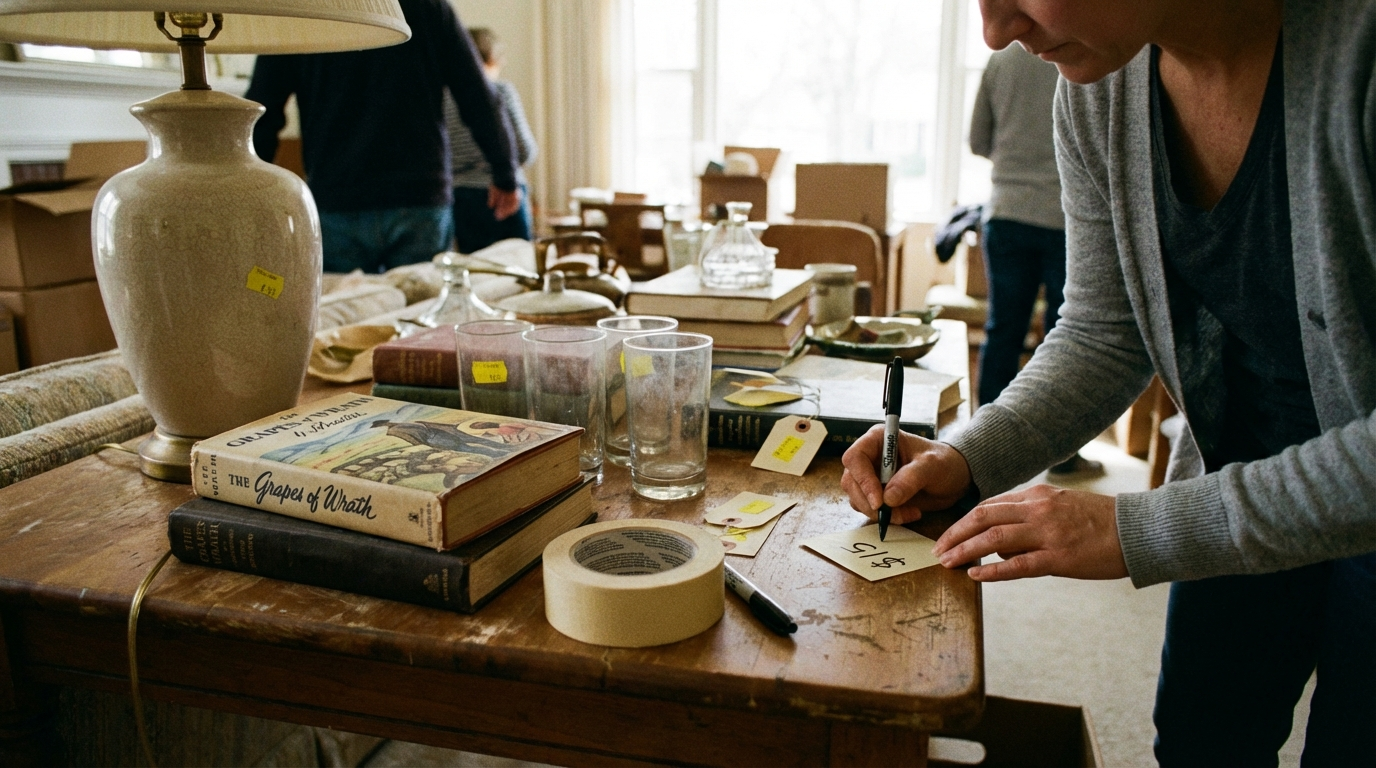
Before you donate a box of household items, five categories are worth a 30-second check: clothing and accessories, books, kitchenware, jewelry, and anything with a recognizable maker's mark. Most of what people give away is genuinely low-value—but the occasional vintage label, first edition, or marked piece is worth real money, and once it's in the donation bin it's gone. Here's how to spot the items worth a second look before they leave the house.
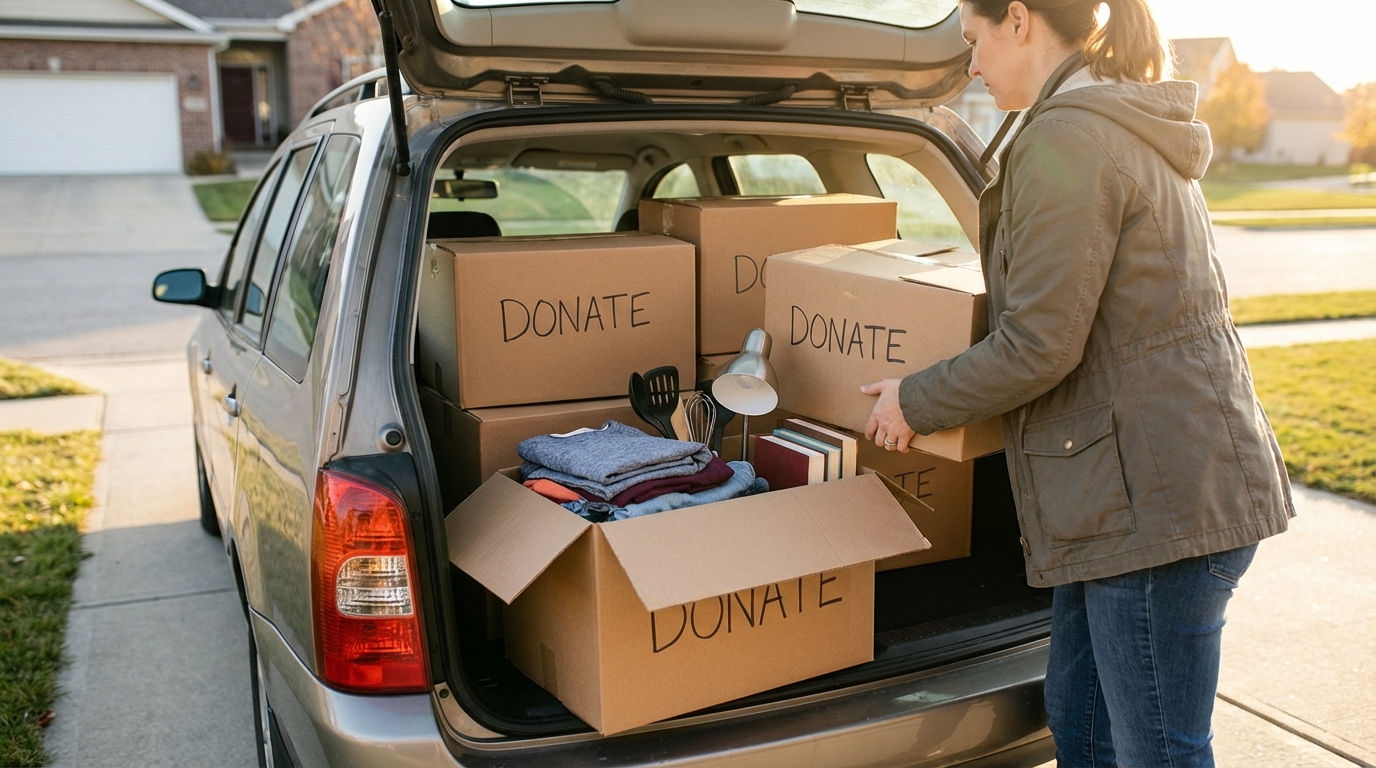
What should I check before donating?
Not everything needs scrutiny. Focus your attention on these categories:
Clothing and Accessories
Worth checking:
- Vintage (pre-1990) pieces with intact labels
- Designer or luxury brand labels
- Leather goods (bags, jackets, shoes)
- Quality construction (heavy zippers, substantial fabric)
- Vintage band t-shirts
- Vintage denim (especially Levi's, Lee, Wrangler from pre-1980)
Usually safe to donate without checking:
- Recent fast fashion (H&M, Zara, etc.)
- Basic worn-out items
- Mass-market brands in average condition
- Generic no-brand items
Red flags that suggest value: Labels you recognize from department stores in the 1960s-1980s, "Made in USA" or "Made in Japan" on vintage items, unusual quality that stands out from modern clothing.
Books
Worth checking:
- First editions of any well-known title
- Signed copies
- Books with dust jackets intact
- Illustrated books with color plates
- Vintage children's books
- Sets that appear complete and old
Usually safe to donate without checking:
- Book club editions (says "Book Club Edition" on jacket)
- Reader's Digest condensed books
- Most textbooks
- Encyclopedias (rare exceptions)
- Mass-market paperbacks in poor condition
Red flags that suggest value: "First Edition" or "First Printing" stated, author signature on title page, publication dates matching copyright dates, books about subjects with dedicated collectors.
Housewares and Kitchenware
Worth checking:
- Cast iron cookware (Lodge, Griswold, Wagner)
- Vintage Pyrex (especially colored/patterned pieces)
- Le Creuset and quality European cookware
- Pottery and ceramics with maker's marks
- Anything that feels substantially heavier or better-made than modern equivalents
Usually safe to donate without checking:
- Generic plastic items
- Chipped or damaged dishes
- Ordinary glassware (most of it)
- Recent mass-market kitchenware
Red flags that suggest value: Marks or stamps on the bottom, weight that suggests quality materials, design that looks intentionally "vintage" or "retro."
Furniture
Worth checking:
- Anything mid-century looking (clean lines, teak or walnut wood)
- Furniture with maker's labels or tags
- Pieces with quality construction (dovetail joints, solid wood)
- Unusual designs that stand out
Usually safe to donate without checking:
- Particle board furniture
- IKEA and big-box store pieces (you know what they cost)
- Visibly damaged items
- Generic 1990s-2000s furniture
Red flags that suggest value: Labels from furniture makers (especially Scandinavian names), construction quality visible in drawer joints, style that matches "mid-century modern" aesthetic.
Jewelry
Worth checking:
- All jewelry (it's small, it's fast to check)
Jewelry has extreme variance in value. A box of costume jewelry might contain one piece worth more than everything else in your donation combined.
Priority checks:
- Anything marked with gold karat stamps (10K, 14K, 18K)
- Sterling silver marks (925, Sterling)
- Designer signatures or maker's marks
- Heavy pieces (weight suggests precious metal)
- Older-looking pieces with quality construction
Identifying valuable vintage jewelry.
Art and Decorative Items
Worth checking:
- Anything with a signature
- Original art (paintings, prints, photographs)
- Sculpture and pottery
- Items that appear handmade or artist-made
Usually safe to donate:
- Mass-produced decorative items
- Obvious reproductions
- Items from craft stores
Red flags that suggest value: Signatures anywhere, gallery labels on backs of frames, numbered limited editions, unusual quality or construction.
Toys and Games
Worth checking:
- Vintage toys (pre-1990)
- Original Star Wars, GI Joe, Transformers (1980s)
- Vintage video games and consoles
- Board games with all pieces (vintage or niche)
Usually safe to donate:
- Recent mass-market toys
- Incomplete games or sets
- Generic stuffed animals
Collectibles
Worth checking:
- Vintage advertising items
- Mid-century decorative objects
- Quality barware and smoking accessories
- Musical instruments (even damaged ones can have value)
- Vintage technology (cameras, radios, etc.)
How do I check an item's value quickly?
You don't need to research every item. You need to quickly identify which items deserve research. A pair of pre-1980 Levi's or a 1960s department-store label can move an item from the donate pile to the check pile in seconds.
The process:
-
Visual scan: Does it look old? Does it look quality? Does it stand out?
-
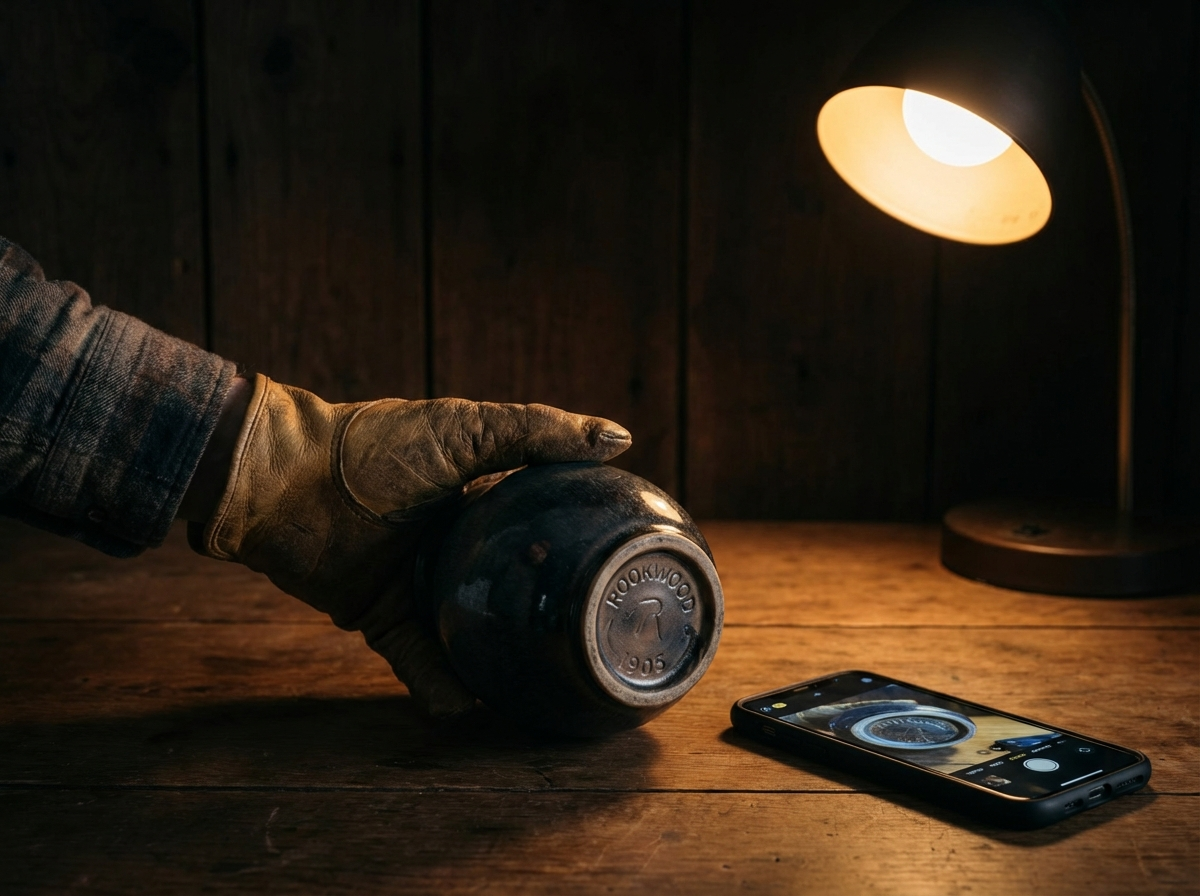
Mark check: Flip it over. Is there a label, stamp, or signature? If yes, it's worth 30 more seconds.
-
App scan: For items that passed the first two filters, scan with an appraisal app. In seconds, you'll know if it's worth listing or fine to donate.
This workflow lets you process a full carload in 15-20 minutes and catch the items worth your attention.
What do I do if I find something valuable?
If your quick check reveals something potentially valuable:
Under $50 value: Probably still donate it—the effort of selling may not be worth it for you. But now you know.
$50-200 value: Consider a quick listing on Facebook Marketplace or eBay. Low effort, reasonable return.
$200+ value: This is worth your time. Research it properly, photograph it well, list it on appropriate platforms.
Uncertain but possibly significant: Set it aside. Research when you have time. Don't donate under uncertainty if the potential value is high.
How should I think about donating vs. selling?
You're not trying to catch everything. You're trying to catch the significant misses.
The $5 item that goes to Goodwill? Fine. That's what donation is for.
The $500 item that goes to Goodwill? That's money walking out the door.
A quick check catches the $500 items—and the $50 items, and the $200 items. It takes minutes and saves money.
The Bottom Line
Before the donation run, take 15 minutes. Scan the boxes. Check the categories that commonly hold value. Flip things over. Look for marks.
You're not looking for everything to be valuable. You're looking for the exceptions—the overlooked items that are worth more than they look.
Catch those, and the rest can go to Goodwill with a clear conscience.