Are Your Old Comic Books Worth Money?
Most old comic books are worth $1–$20, but key first appearances sell for thousands—Action Comics #1 hit $6 million. Here's how to spot the valuable ones.
Most old comic books are worth between $1 and $20, but rare key issues sell for thousands to millions—a single copy of Action Comics #1 sold for $6 million in 2024. What separates a $2 comic from a six-figure one is almost never age. It's the first appearance, the condition, and how many copies survived. Here's how to tell which one you're holding.
How much are old comic books actually worth?
Most comics are worth a few dollars each. The average issue from the 1980s or 1990s—even one that feels old and nostalgic—was printed by the hundreds of thousands, sometimes the millions. Supply like that keeps prices low no matter how carefully you stored it.
But comics are a "key issue" market. Value concentrates in specific books: the first appearance of a character, a first issue, an origin story, a major death. A single one of those can be worth more than a thousand ordinary issues combined. The distance between a $2 comic and a $6 million one comes down to knowing which is which.

Which comic books are worth real money?
The $100,000+ tier: Golden and Silver Age keys
Action Comics #1 (1938). The first appearance of Superman, and the most valuable comic in the world. Only about 100 copies are believed to survive from the original print run, and the CGC census records just 78 graded copies. A CGC 8.5 sold for $6 million through Heritage Auctions in April 2024—the highest price ever paid for a comic. Even worn, incomplete copies trade in the six figures.
Detective Comics #27 (1939). The first appearance of Batman. High-grade copies have sold for over $2 million.
Amazing Fantasy #15 (1962). The first Spider-Man, and the most sought-after Silver Age book of all. A CGC 9.6 copy crossed the $1 million mark. Even well-read copies with visible wear commonly bring thousands.
The $1,000–$100,000 tier: Bronze Age first appearances
Incredible Hulk #181 (1974). The first full appearance of Wolverine. A pristine CGC 9.8 sold for $146,000 in 2022, and even a mid-grade CGC 9.0 has changed hands for around $6,500.
Giant-Size X-Men #1 (1975). Introduces the new team—Storm, Nightcrawler, Colossus. High-grade copies commonly list from the low thousands into five figures.
House of Secrets #92 (1971). The first Swamp Thing. A reliable bronze-age key that commonly sells in the low-to-mid thousands depending on grade.
The $50–$1,000 tier: Copper and Modern keys
New Mutants #98 (1991). The first appearance of Deadpool. Raw copies start around $80, a CGC 9.8 commonly sells for roughly $1,250, and a near-flawless CGC 9.9 has reached $11,700. Nobody knew, in 1991, what that character would become.
Other modern keys worth checking: Amazing Spider-Man #300 (first Venom), Batman Adventures #12 (first Harley Quinn), and The Walking Dead #1. These are the exceptions to the rule that newer comics aren't worth much—and they're worth a lot precisely because they're first appearances.
How do you identify a valuable comic book?
Key issues rule everything
Collectors chase the issue where something happens for the first time, not the run around it. Amazing Spider-Man #300 (first Venom) commands a premium; issue #301 next to it on the shelf is worth a fraction. A complete run is lovely to read, but the money lives in first appearances, origins, and deaths. Learn to spot those and you've learned most of what matters. Many of the same instincts apply to old magazines—it's the historic first, not the age, that people pay for.
Newsstand vs. direct—the fastest spotting trick
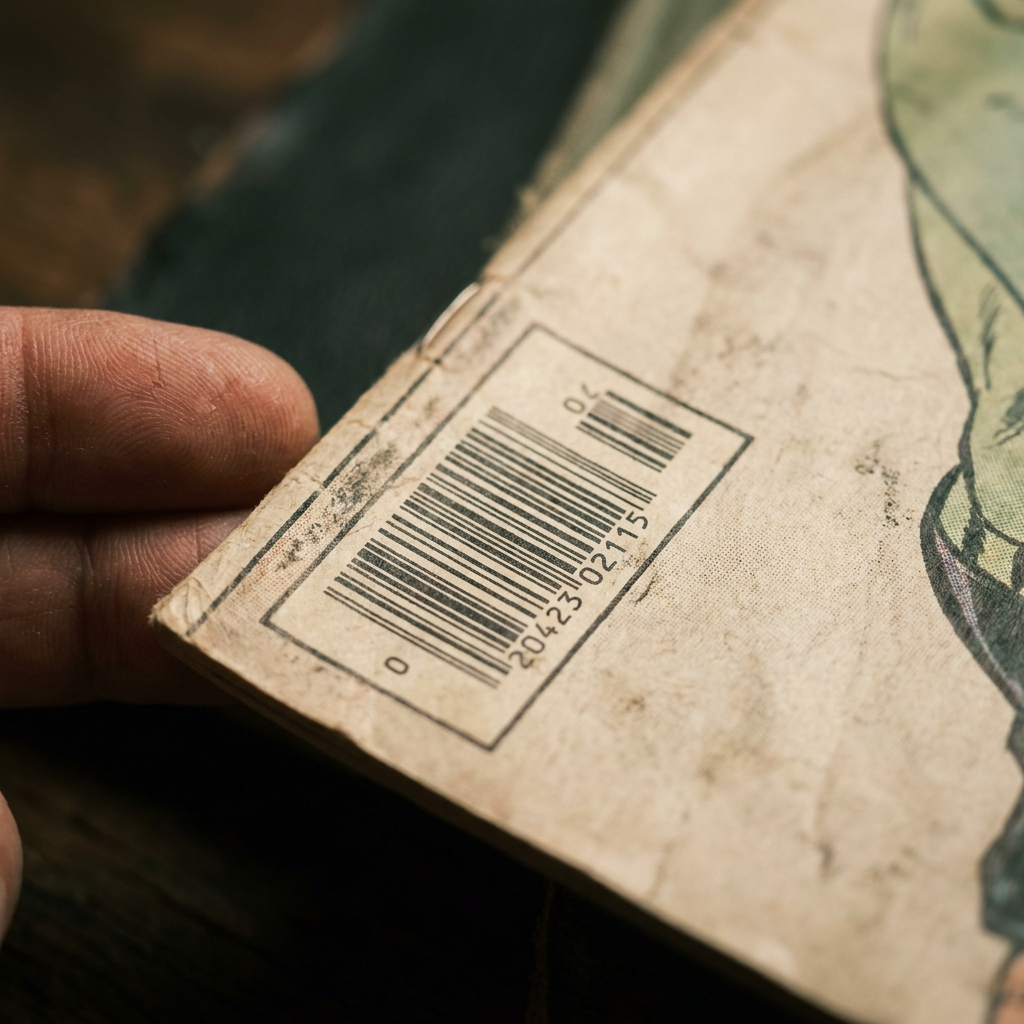
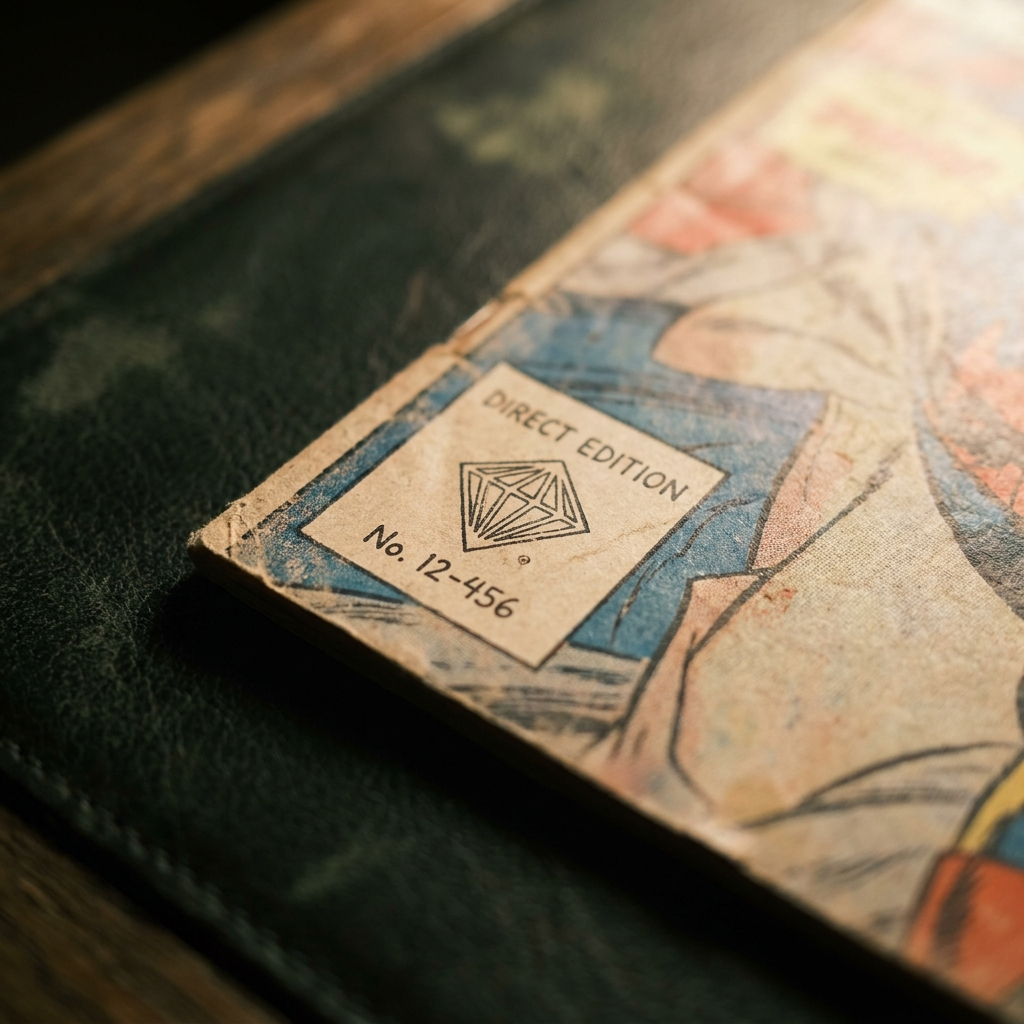
Flip to the box in the lower corner of the cover. A UPC barcode means a newsstand copy, sold in drugstores and supermarkets. A logo, a small diamond, or a character's face in that box means a direct edition, sold through comic shops. For decades newsstand copies dominated—in 1979, about 94% of Marvel's print run was newsstand. But by the 1990s and 2000s the ratio flipped, and newsstand copies became the scarcer version. For many modern keys, a newsstand printing can be worth several times its direct-edition twin. Same story, same date, different corner box.
Condition is the multiplier
Comics are graded on a 10-point scale, from Poor to Gem Mint. The gap is enormous: a book that's a $50 reader in Fine can be a $500 investment in Near Mint. Spine ticks, color-breaking creases, rounded corners, tape, and sun-fading all pull value down fast—and most of it can't be undone. Store the ones worth keeping in Mylar sleeves with acid-free backing boards, upright, out of sunlight and humidity.
Is it worth getting a comic professionally graded?
Grading—collectors call it "slabbing"—means sending a comic to a service like CGC, which authenticates it, assigns a numeric grade, and seals it in a tamper-evident case. It isn't free. In 2026, CGC's tiers run roughly $25–$30 for modern books, $35–$45 for pre-1975 vintage, and $75–$90 for books worth up to $1,000, with the most valuable comics graded at 3–4% of their value. Add membership and shipping and you're often $35–$65 per book all in.
The math is simple: slab when the graded copy is worth dramatically more than the raw one. A $50 raw comic that becomes $400 graded is worth every penny. A $20 comic that becomes $40 graded is not—you'd spend the difference on the grading itself. Grade the keys. Leave the reader boxes raw. When in doubt, cross-check a raw value against the Overstreet Comic Book Price Guide, the hobby's long-running standard, before you spend a dime.
Which comics are NOT worth much (and why)?
Here's the part that surprises people: age doesn't equal value. Most comics from the late 1980s through the 1990s were printed in enormous quantities during a speculation boom. X-Men #1 (1991) sold around 8 million copies—the best-selling comic of all time—which is exactly why a common copy is worth only a few dollars today.
The foil-cover, polybagged "collector's editions" of that era tell the same story. Everyone bought several to get rich, so almost no one did. Multiple copies, mint condition, zero scarcity. Reprints and modern facsimile editions carry little collector value, and a low-grade, water-stained common issue from any decade is worth exactly what it looks like: a couple of dollars. Like old books, a comic's value depends on demand and rarity, not simply on how long it's been sitting in a box.
Where is the best place to sell old comics?

For high-value keys, Heritage Auctions and other major auction houses reach serious collectors and set the record prices you read about. For mid-range and common issues, eBay offers the widest audience—search "sold listings" to price accurately, and pack carefully, because a bent corner in transit is a graded book ruined. Local comic shops and conventions are fastest for reader-grade boxes and let you skip shipping entirely.
Whichever route you choose, know your book before you list it. Our guide to where to sell breaks down the platforms by item type and value.
The bottom line
Your longbox is probably worth more in memories than money—most of it is $1 to $5 an issue. But "most" is the word that gets expensive when you're wrong.
The comics that command real money share three traits: a meaningful first appearance, a high grade, and genuine scarcity. Flip to the corner box, check the cover date, look up the first appearance. Thirty seconds tells you whether you're holding a reader or a record-setter.
Most old comic books are worth $1–$20 each, because they were printed in large quantities. Value concentrates in 'key issues'—first appearances of characters, first issues, origins, and major deaths. Those can be worth thousands to millions. Action Comics #1 (first Superman) sold for $6 million in 2024. The key factors are the first appearance, the condition (grade), and how many copies survived—not simply how old the comic is.
Action Comics #1 (1938), the first appearance of Superman, is the most valuable comic in the world. A CGC 8.5 copy sold for $6 million through Heritage Auctions in April 2024—the highest price ever paid for a comic. Only about 100 copies are believed to survive. Other seven-figure books include Detective Comics #27 (first Batman) and Amazing Fantasy #15 (first Spider-Man).
Check whether the issue introduces a character, a team, or a first issue of a series—those are the 'keys' collectors pay for. Note the publisher, title, and issue number, then look it up in a resource like the Overstreet Price Guide or recent sold listings. Also check the lower-corner box: a UPC barcode marks a newsstand edition, which on many modern keys is rarer and more valuable than the direct edition.
Most aren't. The late 1980s and 1990s were a speculation boom, and titles were massively overprinted—X-Men #1 (1991) sold around 8 million copies, so common copies bring only a few dollars. Foil covers and polybagged 'collector's editions' from that era are similarly abundant. The exceptions are genuine first appearances like New Mutants #98 (first Deadpool), which can be worth hundreds to thousands in high grade.
Only when grading meaningfully raises the value. In 2026, CGC grading runs roughly $25–$45 per book for standard tiers, and $35–$65 all in once you add membership and shipping. Grade a comic when a raw copy worth, say, $50 becomes $400+ once slabbed. It's not worth grading a $20 comic that becomes $40—you'd spend the difference on the service. Grade your keys; leave common issues raw.