Are Your Old Film Cameras Worth Money?
Most old film cameras are worth $20–$300, but rare Leica and Contax bodies sell for thousands. Here's how to identify yours and what it's worth.
Most old film cameras are worth $20–$300, but the right body or lens can bring thousands — and one Leica prototype sold for the equivalent of $15 million. What separates a $40 shelf camera from a four-figure one is the brand, the exact model, and whether it still works. Here's how to tell which one you're holding.
How much are old film cameras actually worth?
Most old film cameras are worth $20–$300. That Kodak Brownie your grandfather kept on the mantel? Charming. Historic. Worth about $30 on a good day. The same is true for most 1970s and 1980s consumer cameras — millions were made, and millions have survived.
But the same decades produced cameras that a global collector base tracks obsessively. A clean Contax T2 point-and-shoot that cost around $400 fifteen years ago now sells serviced for roughly $2,000. A Leica 0-Series prototype — camera no. 105 — sold for €14.4 million (about $15 million) at the 40th Leitz Photographica Auction in 2022, the most anyone has ever paid for a camera.
The distance between $30 and $15 million comes down to knowing exactly what you have. Here's how to read it.
Which film cameras are worth real money?
The $1,000+ tier: Leicas, pro medium format, and cult compacts
Leica rangefinders. Leica is the name that anchors the top of the market. The prototype 0-Series bodies are museum pieces — no. 105 set the $15 million world record in 2022, and a second 0-Series sold for €7.2 million in 2025. You almost certainly don't own one of those two dozen survivors. But even ordinary user Leicas hold serious value: an M3, M2, or M6 in good working order is commonly listed between $1,500 and $4,000, and clean examples climb from there.
Contax T2 and T3. These titanium compacts with Carl Zeiss lenses became the most sought-after point-and-shoots on the market. A serviced T2 sells for around $2,000 — up from $400–$500 in the early 2010s and past $1,000 by the early 2020s.
Professional medium format. A Mamiya 7 II rangefinder that listed near $2,200 in 2019 was selling closer to $3,300 by 2021. Hasselblad 500-series kits and Rolleiflex twin-lens reflex cameras commonly list between $1,000 and $2,500 with a good lens attached.
The $300–$1,500 tier: pro SLRs and premium compacts
Pro-body SLRs. The mechanical Nikon F, F2, and F3 — the cameras that shot decades of photojournalism — commonly list between $200 and $700 depending on finish and metering.
Premium point-and-shoots. Below the Contax T2 sits a whole tier of compacts collectors chase: the Ricoh GR1v and Nikon 35Ti commonly list between $700 and $1,300, the Minolta TC-1 in the same range, and the Yashica T4 and Olympus mju II (Stylus Epic) between $300 and $600. All were built around sharp fixed lenses, which is the whole point.
Rangefinders on the rise. The Canon Canonet QL17 GIII has climbed as much as 70% since 2019 as buyers priced out of Leica look for an affordable rangefinder.
The $50–$300 tier: student SLRs, climbing fast
The workhorse SLRs that taught a generation photography sit here — and their prices are moving. The Canon A-1 roughly doubled in two years, reaching about $160. The Olympus OM-4 and Minolta X700 each rose around 75% in the same window, and the pocketable Olympus XA climbed up to 70% since 2019. The Canon AE-1 and Pentax K1000 — the classic first cameras — commonly list between $80 and $200 with a working meter and a lens.
There's a real gap between these and the four-figure bodies. But supply is fixed and demand keeps growing, so the floor keeps rising.
How do you identify a valuable film camera?
Serial numbers date the body
The number engraved on the top plate is your first and most reliable dating tool. Leica has kept sequential production records since the 1920s, so a serial number can pin a body to its manufacturing year, confirm the original model and its authenticity, and even flag conversions. It's also how experts spot fakes — Soviet copies dressed up as Leicas carry serial numbers that break the real sequence.
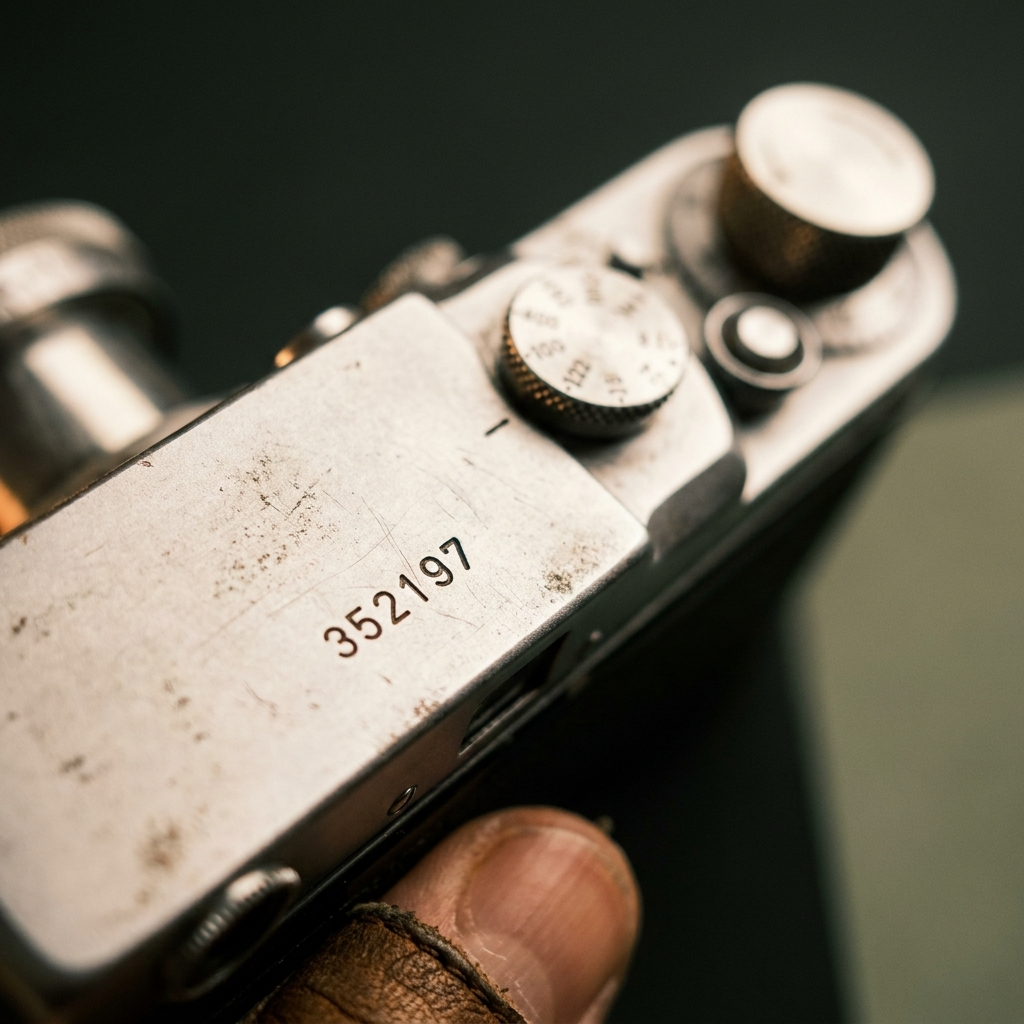
Other makers hide the date in code. Hasselblad stamped a two-letter code near the film gate that decodes with the cipher V-H-P-I-C-T-U-R-E-S standing in for the digits 1 through 0 — so a body marked "VH" left the factory in 1966. Nikon and Canon kept their own serial systems. The lesson is the same across brands: flip the camera over and read the numbers before you guess. Software like Patina's identification tool can decode most of these markings from a single photo.
The lens can be worth more than the camera
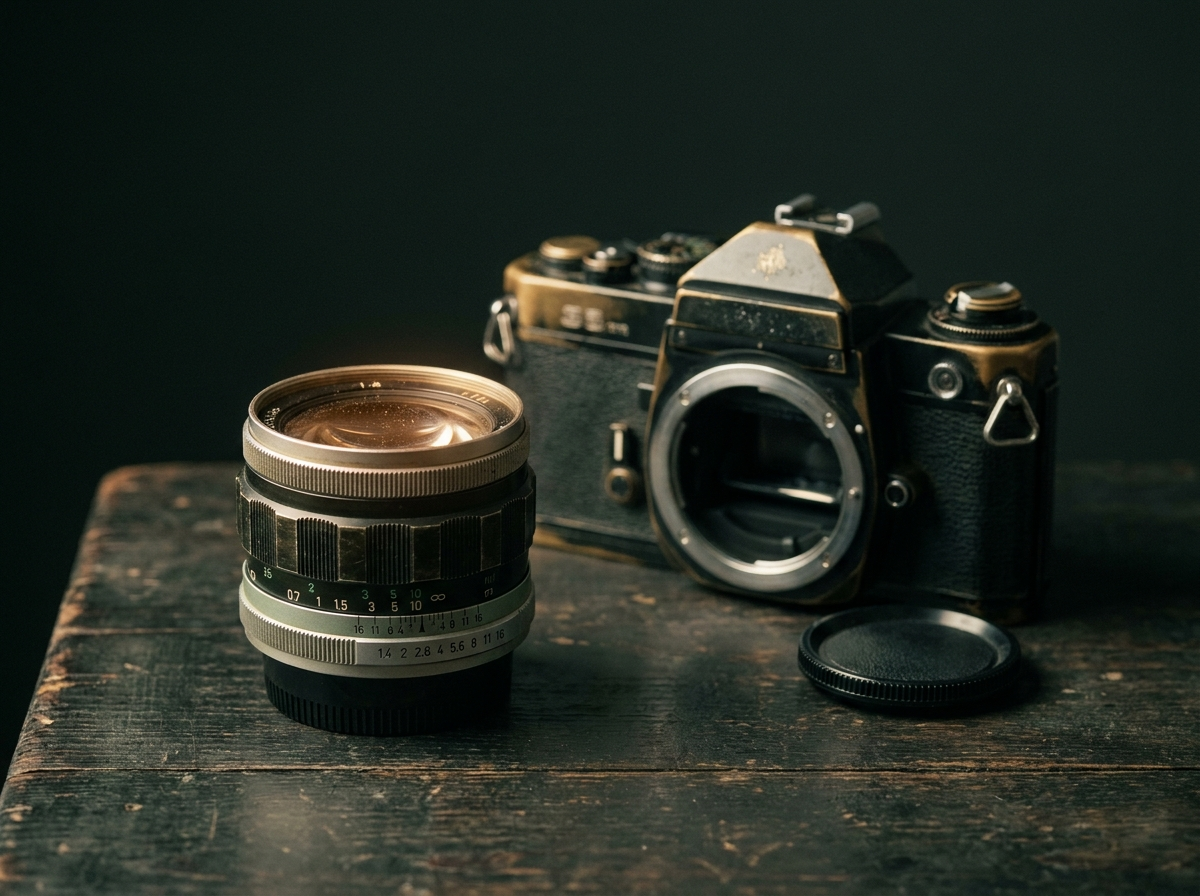
Here's what surprises most people: the glass often outvalues the body. A plain Nikon F body might list for a couple hundred dollars, while a fast Nikkor prime like the Noct-Nikkor 58mm f/1.2 commonly sells in the thousands. Leica M-mount lenses, Carl Zeiss glass, and the sharp fixed lenses inside those premium compacts are what buyers are really paying for. If you inherited a camera bag, the lenses deserve as much attention as the bodies — sometimes more.
Condition: working beats pretty
A camera that fires is worth far more than one that only looks good. With film gear, "working" means the shutter fires at the right speeds, the light meter responds, and the seals haven't rotted. A dead meter, a sticky shutter, or fungus blooming inside a lens can cut value by half or more. Display-only bodies — beautiful on a shelf, dead in the hand — sell to decorators, not photographers, and decorators pay less. Original cases, boxes, caps, and manuals all add value on top.
Which cameras are NOT worth much (and why)?
Kodak Brownies, Instamatics, and box cameras. Produced in the tens of millions. Most sell for $10–$40 no matter how old they look — age isn't the same as rarity.
Cartridge cameras (110 and 126 format). The film is hard to find and the cameras were cheap to begin with. Little collector interest.
Broken bodies. A jammed shutter, a dead meter, fungus, or crumbling light seals drop a camera to parts value. Sellers sometimes list these as "display pieces" — experienced buyers know the difference.
Late plastic autofocus point-and-shoots. With the exception of the premium compacts above, most 1990s plastic point-and-shoots are worth $10–$30. The market is saturated.
Where is the best place to sell an old film camera?
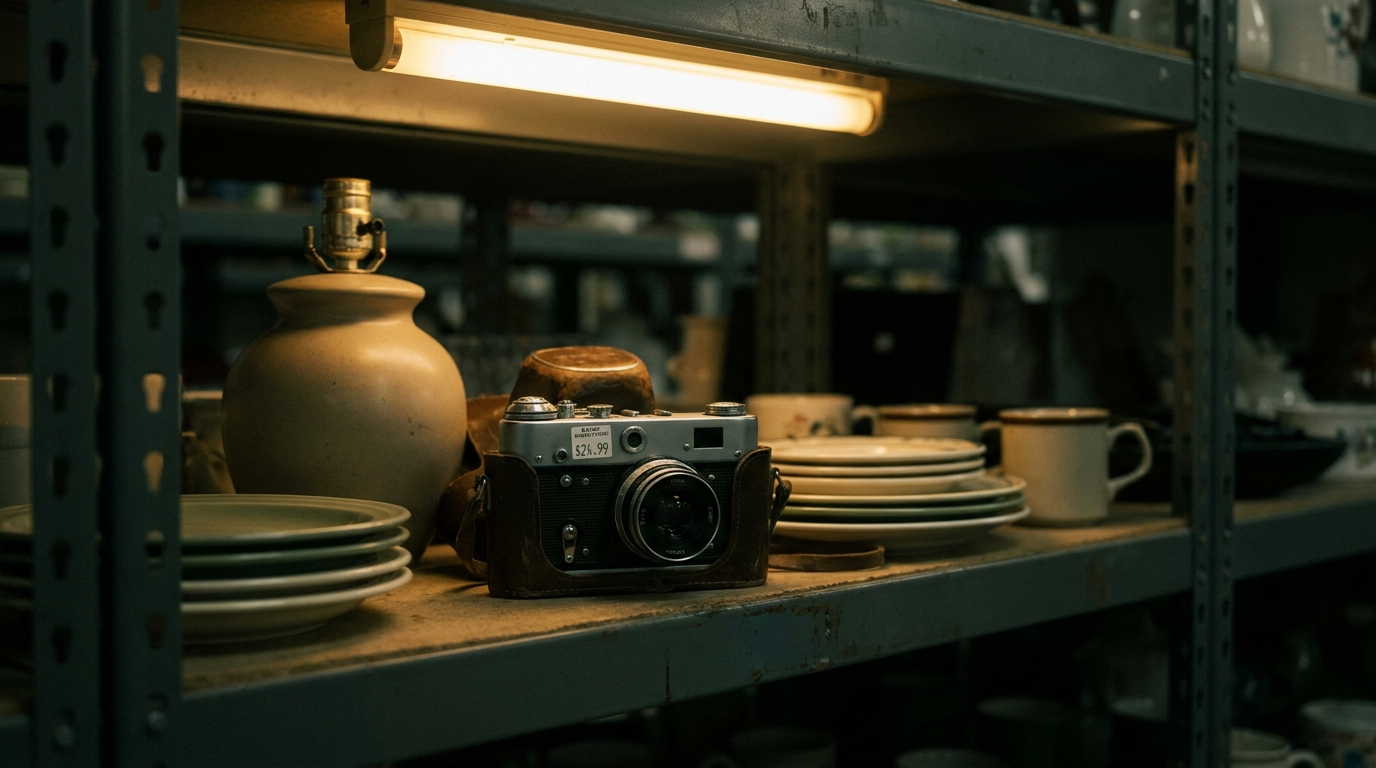
Specialist used-camera dealers like KEH and MPB buy directly and price against a live market — the fastest route for common working gear. eBay offers the widest reach; use the "sold listings" filter to price accurately, and pack carefully, because shutters and lenses don't survive rough shipping. For genuinely rare bodies, dedicated camera auctions — the same Leitz Photographica sale that set the $15 million record — reach the collectors who pay the most. Local camera shops and estate sales work well for common models where shipping isn't worth the hassle. For a full breakdown by platform, see where to sell.
Why values keep climbing
Film had a comeback, and it's still building. Roughly 42 million people shoot film today, and about 35% of them are between 18 and 30 — a young audience that didn't grow up with these cameras and is buying them now. Searches for analog photography rose 41% year over year in 2024, which the photography press called film's best year in decades.
That demand meets a fixed supply. No one is manufacturing a 1980 Canon A-1 anymore. Every body that jams, molds, or gets tossed shrinks the pool, while a new generation drawn to mid-century design and tactile, off-screen hobbies keeps arriving. The gap between common cameras and desirable ones widens every year.
The bottom line
Your old camera is probably worth $30 to $300. But "probably" gets expensive when the body on the shelf turns out to be a Contax T2 or a Leica M-something.
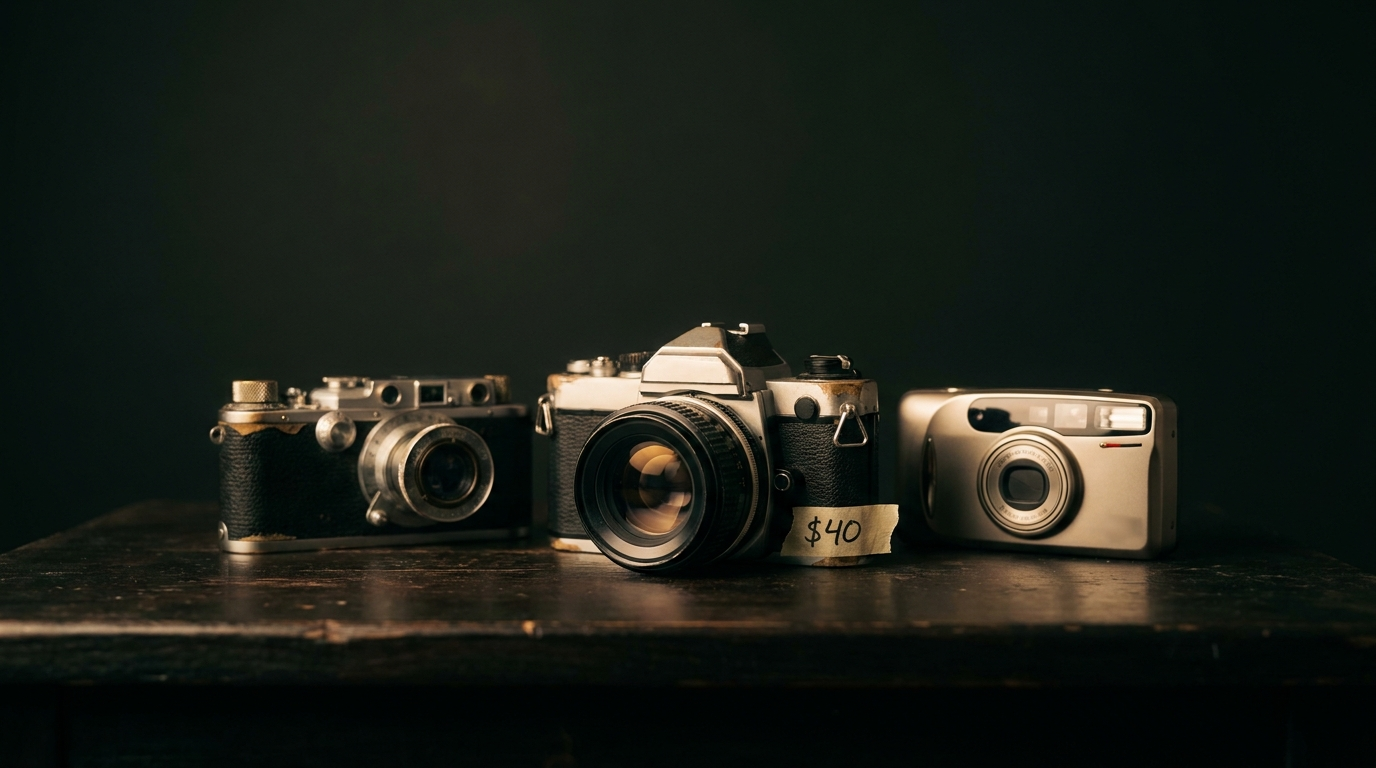
The cameras that command real money share three traits: a respected maker with a tracked serial history, a sharp lens people still want to shoot, and working mechanics — not just good looks. Flip the camera over, read the serial number, and check whether the shutter fires. Two minutes of looking is the difference between a $40 yard-sale giveaway and a listing collectors fight over.
Most old film cameras sell for $20–$300. Common consumer models like Kodak Brownies, Instamatics, and 1980s student SLRs have modest value because so many survive. But sought-after bodies can be worth much more: a serviced Contax T2 sells for around $2,000, pro Nikon and Leica rangefinders reach $1,500–$4,000+, and the rarest Leica prototype sold for the equivalent of $15 million. Value comes down to the maker, the exact model, working condition, and the lens attached.
A Leica 0-Series prototype — camera no. 105, one of roughly two dozen made in the 1920s — holds the record, selling for €14.4 million (about $15 million) at the 40th Leitz Photographica Auction in 2022. A second 0-Series sold for €7.2 million in 2025. Among cameras people actually own and use, premium compacts like the Contax T2 (~$2,000) and professional medium-format gear like the Mamiya 7 II (~$3,300) sit at the top.
Start with the serial number engraved on the top plate. Leica has kept sequential production records since the 1920s, so the number can date the body and confirm the model. Other makers use codes — Hasselblad stamped a two-letter date code near the film gate using the cipher V-H-P-I-C-T-U-R-E-S for the digits 1 through 0. Then note the exact model name, lens mount, and any markings, and check that the shutter and meter still work.
Kodak Brownies, Instamatics, and box cameras were made in the tens of millions and typically sell for $10–$40 regardless of age. Cartridge-format cameras (110 and 126) have little demand because the film is hard to find. Most 1990s plastic autofocus point-and-shoots — outside a handful of premium models — sell for $10–$30. And any camera with a jammed shutter, dead meter, or lens fungus drops to parts value.
Specialist used-camera dealers like KEH and MPB buy directly and price against a live market — the quickest route for common working gear. eBay offers the widest reach; use sold listings to price and pack carefully. For rare bodies, dedicated camera auctions (such as Leitz Photographica) reach collectors who pay the most. Local camera shops and estate sales work for common models where shipping isn't worth it.