Are Your Old Coins Worth Money? Dates to Check
Most jar coins are worth face value. But pre-1965 silver and a few rare wheat pennies bring far more. Here's how to spot the coins actually worth money.
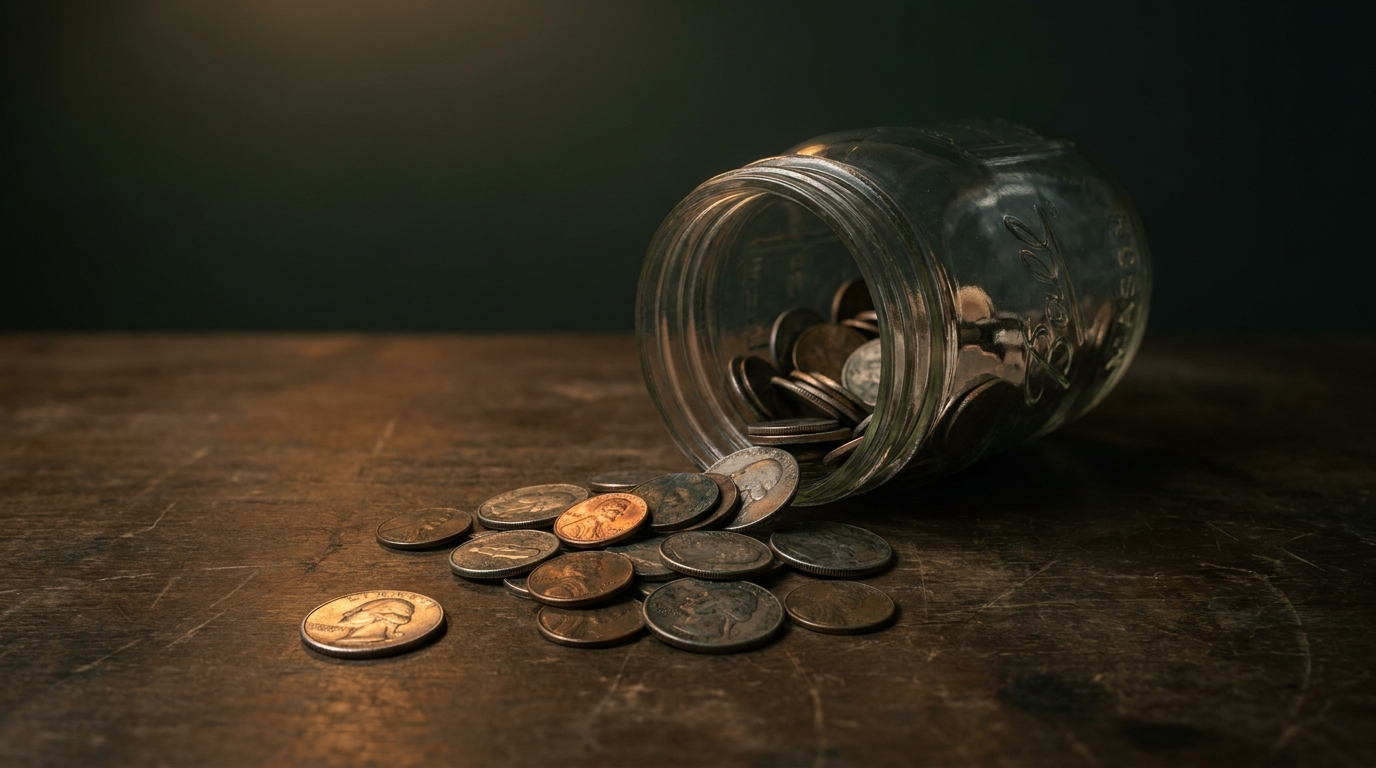
Most coins in that jar are worth exactly their face value—a penny is a penny. But a few are worth real money: every U.S. dime, quarter, and half dollar made before 1965 is 90% silver, and a handful of wheat pennies bring hundreds to thousands of dollars. What separates a one-cent coin from a four-figure one is the date, the mint mark, and whether it's an error. Here's how to read your own coins.
How much are old coins actually worth?
Let's be honest up front. If you inherited a coffee can of loose change or a cigar box of your grandfather's coins, most of it is worth face value. Old does not mean valuable. A worn 1948 penny is still a penny. A 1970s dime is still ten cents. Circulation made billions of these, and billions survive.
But mixed into that jar are usually a few coins that are worth far more than their stamped value—and they don't announce themselves. They look ordinary. The trained eye knows to check three things: the date, the mint mark, and the metal. Miss those, and a $150 coin goes to the Coinstar machine for a dime.
Which coins are worth real money?
The $1,000+ tier: rare errors and key dates
The 1943 bronze cent. In 1943, pennies were struck in zinc-coated steel to save copper for the war. A tiny number were mistakenly struck on leftover bronze blanks—and those errors are among the most valuable coins in America. Genuine examples commonly sell in the six figures; one 1943-D bronze cent sold for roughly $1.7 million. The catch: almost every "copper 1943 penny" people find is an ordinary steel cent, and steel is common. There's a thirty-second test for it below.
The 1955 Doubled Die cent. A misalignment during die production left the date and lettering visibly doubled—you can see it with the naked eye. Roughly 40,000 were struck in a single Philadelphia night shift before anyone caught it. Circulated examples commonly list in the $1,000–$2,000 range, and higher for clean ones.
The 1909-S VDB cent. The first Lincoln cents carried designer Victor David Brenner's initials, "VDB," on the reverse. The San Francisco version had a tiny mintage before the initials were removed. It's one of the most famous key dates in American coins—even well-worn examples commonly bring several hundred dollars.
The $50–$500 tier: key-date wheat pennies
Not every valuable wheat penny is a museum piece. A short list of dates carries real, dependable value even in circulated condition:
1914-D—commonly listed in the low hundreds. 1922 "Plain" (a Denver cent where the D failed to strike)—a genuine one is a collector target. 1931-S—low mintage, commonly listed around $75–$150. These aren't life-changing, but they're the coins that quietly hide in an inherited roll. The distance between them and a common 1950 penny comes down to a single mint mark and a date.
The hidden tier: silver in plain sight
This is the one most people miss. Every dime, quarter, and half dollar the U.S. minted through 1964 was struck in 90% silver. In 1965 that stopped—the Coinage Act pulled silver out of circulating dimes and quarters and dropped the half dollar to 40% silver (through 1970).
That means a beat-up 1964 quarter isn't worth 25 cents. It's worth whatever its silver content is worth—and a pre-1965 dime holds about 0.072 troy ounces of silver, a quarter about 0.18. Multiply by the day's silver price and these "junk silver" coins routinely trade for many times face value. The value floats with the silver market, so it moves day to day. But it never drops back to a dime.
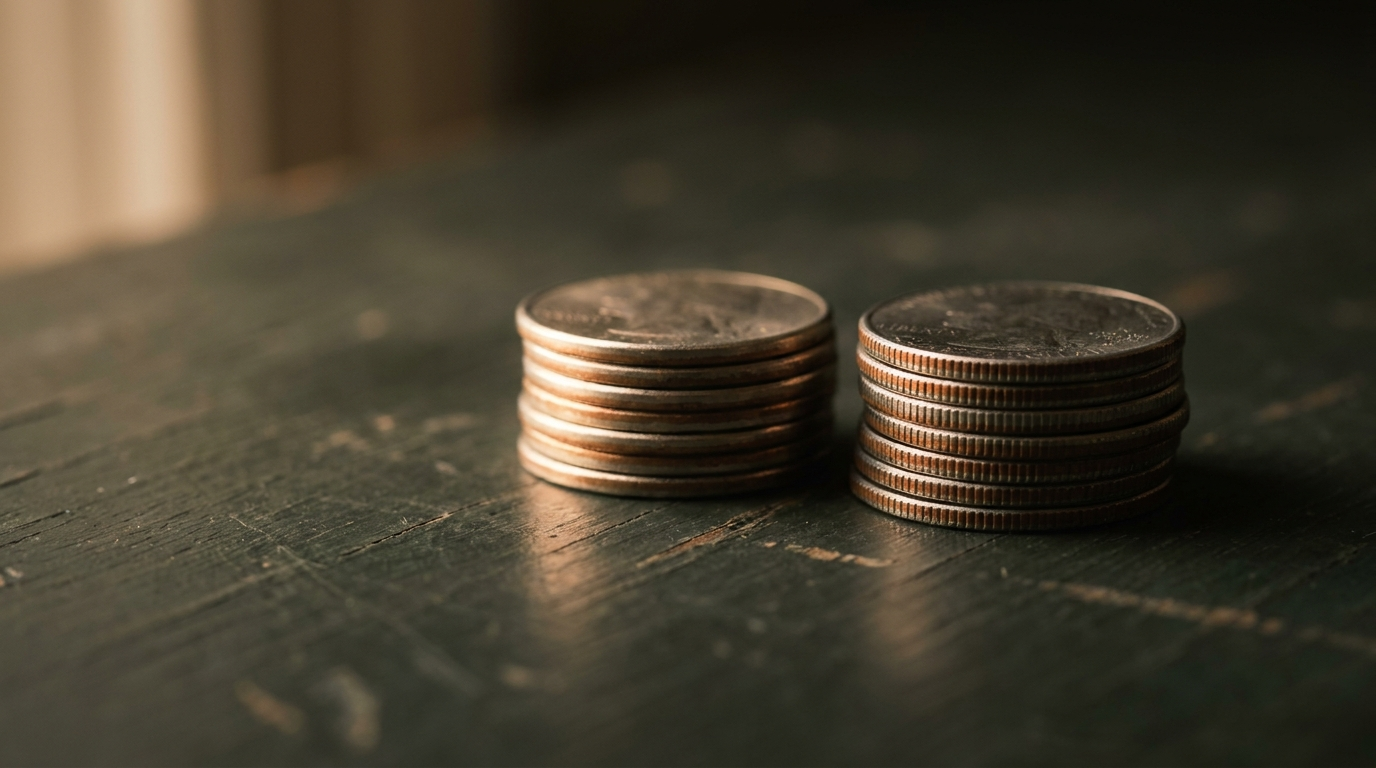
How do you identify a coin worth checking?
The date and mint mark are your first read
Every U.S. coin tells you two things: when it was made and where. The date is obvious. The mint mark is a single small letter—D for Denver, S for San Francisco, P or no letter for Philadelphia, W for West Point. On Lincoln cents it sits just under the date; on many other coins it moved around over the years.
That letter matters more than the design. The difference between a common coin and a key date is often nothing but the mint mark—the same year struck in a different city, in a smaller quantity. Read the date first. Then find the letter.
Wheat pennies: check the back
Flip any old-looking penny over. If you see two stalks of wheat framing the words "ONE CENT," it's a wheat cent—minted from 1909 to 1958. That alone doesn't make it valuable; most wheat pennies are worth a few cents. But it tells you to slow down and read the date and mint mark, because the key dates above all live in this series.
The magnet test for 1943 pennies
Found a 1943 penny that looks copper? Hold a magnet to it. A 1943 steel cent—the common one—snaps right to the magnet. A genuine 1943 bronze error does not stick, because bronze isn't magnetic. If it sticks, it's steel, and steel 1943 cents are worth a few cents to a dollar. If it truly doesn't stick and it's really dated 1943, that's the moment to get it authenticated by a professional grading service before you do anything else. Understanding what appraisers look for is what separates a real find from wishful thinking.
Why you should never clean a coin
Here's the mistake that costs people the most money, and it feels like the opposite of a mistake.
Do not clean your coins. Not with polish, not with vinegar, not with a cloth. That dark, aged surface—the toning, the patina—is exactly what collectors want, because it proves the coin is original and untouched. Scrub it and you leave microscopic scratches that a grader spots instantly. A cleaned coin gets flagged as "details" rather than a clean numeric grade, and its value can fall by half or more. It is irreversible.
The instinct is understandable. A shiny coin looks more valuable. But in coins, the market pays for honesty, not shine. When in doubt, leave it exactly as you found it and let the trained eye—yours or an expert's—read it dirty.
Which coins are NOT worth much (and why)?
Most wheat pennies. Common dates from the 1940s and 1950s are worth a few cents each. Charming, collectible, but abundant.
Steel 1943 cents. These are the common version—magnetic, silver-gray. Worth a few cents to about a dollar. Only the bronze error is valuable.
Worn common-date silver. Even here there's a floor: the silver itself. A smooth-worn 1962 dime still carries its metal value.
Modern clad coins. Dimes and quarters from 1965 on are copper-nickel with no silver. Unless it's a notable error, a 1998 quarter is worth 25 cents.
Coins someone already polished. Sadly, a cleaned key date is worth a fraction of an original one. The damage is done.
Which coins in your pocket change are worth checking?
Pennies, quarters, and nickels are the most-searched "worth money" coins of 2026, and a few still turn up in circulation. Wartime nickels from 1942 to 1945 contain 35% silver and show a large mint mark above Monticello on the back. Pennies dated 1982 come in two versions, copper and zinc, and the heavier copper ones (3.11 grams versus 2.5) are worth more than face value in bulk. Quarters from 2019 and 2020 with a "W" mint mark from West Point were released only into circulation in small numbers and sell for $10 to $20 or more, and the 2004-D Wisconsin quarter with an "extra leaf" on the corn stalk brings $50 and up. None of these will fund a retirement, but they're the reason to look before the coin-counting machine does.
Where is the best place to sell old coins?
Local coin shops are the fastest route for silver and common key dates. Bring your pre-1965 silver as a group—dealers buy "junk silver" by weight against the day's price. Get a second quote if the number feels low.
Reputable online dealers and auction houses suit genuine rarities—a real 1909-S VDB or an authenticated error belongs where serious buyers compete. For anything that might be four figures, professional grading (PCGS or NGC) protects both you and the buyer.
eBay works for mid-tier coins with good photos; search "sold" listings to price honestly. Coin shows put you in front of dozens of dealers in one room, which is useful for both selling and learning what you have.
Whatever the channel, know roughly what you hold before you walk in. Our guide on where to sell breaks down the trade-offs by platform.
The bottom line
Your jar of old coins is probably worth a little more than face value—and occasionally a lot more. The coins that carry real value share a pattern: they were made in small numbers (key dates, errors), they were struck in silver (anything before 1965), or they survived untouched (no cleaning, original surfaces).
So before that jar goes anywhere, do three things. Check the dates—anything pre-1965 in silver, anything on the wheat-penny key list. Find the mint mark, that single small letter. And keep your hands off the surface. The whole pass takes a few minutes, and it's the difference between a coffee can of "old change" and a small stack that's quietly worth checking.
Most wheat pennies (minted 1909–1958) are worth only a few cents—common dates from the 1940s and 1950s were made in enormous quantities. But a short list of key dates carries real value even when worn: the 1909-S VDB, 1914-D, 1922 'Plain,' and 1931-S can bring anywhere from the low hundreds to several hundred dollars. The 1955 Doubled Die and the rare 1943 bronze error are worth far more. Always check the date and mint mark before spending a wheat penny.
Start with three checks. First, any dime, quarter, or half dollar dated 1964 or earlier—those are 90% silver and worth many times face value. Second, wheat pennies (two wheat stalks on the back), then read the date and mint mark for key dates. Third, any 1943 penny that looks copper rather than steel—test it with a magnet. Those three passes catch the overwhelming majority of hidden value in an ordinary jar.
Often, yes—because of silver. Every U.S. dime, quarter, and half dollar struck through 1964 is 90% silver. In 1965 the Coinage Act removed silver from circulating dimes and quarters and cut the half dollar to 40% silver through 1970. That means even a worn pre-1965 quarter is worth its silver content, which floats with the silver market but stays well above its 25-cent face value. Collectors call these 'junk silver,' and dealers buy them by weight.
No—cleaning is the single most common way people destroy coin value. Polishing or scrubbing leaves microscopic scratches and strips the original surface, which collectors and grading services can spot instantly. A cleaned coin is flagged as 'details' rather than given a clean grade, and can lose half its value or more. The damage is permanent. Leave coins exactly as you found them, dirt and toning included.
Use a magnet. In 1943, pennies were struck in zinc-coated steel, and those steel cents are magnetic and common—worth a few cents to about a dollar. A tiny number were struck by mistake on leftover bronze blanks, and those are worth six figures. A genuine 1943 bronze cent will NOT stick to a magnet. If yours sticks, it's ordinary steel. If it truly doesn't stick and it's dated 1943, have it authenticated by a professional grading service before doing anything else.
For pre-1965 silver and common key dates, a local coin shop is fastest—bring silver as a group, since dealers buy it by weight. For genuine rarities and authenticated errors, reputable online dealers and auction houses reach serious buyers. eBay works for mid-tier coins if you use good photos and check 'sold' listings for real prices. For anything potentially worth four figures, professional grading (PCGS or NGC) protects both you and the buyer.