Are Old Vinyl Records Worth Money? What Sells
Most old vinyl is worth $5–$25, but rare first pressings sell for thousands—and one Beatles LP hit $125,000. Here's how to identify what you have.
Most old vinyl records are worth $5–$25, but rare first pressings in clean condition sell for hundreds to thousands of dollars—and the right record at the right auction can reach six figures. What separates a $10 record from a $10,000 one is the pressing, the condition, and a set of tiny codes etched into the run-out groove. Here's how to tell which one you have.
How much is old vinyl actually worth?
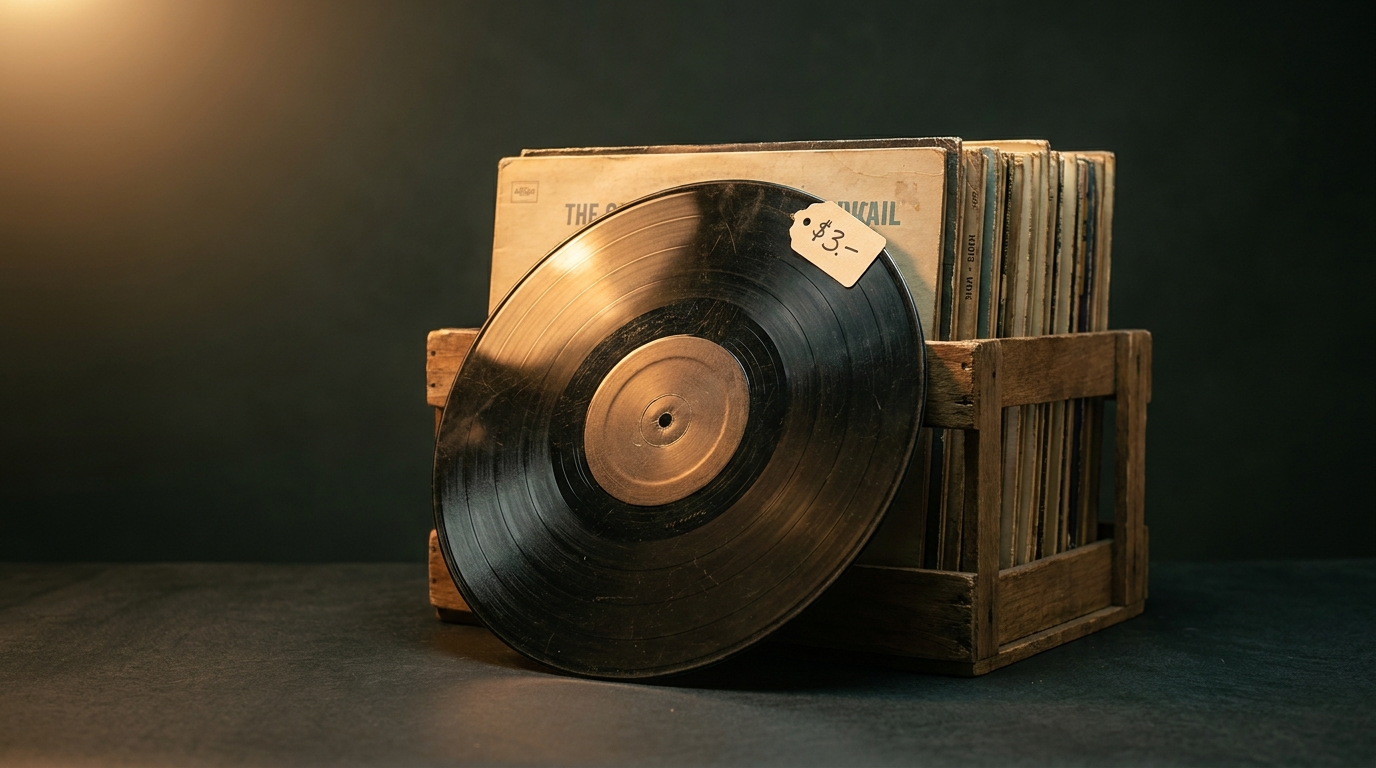
Most records are worth $5–$25. That boxed set of easy-listening LPs, the scratched classic-rock reissue, the church-sale classical stack—charming, but common. Millions of copies were pressed, most people kept them, and supply still swamps demand. A worn copy of a record that sold ten million units is worth about a dollar.
But the same title can exist in two forms that look nearly identical and price a hundred times apart. A first pressing—the earliest run, struck from the original metalwork before any corrections—can command a serious premium. A later reissue of the same album, printed decades afterward, usually doesn't. The jacket art can be identical. The difference lives in details most people never check.
The distance between $10 and $10,000 comes down to knowing which pressing you're holding. Here's how to read it.
Which vinyl records are worth real money?
The $10,000+ tier: one-of-ones and withdrawn pressings
The Beatles, "Yesterday and Today" (butcher cover, 1966). Capitol pulled this album's original cover—the band posed with raw meat and dismembered dolls—almost immediately, making the surviving "first state" copies grails. A sealed first-state stereo copy set a world record when Heritage Auctions sold one for $125,000. Peeled, pasted-over, and second-state copies exist in far greater numbers and sell for far less.
Bob Dylan, "The Freewheelin' Bob Dylan" (stereo, 1963). A tiny early run went out with four songs Columbia later deleted, including "Talkin' John Birch Blues." Only about three stereo copies with the withdrawn tracks are known to exist. When Heritage offered one, it was described as a record they'd never been able to bring to auction before. Reported sales sit around $150,000.
Elvis Presley, "My Happiness" (1953 acetate). The first thing Elvis ever recorded—a one-off acetate cut at Sun Studio when he was eighteen. It sold for a reported $300,000 at a 2015 Graceland auction; the buyer was later revealed to be Jack White.
Wu-Tang Clan, "Once Upon a Time in Shaolin." A deliberate one-of-one—a single copy was ever manufactured. It has changed hands privately for reported sums in the millions, which makes it less a record than a piece of conceptual art. You do not have this one in your basement. But it explains the ceiling.
The $500–$5,000 tier: first pressings and rare variants
Sex Pistols, "God Save the Queen" (A&M, 1977). A&M pressed the single, then destroyed almost the entire run after dropping the band days later. The handful of surviving copies are among the most valuable records in punk, commonly listed in the four to five figures.
The Velvet Underground & Nico (1967). The famous Andy Warhol "peelable banana" cover matters, but so does the pressing: early versions with a withdrawn back-cover photograph (the "torso" variant) sell for thousands when authenticated.
Original mono Blue Note jazz pressings. First pressings from the label's 1950s–60s peak—identified by deep-groove labels, the correct address on the label, and "ear"-stamped dead wax—regularly bring $500–$3,000+ in strong condition, more for the rarest titles.
Prices in this tier swing hard on condition and on whether the copy is genuinely a first pressing rather than a clean reissue. Verify before you celebrate.
The $50–$500 tier: clean first pressings of the classics
Original first pressings of landmark rock, soul, and jazz albums—in Near Mint condition, with the correct labels and intact jackets—land here. Original mono copies often outvalue their stereo counterparts. Audiophile pressings and promotional copies climb, too. These aren't grails, but the prices are steady and rising as clean copies get harder to find.
Under $20: what most records actually are
Later reissues, 1970s–80s major-label pressings of huge sellers, easy-listening and light-classical stacks, and anything with visible scratches or ring wear. Enormous supply, modest demand. Beautiful to own. Not an investment.
How do you identify a valuable pressing?
The dead wax tells the story
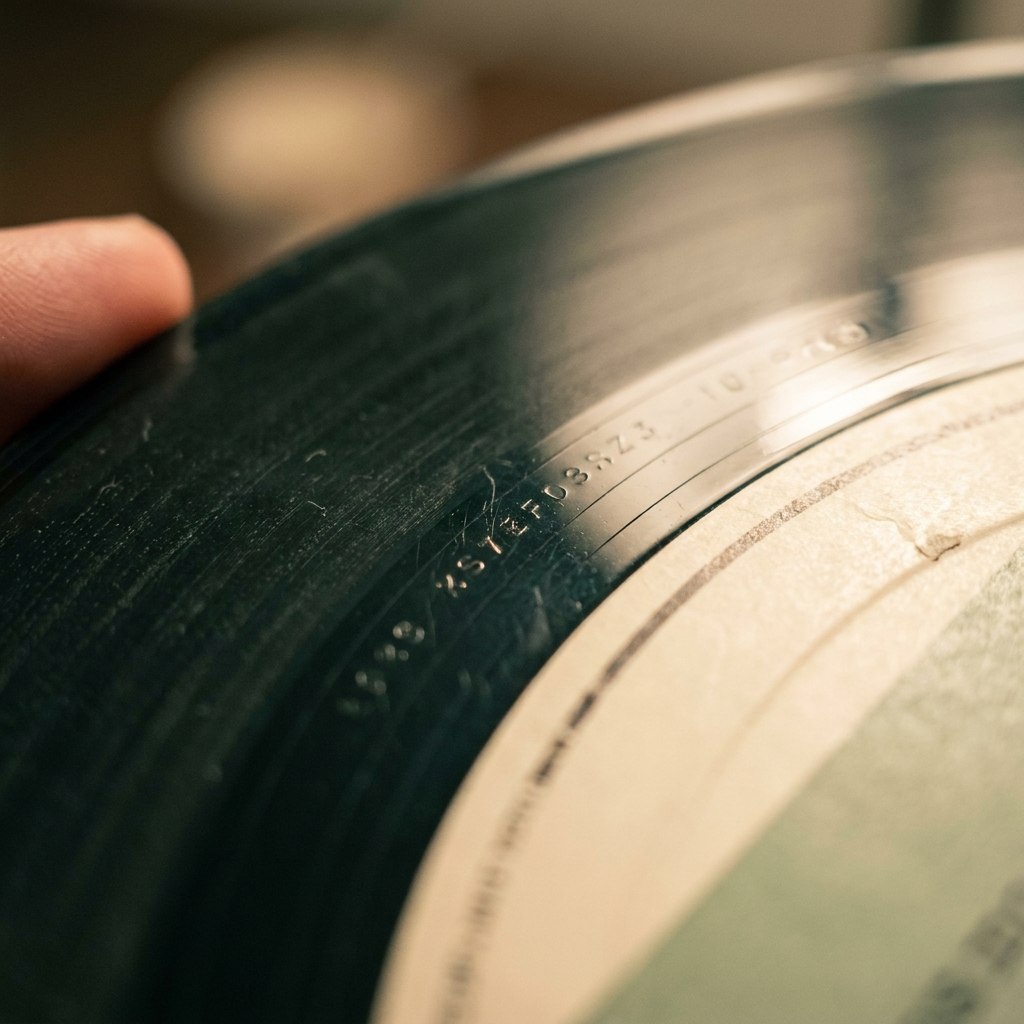
Flip past the last song to the smooth, un-grooved ring around the label—the "dead wax," or run-out groove. Etched or stamped into it you'll find a string of letters and numbers: the matrix number. This is the mark pressed into the record at the plant, and it's the single most reliable way to identify exactly which pressing you have.
Matrix numbers reveal the mastering, the stamper, sometimes the plant, and often whether a copy is a true first pressing. Two records with identical covers can carry different matrix codes—and a thousand-dollar difference. Copy the string down, then match it in the Discogs database, where collectors have cataloged pressings down to the individual stamper. The mark tells the story. You just have to look for it.
Labels and catalog numbers date the record
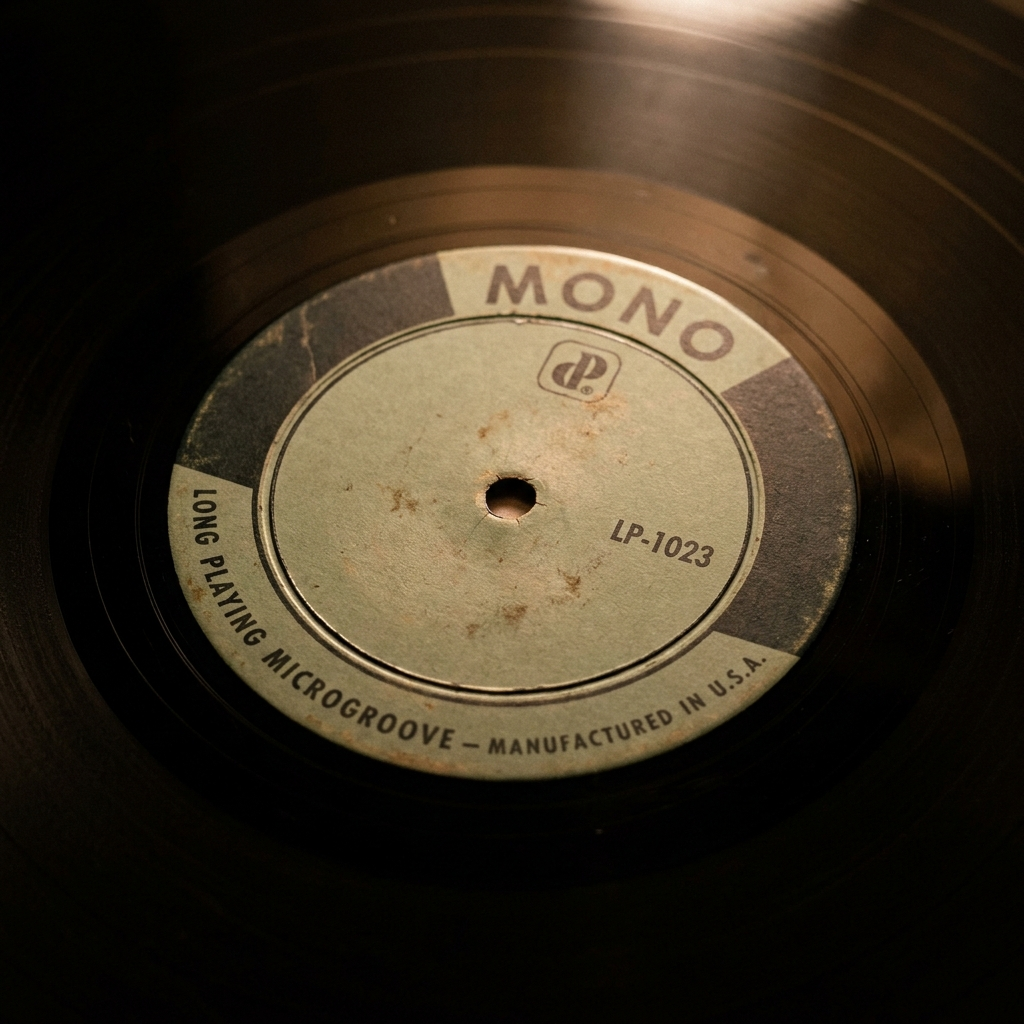
The label design is a timeline. Companies changed their logos, fonts, rim text, and addresses every few years, so a label style narrows a record to an era. Mono pressings (a single "MONO" on the label, older catalog prefixes) usually predate the stereo version and often carry more value. A catalog number that matches the original release—not a reissue series—is a good sign you're holding an early copy.
Sleeves, inserts, and jackets
Completeness is value. The original inner sleeve, a lyric insert, a poster, a gatefold that hasn't split—each one adds real money, and losing them takes it back. A first pressing missing its poster can drop below a complete later copy. Check the jacket for the original catalog number, correct printing, and whether it's a genuine early cover or a reissue reprint.
Condition: the value multiplier
Condition doesn't nudge the price—it sets it. Most of the market grades on the Goldmine scale, the same standard Discogs uses in its marketplace. Near Mint is the benchmark every price is measured against, and it's rare: Goldmine estimates that only a small fraction of surviving 1950s–60s records still qualify. A Very Good Plus copy is worth roughly half of Near Mint. Very Good drops to about a quarter. Good sits at 10–15%.
That means a scratch you can hear can erase most of a record's value in one pass. Warps, seam splits, ring wear on the jacket, and writing on the label all pull the grade down. Grade honestly—and if a rare copy is sealed, be cautious: a sealed record can't be inspected, and sealed doesn't always mean first pressing.
Which records are NOT worth much (and why)?
Reissues and later pressings. A 1980s repress of a 1969 classic looks the part but carries a fraction of the first pressing's value. The dead wax and label give it away.
Mega-sellers in worn condition. The best-selling albums of all time are common by definition. A scratched copy of a record that sold ten million units is a few dollars, no matter how beloved.
Easy-listening and light-classical bulk. Orchestral mood music, budget-label classical, and holiday compilations were pressed by the truckload and kept forever. Supply is effectively infinite.
Damaged records. Deep scratches, heat warps, water-stained jackets, seam splits, and spindle-hole wear cut value sharply—and, like a scratch in the groove, most of it is irreversible.
Where is the best place to sell vinyl?
Discogs is the center of the collecting universe. It's both the definitive pressing database and a marketplace with historical sale prices, so you can identify your exact copy and see what it actually trades for. For serious sellers, this is where knowledgeable buyers are.
eBay offers the widest reach. Filter to "sold listings" to price from real sales, not hopeful asks. Pack flat and well—warps and seam splits from bad shipping generate returns fast.
Record shows and local shops work well for common titles and let you skip shipping entirely. Dealers pay less than full retail but buy in volume and pay on the spot.
Auction houses like Heritage handle the true rarities—the butcher covers and withdrawn pressings—where a global bidding pool matters more than convenience. For a full breakdown of platforms and fees, see where to sell.
If you're not sure what you have, that's the part to solve first. Identifying the pressing before you list—by hand or with a tool that shows you how AI appraisal works—is the difference between a $10 sale and a $1,000 one.
The bottom line
Your box of records is probably worth $5–$25 apiece. But "probably" gets expensive when one of them is a first pressing and you sold it for a dollar.
The records that command real money share a few traits: they're genuine first or withdrawn pressings (confirmed in the dead wax, not assumed from the cover), they survived in clean condition (no deep scratches, complete with inserts), and they're wanted by a collector community that tracks them obsessively. Everything else is a lovely, ordinary record.
Pull one out. Read the run-out groove. Match the matrix number. It takes about a minute—and it's the difference between a crate you'd give away and one worth going through carefully. If you've also got a stack of old CDs, the same logic applies: the pressing is where the value hides.
Most old vinyl sells for $5–$25 per record. Common titles, later reissues, and worn copies have modest value because supply is enormous. But rare first pressings, withdrawn variants, and records in Near Mint condition can be worth hundreds to thousands—and the rarest examples reach six figures at auction. Value comes down to the pressing (first vs. reissue), the condition, and whether collectors actively want the title.
Wu-Tang Clan's 'Once Upon a Time in Shaolin' is the most valuable modern record—only one copy was ever made, and it has changed hands for reported sums in the millions. Among mass-released records, a sealed first-state Beatles 'butcher cover' set a world record at $125,000 through Heritage Auctions, and an ultra-rare stereo 'Freewheelin' Bob Dylan' with four withdrawn tracks has reportedly sold for around $150,000.
Check the dead wax—the smooth run-out groove between the last song and the label. The etched or stamped matrix number identifies the exact pressing, and you can match it in the Discogs database to confirm whether it's a first pressing or a later reissue. Also check the label design, catalog number, and whether it's mono (often earlier) or stereo. Identical covers can hide very different pressings.
Later reissues and repressings of famous albums, mega-selling titles in worn condition, easy-listening and budget-label classical stacks, and any record with deep scratches, warps, or seam splits. These were produced in huge quantities or damaged in ways that can't be reversed. Charming to own, but common—usually $1–$5 each.
Discogs is the primary hub—it's both the definitive pressing database and a marketplace with historical sale prices, so you can identify your exact copy and see what it trades for. eBay offers the widest reach (use sold listings to price accurately). Local record shops and shows work well for common titles without shipping. Auction houses like Heritage handle the true rarities.