Is Your Silverware Worth Money? Sterling vs Plate
Most sterling flatware is worth its silver weight—but rare patterns sell for thousands. Here's how to tell sterling from plate and what your set is worth.
Most old silverware is worth either its melt value or its collector value—whichever is higher. For sterling, that means a single teaspoon holds roughly $30–$55 in silver at today's prices, and a full service can carry well over $1,000 in weight alone. But the right pattern from the right maker sells for two to five times melt, and a complete Tiffany service has brought $15,000 or more. The first thing to settle is whether you have sterling or silverplate—because that one distinction changes the answer by a factor of a hundred.
How much is old silverware actually worth?
There are two numbers on any piece of silverware, and the higher one wins.
The first is melt value—what the metal is worth if it were melted down. Sterling silver is 92.5% pure, so the math is simple: weight in troy ounces × 0.925 × the current silver price. Silver traded around $62 an ounce in early August 2026, up sharply over the past year. At that price, a sterling teaspoon that weighs 25–35 grams holds somewhere between $30 and $55 in silver. A full service for twelve—dozens of solid pieces—can hold well over a thousand dollars in weight alone, sometimes several thousand.
The second is collector value—what someone will pay for the specific pattern, maker, and set you have, regardless of weight. For common patterns in plated metal, this number is close to zero. For a sought-after sterling pattern in a complete set, it can be many times the melt.
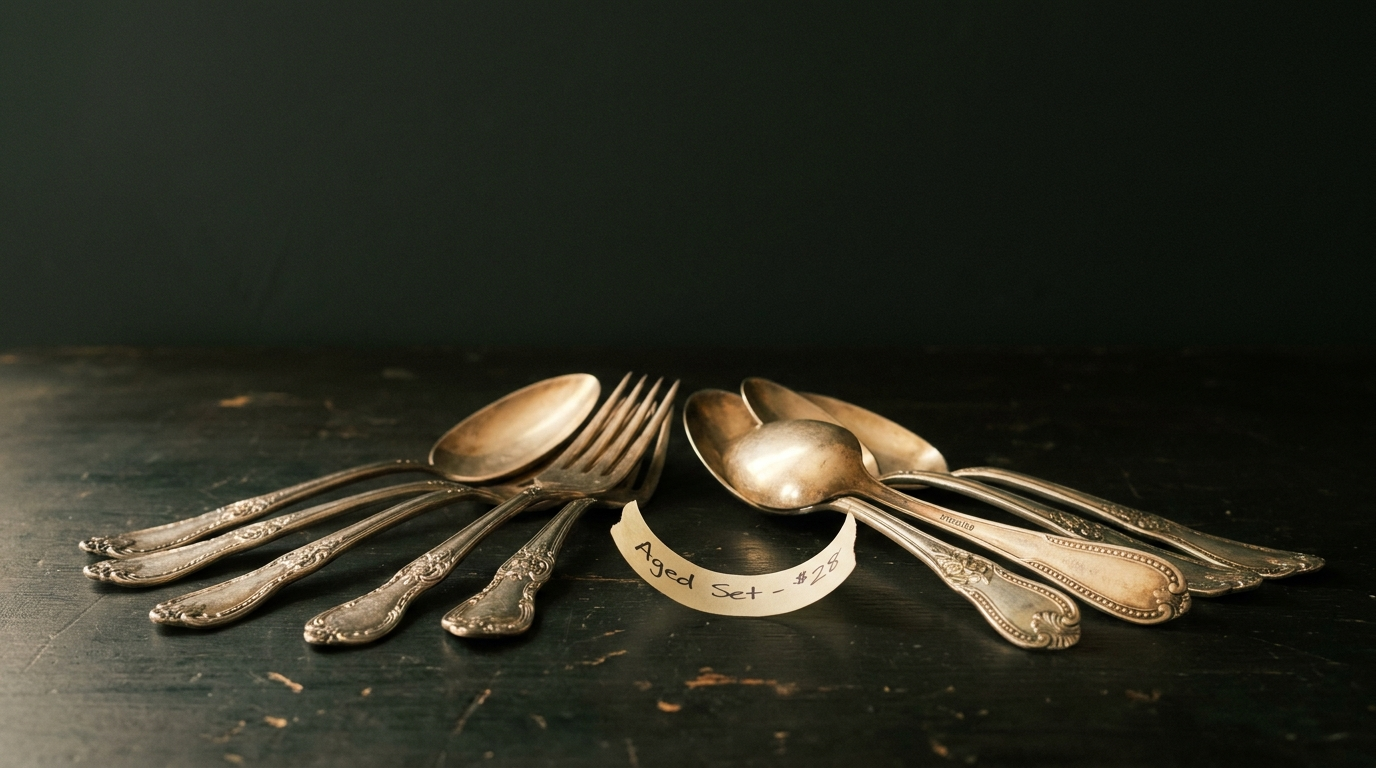
The whole game is figuring out which number applies to your set. And that starts on the back of the handle.
Sterling or plate? The question that decides everything
Flip a fork over and look at the back of the handle. What's stamped there tells you almost everything.
"STERLING" or "925" means solid sterling silver—92.5% pure metal all the way through. This piece has real melt value and, potentially, real collector value. American makers used the word "STERLING." British sterling carries a set of small stamped symbols called hallmarks—typically a lion walking to the left (the lion passant), a town mark, and a date letter.
"EPNS," "Silver Plate," "A1," "triple plate," or a brand name with no purity mark means silverplate. That's a microscopically thin layer of silver bonded over a base metal like nickel or copper. It looks nearly identical to sterling when polished, but the silver content is so small that melt value is effectively nothing. "IS" for International Silver and many "Rogers" marks are plate, not solid.
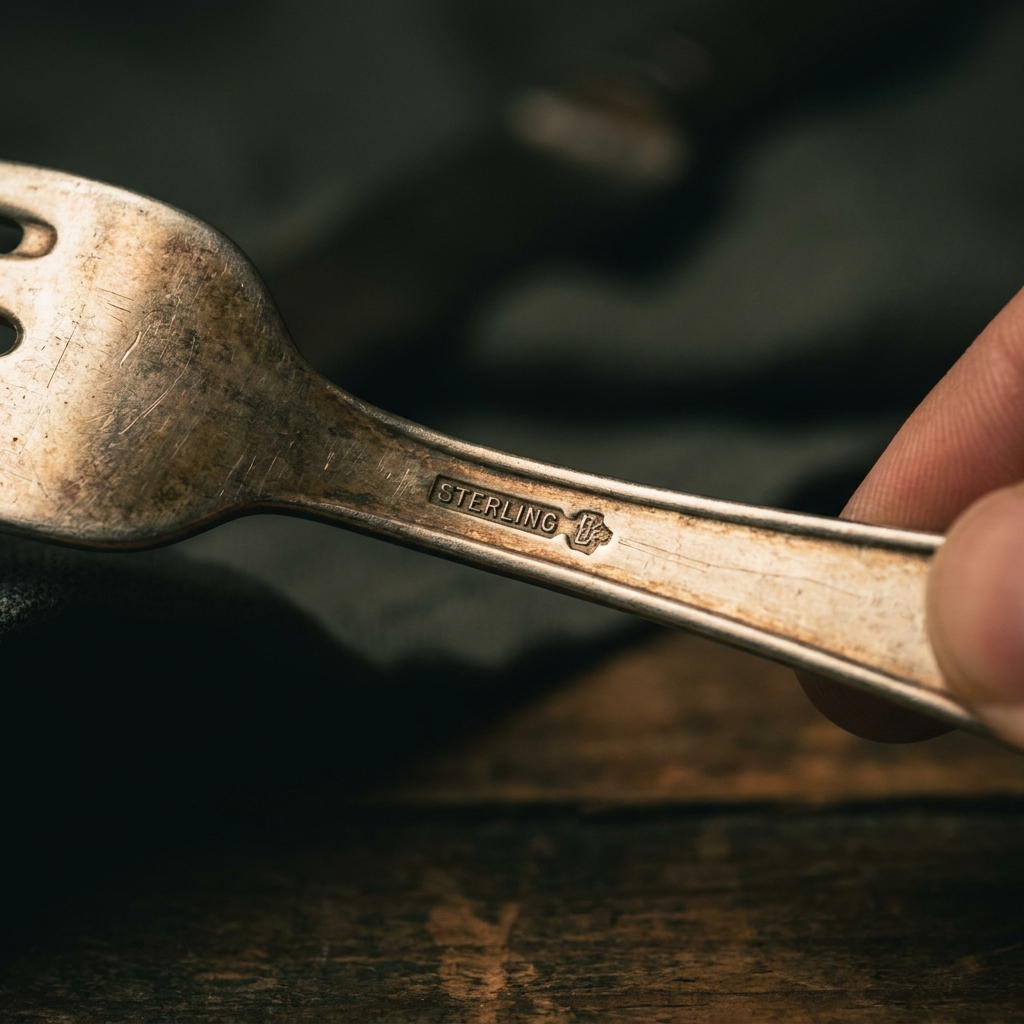
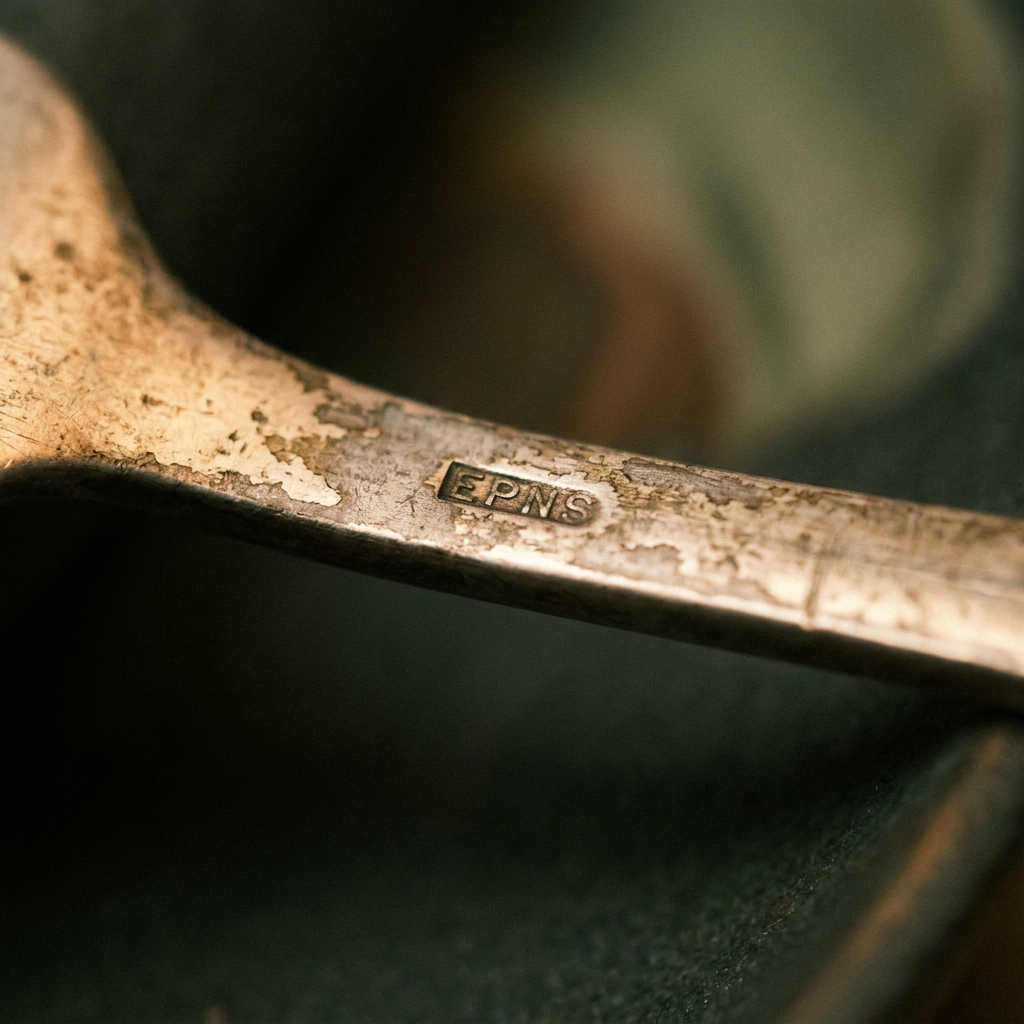
This single check separates a drawer worth $40 from a drawer worth $4,000. When there's no mark at all, treat it as plate or unknown until proven otherwise—genuine sterling was almost always marked. The maker's mark database at 925-1000.com, the online encyclopedia of silver marks used even by the Library of Congress, is the fastest way to decode an unfamiliar stamp.
Which silverware patterns beat melt value?
Once you've confirmed sterling, the pattern decides how far above melt you can go. A plain, common pattern sells for its silver weight. A named pattern from a respected maker—especially a complete set—sells for a premium.
The $8,000+ tier: complete services collectors chase
Chrysanthemum (Tiffany & Co., 1880). The most valuable common flatware pattern in America. Individual place settings commonly list between $400 and $800 each, and a complete service can bring $15,000 to $30,000 or more. Deep, sculptural, unmistakably Tiffany.
Grande Baroque (Wallace, 1941). The ornate wedding-registry classic. Complete services commonly sell in the $10,000–$18,000 range.
Francis I (Reed & Barton, 1907). Famous for the different fruit-and-flower cluster on every piece. Full services commonly list between $8,000 and $15,000.
The premium-pattern tier: 1.5x to 3x melt
These don't reach four figures per setting, but they consistently outrun their silver weight for complete sets:
Repoussé (Kirk, 1828), the hand-chased floral known as "Baltimore Rose." King Richard (Towle, 1932), dense with Renaissance detail. Chantilly (Gorham, 1895), the best-selling sterling pattern of all time and always in demand. Buttercup and Strasbourg, both Gorham, round out the reliably-collectible group.
What lifts a pattern above melt is consistent: a respected maker, a discontinued or pre-1940 design, and completeness. A service for twelve with matching serving pieces is worth dramatically more than the same count of loose forks—collectors pay for the set, not the spoons.
How do you identify old silverware?
The maker's mark tells you who—and often when
Alongside the sterling stamp, most American silver carries a maker's mark. Gorham, founded in 1831 (its archive now lives at Brown University), stamped a lion, an anchor, and a "G," followed by a symbol that encodes the exact year of manufacture. Learning to read those date symbols lets you place a piece to the year. Towle, Reed & Barton, Wallace, and Kirk each have their own marks and histories; International Silver was formed by a 1898 merger of Connecticut makers and appears on a great deal of both sterling and plate.
The pattern name unlocks the value
The handle design is the pattern, and matching it to a name is what connects your piece to real prices. Replacements, Ltd. catalogs hundreds of thousands of patterns and offers photo-based identification plus current pricing for individual pieces—it's the standard reference for putting a name to a handle.
Hollow-handle knives are the common trap
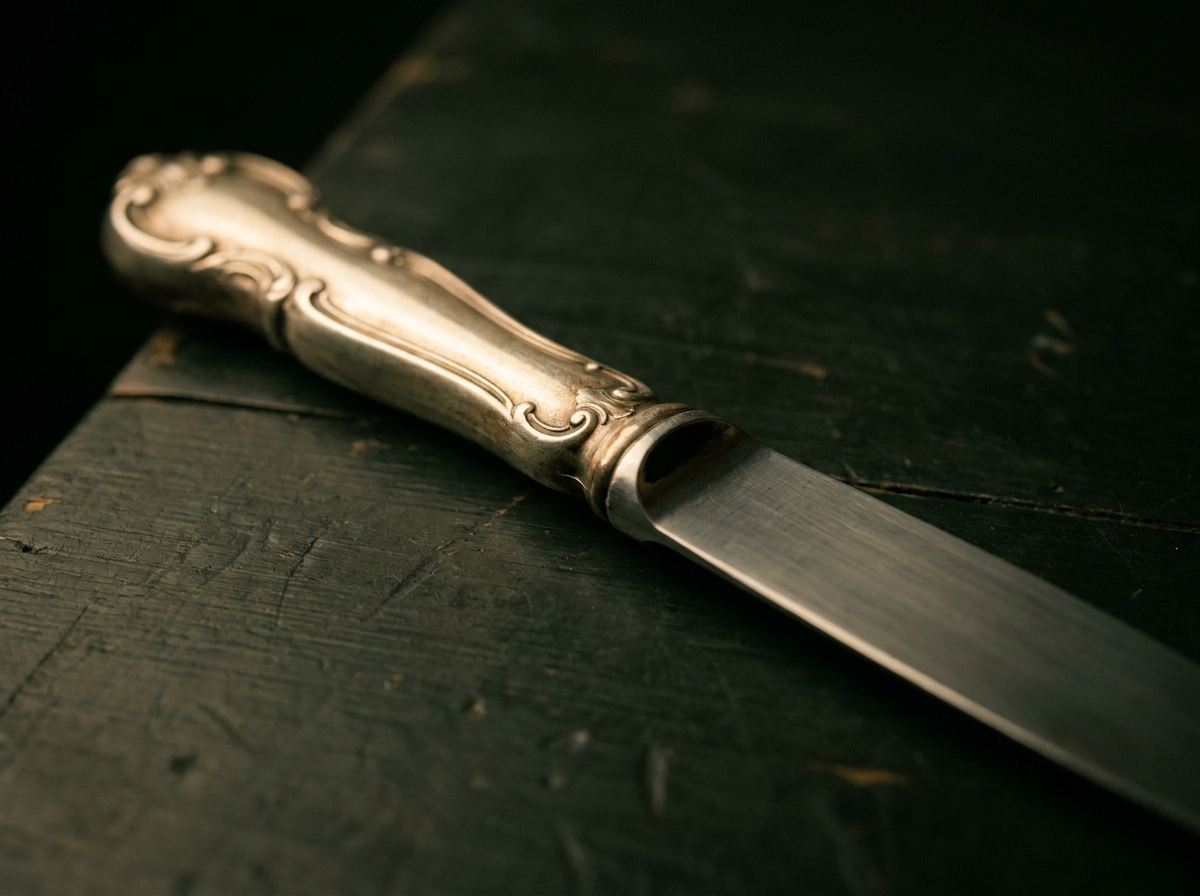
Most sterling dinner knives have a hollow sterling handle filled with resin or cement, fitted onto a stainless-steel blade. Only the thin handle shell is silver. If you weigh a knife on a scale and multiply by the silver price, you'll wildly overestimate—knives are valued per handle, not by gross weight. Forks and spoons, by contrast, are usually solid sterling and weigh true.
Condition and monograms
Wear matters. Bent tines, deep scratches, and thinned bowls from a century of use pull value down. Monograms—once considered a defect—now cut value only modestly, and an elegant hand-engraved one can even add character for the right buyer. What still hurts most is an incomplete set with mismatched or missing serving pieces.
What silverware is not worth much (and why)
Silverplate, whatever the pattern. EPNS, IS, A1, and "Rogers" plate have decorative and sentimental value but almost no metal value. Beautiful on the table; disappointing on the scale.
Stainless "flatware." If it's stamped "stainless" or "inox," there's no silver in it at all.
Odd loose pieces in common patterns. A single plated salad fork isn't worth the postage to sell it.
Weighted sterling. Some candlesticks and a few handle-heavy pieces are sterling shells filled with plaster for stability—marked "weighted" or "reinforced." The silver content is thin. This is a flatware article, but the same caution applies to any sterling hollowware you find alongside the set.
Where's the best place to sell old silverware?
For melt value, reputable precious-metals buyers, coin dealers, and refiners will pay a percentage of the current spot price by weight. Always weigh the solid pieces separately and keep hollow-handle knives out of the melt calculation. Get more than one quote—melt offers vary, and a fair buyer pays melt or collector value, whichever is higher.
For pattern value, the calculus is different. Replacements, Ltd. buys and sells by pattern and is the natural home for named sterling. eBay's sold listings show what pieces actually close at, and Etsy rewards well-photographed, complete sets. For the top tier—Tiffany, Georg Jensen, rare early patterns—a regional auction house can reach collectors who pay the strongest prices. Our guide to where to sell breaks down which channel fits which piece.
One rule holds across all of them: for a desirable pattern, a complete matched service is worth more sold together than broken into parts. For common sterling, selling by the place setting sometimes nets more than a bulk melt offer. Know which situation you're in before you list.
The bottom line
Inherited silver almost always arrives as a mystery—a heavy box, a family story, and no idea whether it's treasure or table dressing. The answer comes down to two questions, in order. Is it sterling or plate? And what's the pattern?
Answer the first by flipping a fork and reading the mark. Answer the second by matching the handle to a name. Together they turn a vague heirloom into a real number—and often that number is a pleasant surprise. If you're working through a whole estate, our guides on what you've inherited and how to use Patina to appraise a room walk through doing it piece by piece.
Sterling doesn't rust, fade, or go out of style. It just waits in the drawer for someone who knows how to read it.
It depends entirely on whether it's sterling or silverplate. Sterling silver (marked STERLING or 925) is 92.5% solid silver and always carries melt value—roughly $30–$55 per teaspoon and often more than $1,000 for a full service at 2026 silver prices—plus collector value if it's a sought-after pattern. Silverplate (marked EPNS, A1, IS, or 'Silver Plate') has a microscopically thin silver coating over base metal and almost no metal value. Flip a piece over and read the back of the handle first.
Look at the back of the handle. 'STERLING' or '925' means solid sterling silver. British sterling shows small stamped hallmarks including a lion passant (a lion walking left). Marks like 'EPNS,' 'A1,' 'triple plate,' 'Silver Plate,' or 'IS' mean silverplate—a thin silver layer over base metal, with little to no melt value. If there's no purity mark at all, treat it as plated until proven otherwise, since genuine sterling was almost always marked.
Tiffany & Co.'s Chrysanthemum (introduced 1880) is generally the most valuable common American pattern—individual place settings commonly list for $400–$800 and complete services can bring $15,000–$30,000 or more. Other high-value patterns include Wallace Grande Baroque (complete sets around $10,000–$18,000) and Reed & Barton Francis I ($8,000–$15,000). Gorham Chantilly is the best-selling sterling pattern ever and stays in steady demand.
Very little in metal terms. Silverplate is a thin layer of silver electroplated over nickel or copper, so the recoverable silver is minimal and melt value is effectively zero. It can still hold decorative or sentimental value, and complete plated serving sets from respected makers occasionally sell modestly to people setting a vintage table—but you won't get scrap-silver money for it. Marks to look for: EPNS, A1, triple plate, and 'IS' (International Silver).
For weight value, reputable precious-metals buyers, coin dealers, and refiners pay a percentage of the silver spot price—get multiple quotes. For pattern value, Replacements, Ltd. buys and sells by pattern and is the standard channel for named sterling. eBay sold listings show real closing prices, Etsy suits photogenic complete sets, and auction houses reach collectors for top-tier makers like Tiffany and Georg Jensen. A fair buyer pays melt value or collector value—whichever is higher.