Is Grandma's China Worth Anything?
Most inherited china sells for $50–$300 a set—but rare patterns and single serving pieces bring hundreds more. Here's how to identify what you have.
Most inherited china is worth $50–$300 for a full set, and often less—demand for formal dinnerware has fallen sharply over the past few decades. But early European porcelain, a handful of sought-after patterns, and individual serving pieces can still bring hundreds to thousands. What separates a $60 set from a $600 one is the maker, the pattern, and—surprisingly—whether you keep the set together or break it up. Here's how to tell what you have.
How much is old china actually worth?
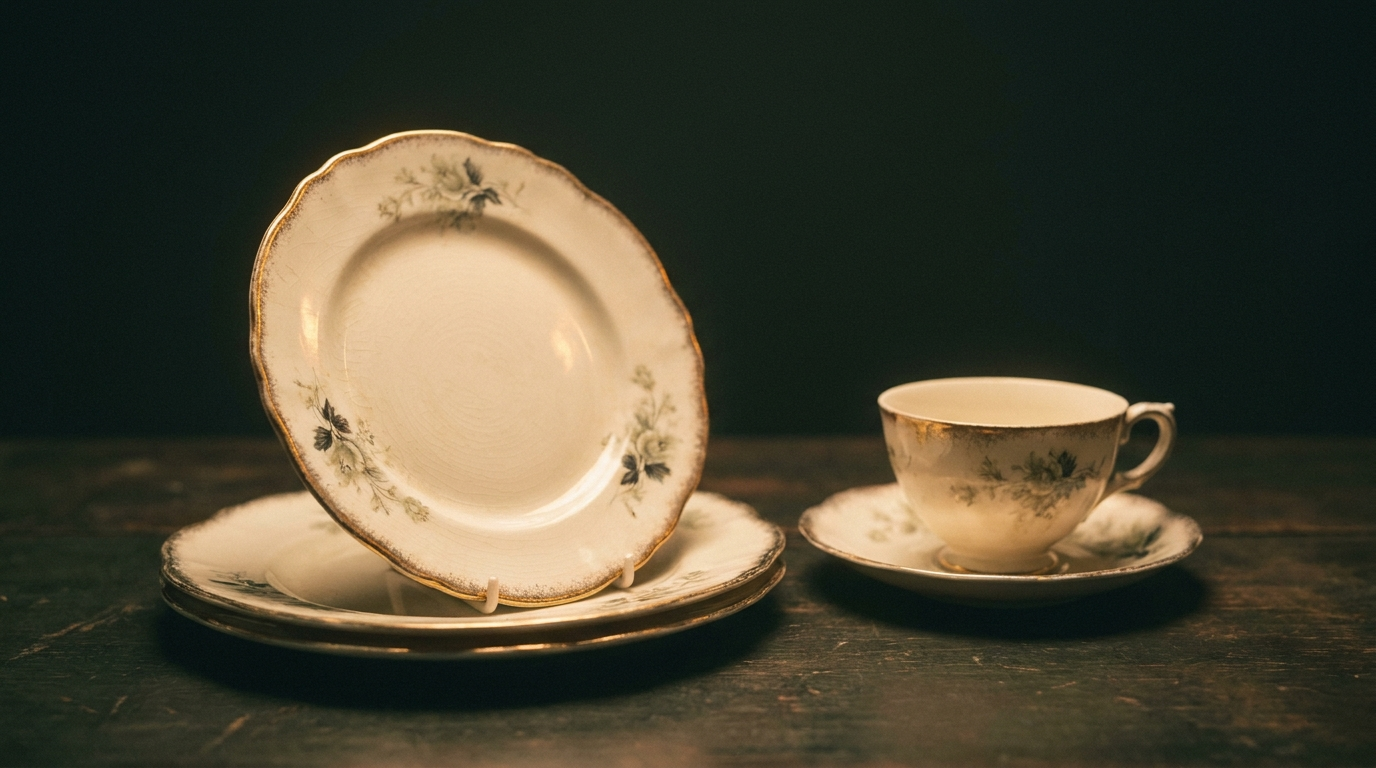
Start with the honest part, because it's the part most people don't expect. A complete formal china service—twelve place settings, the serving bowls, the covered vegetable dish—usually sells for $50 to $300 today. Beautiful sets. Barely used. Still boxed, sometimes. And still modest, because the market is flooded with them.
The reason is generational. Formal dining faded, dishwashers and microwaves became the standard, and millions of inherited sets reached resale at roughly the same time. A 12-place Haviland Limoges service that retailed for the equivalent of about $4,000 in 1955 now commonly sells for $150 to $400. Supply outran demand, and it hasn't caught back up.
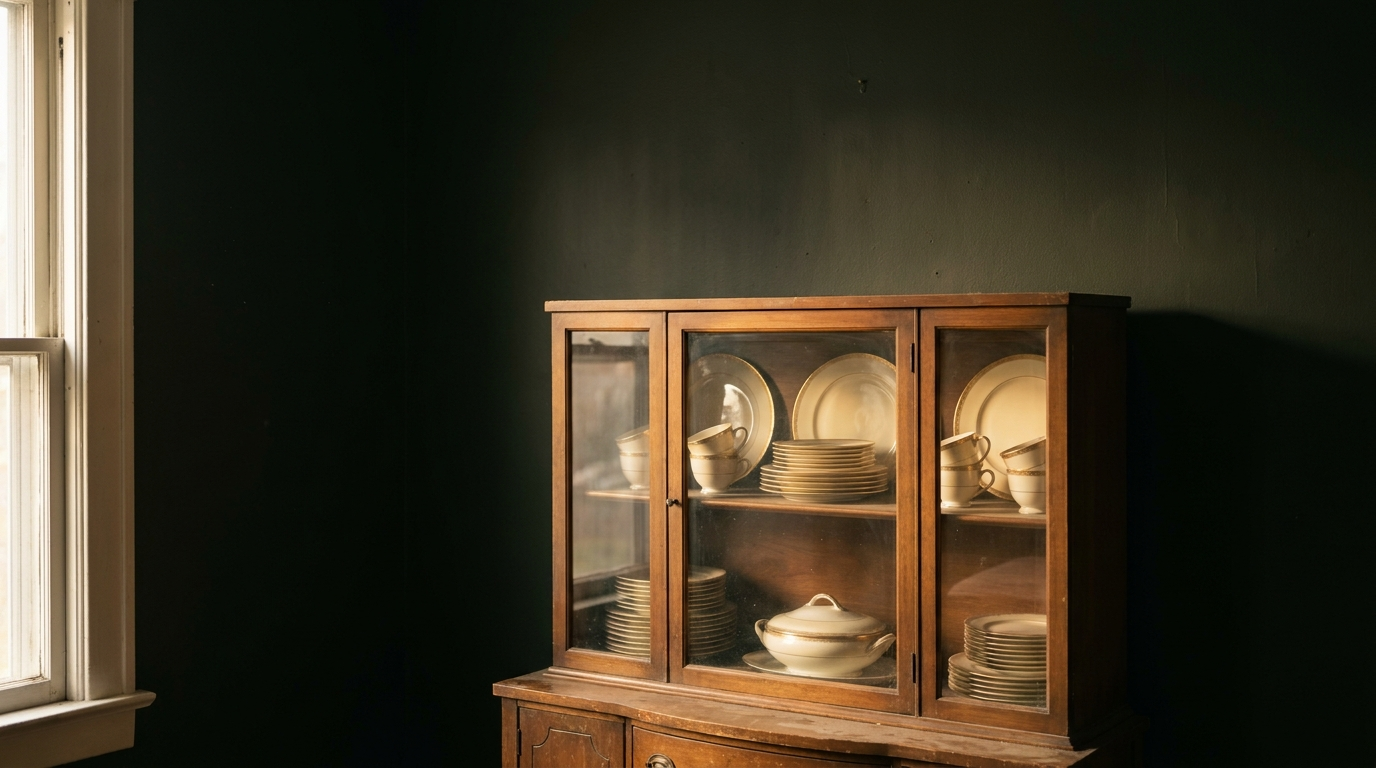
If you're sorting a parent's cabinet right now, that number can sting. The china meant something. It came out for holidays. So before we talk resale, one thing worth saying plainly: keep what carries the memory. Value on the open market and value to you are two different measurements, and only one of them shows up in a price guide. When you're ready to sort the rest, there's a gentler way to work through a full household.
Which china is worth real money?
The $1,000+ tier: Early European porcelain and designer rarities
The four-figure china is almost always old, European, and made before mass production took over. Early Meissen, Sèvres, and early Worcester pieces range from roughly $1,000 to $50,000, with individual Meissen pieces commonly listed between $300 and $15,000 depending on age, decoration, and condition. These are eighteenth- and nineteenth-century wares—hand-painted, hand-gilded, made in small quantities for a small clientele. If your piece predates 1850 and carries a crossed-swords mark or an interlaced-L, do not put it in a donation box before it's identified.
Designer collaborations can also reach this tier. Noritake's Frank Lloyd Wright "Imperial Hotel" pattern, designed in 1925 for Wright's hotel in Tokyo, has been listed around $512 per place setting—not because it's old, but because the name behind it drives demand.
The $150–$1,000 tier: Sought-after patterns and key serving pieces
Below the museum tier sit the patterns collectors actively chase. Among Noritake alone, Foxboro (cobalt band, gold birds) lists around $365 for a five-piece setting, the ornate 1924 20056 Black and Gold around $188, and 1990s patterns like Fitzgerald and Hemingway hold $130–$170 per setting because demand for those specific designs never faded. Discontinued is the operative word: when a maker stops producing a pattern, the people still building or repairing a set have nowhere to turn but the secondary market.
This tier is also where single serving pieces punch above their weight—which brings us to the most counterintuitive rule in china.
Why a full set often sells for LESS than one serving piece
Here's the part that surprises almost everyone. A complete twelve-place set frequently sells for less than the sum of its parts. Sets often bring 40 to 80 percent more when sold piecemeal than whole.
Two things drive it. First, buyers rarely need a whole service—they need the four salad plates that broke, or the gravy boat that never made it into the box. Second, serving pieces are simply scarcer. Covered vegetable dishes, teapots, gravy boats, and platters got used hard and broke far more often than dinner plates, so surviving examples of a discontinued pattern's serving pieces can command real money on their own.
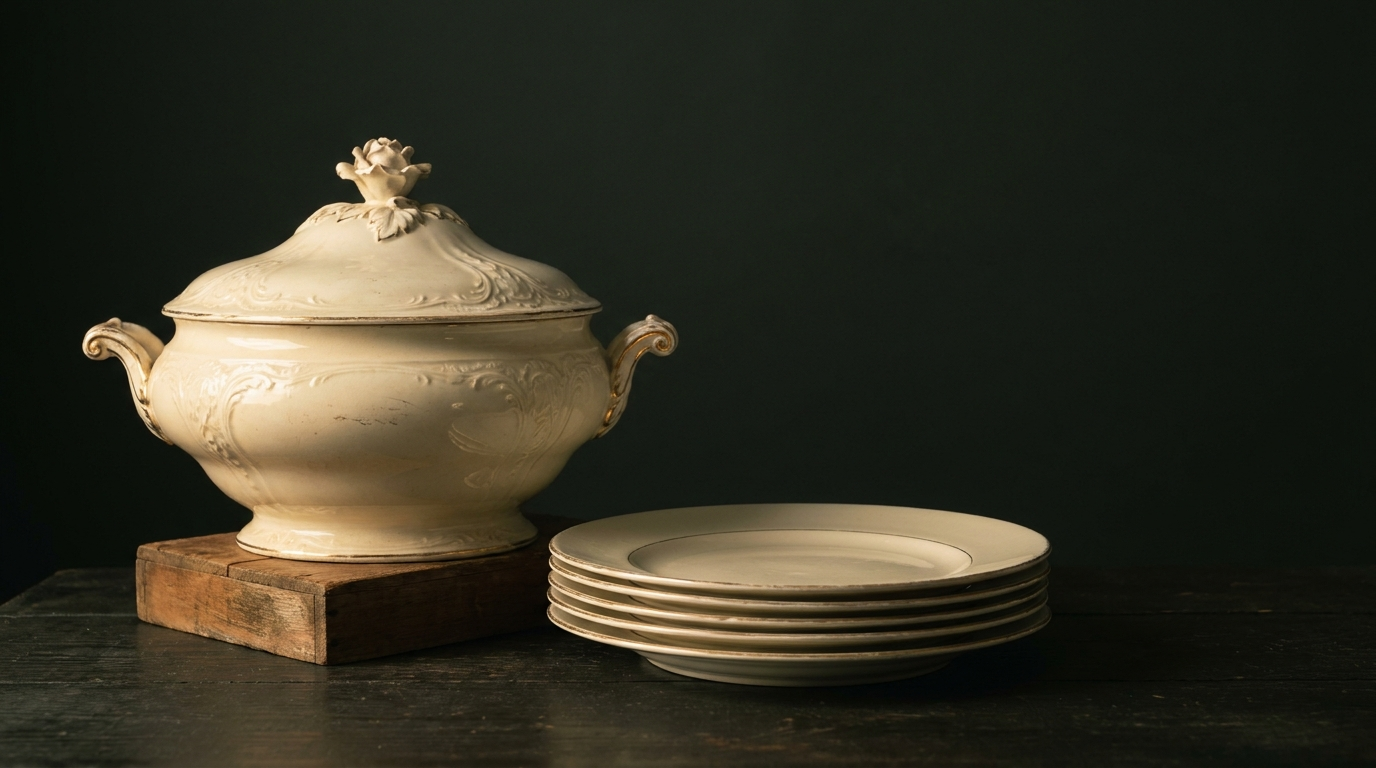
The practical takeaway: don't assume the set is the asset. In a common pattern, the lidded tureen or the coffee pot might be the only piece anyone's searching for—and the only piece worth listing individually.
How do you identify and date old china?
The backstamp tells you the era
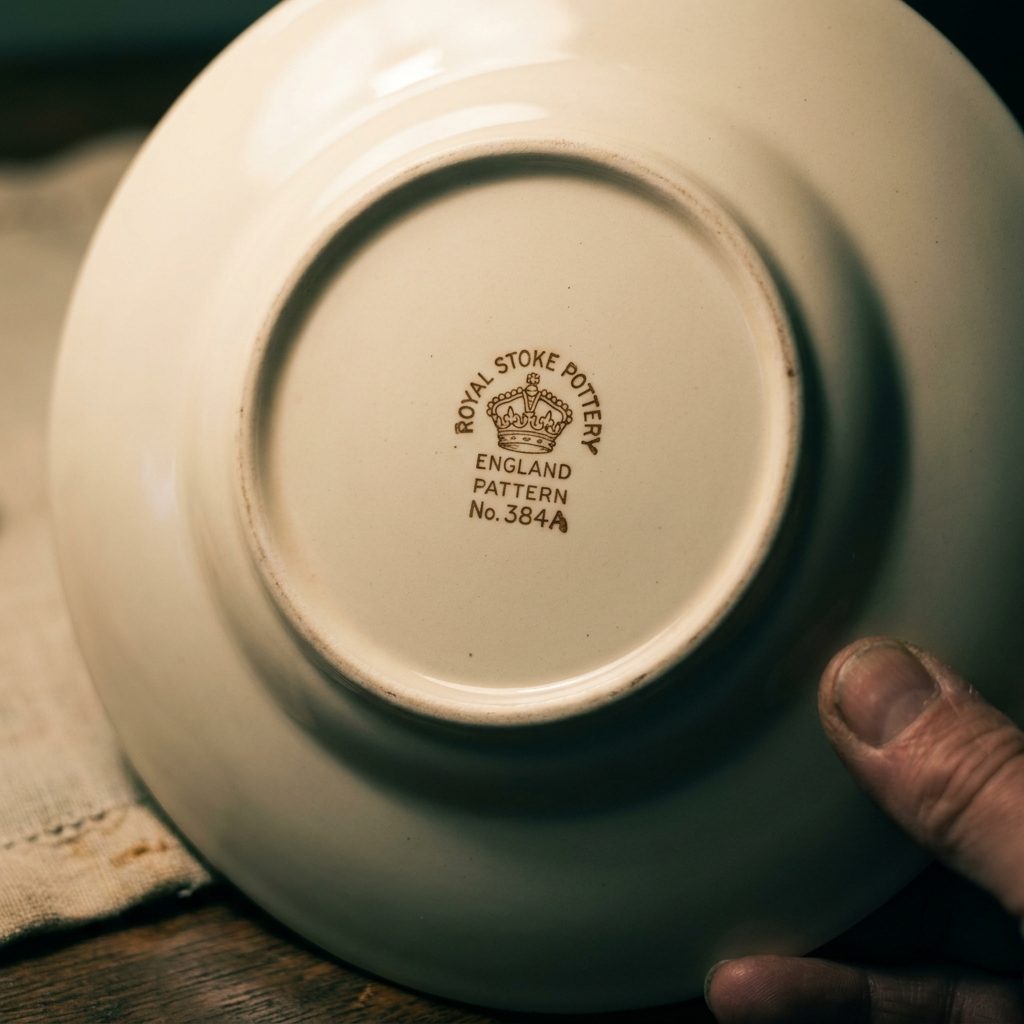
Flip the piece over. The mark on the bottom—the backstamp—is your first and most reliable dating tool, and one detail does a lot of the work: the country of origin.
Because of the 1891 McKinley Tariff Act, imported goods had to be marked with their country of origin. So a mark reading only "England" or "France" (with no "Made in") generally dates a piece to roughly 1891–1914, while "Made in England" or "Made in Japan" points to sometime after that. No country mark at all can mean the piece predates 1891 entirely—or was made for the domestic market.
Individual makers refined the system further. Wedgwood, for instance, added "ENGLAND" to its mark after 1891, switched to "MADE IN ENGLAND" from around 1908, used a three-letter code to encode the month and year of manufacture, and moved to actual year digits from 1929 onward. Learn one maker's system and the backstamp stops being decoration and starts being a date stamp.
The pattern name unlocks the value
Once you know the maker, the pattern name is what you actually price against. Replacements, Ltd. maintains a pattern-identification service with a visual search tool—upload a clear photo of the plate front and it will try to match your pattern—and price-guide publishers like Kovels catalog marks and realized values across thousands of makers. With a maker and a pattern name in hand, you can search sold listings and see what your exact piece is actually moving for.
Condition is the multiplier
Gold and platinum trim wears off—and once it's gone, it's gone. Faded, rubbed, or scratched gilding drops a piece well below a crisp example. Crazing (the fine web of cracks in the glaze) reads as age and wear to most buyers and pulls value down, especially when it's stained. Chips and hairline cracks move a piece toward decorative-only pricing. And completeness matters in both directions: a set missing its serving pieces loses its best cards, while a lone, pristine serving piece from a discontinued pattern can be the most valuable thing in the cabinet.
Which china is NOT worth much (and why)?
Common mid-to-late 20th-century formal patterns. Most Lenox, Mikasa, Royal Doulton, and everyday Noritake dinnerware from the 1960s onward was produced in enormous quantities. Lovely on the table, modest at resale—typically that $50–$300 range for a full set.
Gold-trimmed sets that can't handle modern life. Metallic banding means no dishwasher and no microwave. For many buyers, that alone takes formal china out of the running.
Incomplete sets missing the serving pieces. As above—strip out the tureen and the platter and you've often removed the only pieces with independent demand.
Heavily crazed or repaired pieces. Stained crazing, glued handles, and hairlines push a piece toward decorative pricing no matter how good the pattern is.
Where is the best place to sell old china?
Replacements, Ltd. both identifies patterns and buys pieces outright—especially individual serving pieces and discontinued patterns people are actively trying to complete. eBay offers the widest reach; sort by "sold listings" to price against reality, and pack like the fragile thing it is, because breakage claims erase margins fast. Facebook Marketplace and local estate sales work well for complete common sets where shipping would eat the value. For the full breakdown of which platform fits which piece, see where to sell.
If your cabinet is mostly common patterns, don't overlook the honest option: some sets are worth more as the everyday dishes you actually use than as a listing nobody bids on.
The bottom line
Your grandmother's china is probably not a Meissen. It's probably worth $50–$300, and its real value may be the Thanksgiving table it belongs to. But "probably" gets expensive when you're wrong about the one serving piece, the pre-1850 European maker, or the discontinued pattern someone's been hunting for years.
So do the thirty-second version first. Flip a piece over. Read the backstamp for the maker and the era. Find the pattern name. Then decide—piece by piece, not set by set—what to keep, what to use, and what to let someone else treasure next.
Most inherited china sells for $50–$300 for a full set, and sometimes less, because demand for formal dinnerware has declined sharply. But early European porcelain (Meissen, Sèvres, early Worcester) can bring $1,000–$50,000, sought-after discontinued patterns run $130–$500+ per setting, and individual serving pieces from a discontinued pattern often sell for more on their own than a complete common set. Maker, pattern, and condition decide almost everything.
Early European porcelain leads: antique Meissen, Sèvres, and early Worcester pieces range from about $1,000 to $50,000. Designer collaborations like Noritake's Frank Lloyd Wright 'Imperial Hotel' pattern have listed around $512 per place setting. Among more common makers, discontinued Noritake patterns such as Foxboro (~$365 per five-piece setting) command premiums because collectors are still trying to complete or repair those specific sets.
Check the backstamp on the bottom. Because of the 1891 McKinley Tariff Act, imported pieces marked only 'England' or 'France' generally date to 1891–1914, while 'Made in England' or 'Made in Japan' point to after that. No country mark can indicate a piece made before 1891. Individual makers add more detail—Wedgwood, for example, used 'ENGLAND' after 1891, 'MADE IN ENGLAND' from about 1908, and year digits from 1929.
Often by the piece. Complete sets frequently sell for 40–80% more piecemeal than whole, because buyers usually need specific replacements rather than a full service. Serving pieces—tureens, gravy boats, platters, teapots—are scarcer than dinner plates because they broke more often, so a single serving piece from a discontinued pattern can be worth more than the rest of the set combined.
Replacements, Ltd. identifies patterns and buys pieces outright, especially discontinued patterns and individual serving pieces. eBay offers the widest reach—sort by 'sold listings' to price accurately and pack carefully. Facebook Marketplace and local estate sales work well for complete common sets where shipping costs would erase the value.